

























































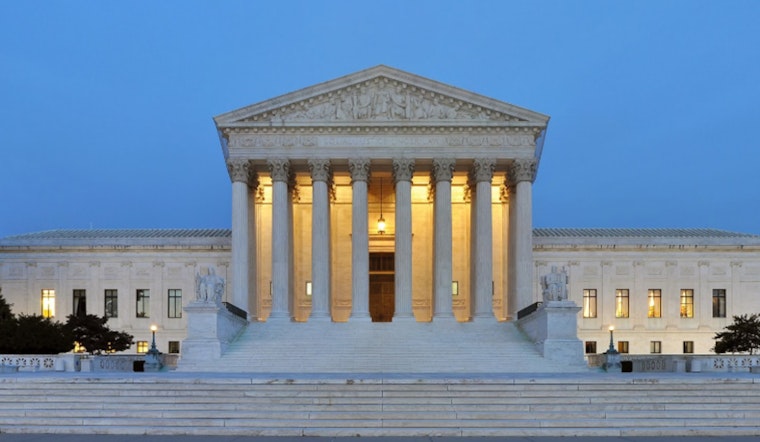
The U.S. Supreme Court quietly cleared the runway for Medicare drug price negotiations on Monday, May 18, 2026, when it declined to hear appeals from several major pharmaceutical companies trying to stop the program. By leaving lower court rulings in place, the justices allowed the federal Medicare Drug Price Negotiation Program to keep moving forward, meaning the first batch of negotiated prices will remain in effect. For Medicare enrollees and taxpayers, the decision keeps in place price changes and savings that the Centers for Medicare & Medicaid Services has already started rolling out.
Who Asked the Court to Step In
Major drugmakers, including Novo Nordisk, AstraZeneca, Janssen, Bristol Myers Squibb, Novartis and Boehringer Ingelheim, had urged the Supreme Court to review decisions that went against them in the lower courts. The justices declined to take up the cases, leaving intact federal appeals court rulings that threw out the industry’s challenges, according to Reuters.
How the Program Works
Created under the Inflation Reduction Act of 2022, the Medicare Drug Price Negotiation Program requires the Centers for Medicare & Medicaid Services to bargain each year over maximum “fair” prices for a selected group of high-cost prescription drugs. As the program moves through its early rounds, CMS has released timelines, fact sheets and the resulting maximum fair prices to the public, according to CMS.
Which Drugs Are Affected
So far, federal officials have locked in negotiated prices for 25 prescription products, including the headline-grabbing GLP-1 weight-loss and diabetes drugs Ozempic, Rybelsus and Wegovy. A third round of drug selections announced by CMS would raise the total number of affected medicines to about 40. Those figures, along with details on the Supreme Court’s latest action, were reported by AP.
Industry Pushback
Pharmaceutical companies have argued in court filings and public statements that the negotiation program is really government price setting in disguise, not a fair bargaining process. They contend that if lawmakers are serious about cutting drug costs, they should focus instead on insurers and third-party pharmacy benefit managers. As Spectrum News reported, those arguments have been central to the industry’s litigation strategy.
Legal Implications
With the Supreme Court opting not to intervene, legal analysts say that, for now, only Congress appears to have the power to shut the program down entirely. The law that created it does not include a built-in expiration date or explicit sunset provision. Coverage of the court’s orders also points out that lower courts have repeatedly dismissed many of the drugmakers’ constitutional claims, leaving legislative action as the most straightforward way to upend the program, according to AP.
What This Means For Patients
CMS estimates that the first waves of negotiated prices will save the Medicare program billions of dollars and trim beneficiaries’ out-of-pocket costs by about $1.5 billion in 2026. Roughly 8 to 9 million Medicare enrollees have used at least one of the drugs that are already subject to negotiation in recent years. To take advantage of potential savings, beneficiaries are encouraged to check their plan formularies and pharmacy networks. The official Medicare Plan Finder (Medicare Plan Finder) is the federal comparison tool for Part D and Medicare Advantage drug coverage.
What To Watch Next
More lawsuits and plenty of political fireworks are likely as CMS pushes into additional negotiation cycles and as industry groups keep pressing Congress for relief. Policy experts at KFF and other outlets are tracking how many drugs get pulled into the program each year, how the savings add up and whether lawmakers or the courts move again to reshape what is quickly becoming a high-stakes battle over prescription drug prices.




