

























































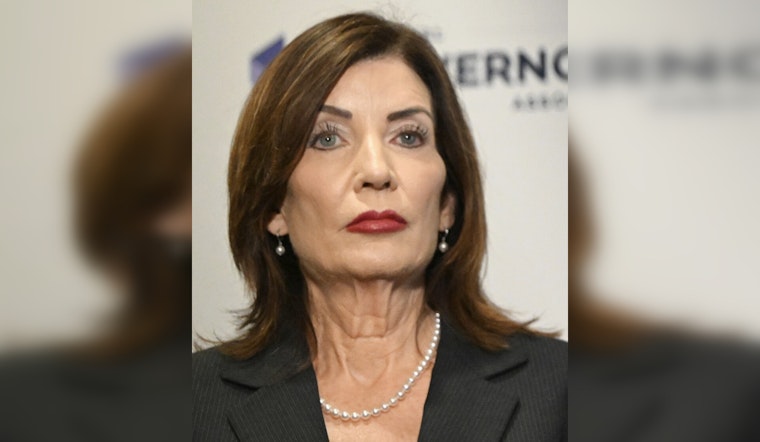
Gov. Kathy Hochul’s team signaled Friday that New York is on track to join a new federal scholarship tax credit program that would let donors redirect their federal tax liability into scholarships for K-12 education. Her office says Hochul intends to opt the state in, while carefully reviewing federal guidance for any potential "poison pills" that could harm New York’s schools. If Albany files the required election paperwork, donations to approved scholarship-granting organizations would qualify for federal credits beginning in 2027.
How the federal credit works
According to a joint fact sheet from the U.S. Departments of Education and Treasury, the Education Freedom Tax Credit allows individual taxpayers to claim a nonrefundable, dollar-for-dollar federal credit of up to $1,700 for cash contributions to state-certified Scholarship Granting Organizations (SGOs). Those SGOs can then award scholarships for private-school tuition, tutoring, special-needs services and other qualified K-12 expenses to students from households earning up to 300% of the area’s median gross income. The IRS has said states can make an advance election to participate and must publish an annual list of qualifying SGOs for in-state donations to be eligible, and donors can begin claiming credits for contributions made on or after Jan. 1, 2027.
Hochul's office and the politics
Hochul’s press office told JNS that the governor "is open to any proposals that will support our students and schools" but will review federal rules before making any final election. The timing is not exactly low stakes. The decision lands in the shadow of the 2026 campaign, with Hochul running for another term and the Republican ticket headed by Nassau County Executive Bruce Blakeman, who was chosen as the GOP nominee this year, according to WXXI News. Her office says that political calendar is one reason Albany wants to see final Treasury and IRS guidance before locking anything in.
Where other states stand
Republican-led states have been the quickest to sign on to the new credit, moving early to position local scholarship groups for an influx of donations. Gov. Jared Polis also filed Colorado’s paperwork to participate earlier this year, according to Colorado Public Radio. At the same time, the National Conference of State Legislatures is tracking a steady stream of bills and executive actions as governors and lawmakers across the country debate how to certify and oversee SGOs at the state level.
Supporters and critics
Supporters argue the federal credit will unlock new private dollars for families and for faith-based schools, and advocacy groups are already busy organizing to get scholarship programs certified so they can tap the new funding. JNS reported that Jewish federations and other community organizations are pressing governors to opt in so donations can flow to existing day-school and scholarship networks.
Opponents, including major teachers unions and public-education advocates, warn the policy could siphon resources from public schools and create accountability gaps in how funds are used, concerns detailed by reporting in Education Week. They see the credit as a federal foothold for a broader voucher-style system and are gearing up for a fight in statehouses like Albany.
Next steps in Albany
If Hochul formally files New York’s election to participate, state officials will have to designate an agency to send an annual roster of SGOs to the Treasury Department and to publish that list for the public. They will also need to vet which nonprofits meet the program’s requirements, as the IRS explains. The state will be watching forthcoming Treasury and IRS rules for implementation details, and the administration says it plans to coordinate with education agencies to build any needed oversight structures.
Whether New York captures this stream of federal money or slides into another prolonged policy brawl will hinge on the administration’s review and the political calculations leading up to November. Families, faith communities and public-school advocates are all watching closely as Albany decides what guardrails, if any, it will insist on before enrolling the state.




.jpg)