

























































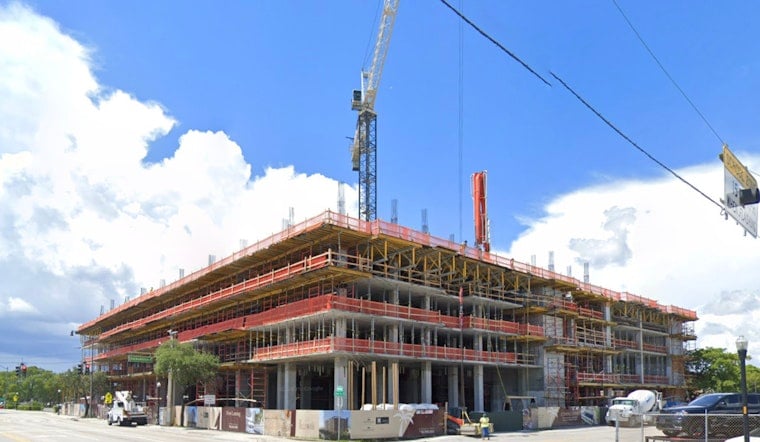
Hollywood’s Federal Highway corridor could be on the verge of a massive growth spurt, with city commissioners weighing zoning changes that would clear the way for up to 25,100 mid-rise and high-rise apartments between Sheridan Street and Pembroke Road. The proposal would relax long-standing density caps along the busy transit route and smooth the path for projects already under construction or approved. Backers frame it as a badly needed boost to the local housing supply, while skeptics see a recipe for heavier traffic, stretched city services and a skyline that looks nothing like the Hollywood they know.
What the package would change
At the core of the plan is a jump in how many homes are allowed along this slice of Federal Highway. The city’s overall cap for the corridor would climb from roughly 17,100 dwelling units to about 25,100. A linked proposal would also rework limits along the State Road 7 corridor, where the current cap is about 5,309 units. One option would raise that by around 4,379 units, while another would allow as many as 9,688 units in total, according to the Sun Sentinel.
Developers say the market is already moving
Developers are not exactly waiting around for the zoning debate to wrap up. Starlife Group’s 21 Hollywood, at 2100 N. Federal Highway, has already topped off and is slated to bring about 200 rental apartments and roughly 10,000 square feet of ground-floor retail, with openings targeted in 2027, per Florida YIMBY. Nearby, Affiliated Development has broken ground on The Tropic, an 18-story tower at 303 S. Federal Highway that is expected to include about 223 units and a workforce-housing component tied to public incentives, according to Affiliated Development.
Small wins on affordability
City and developer paperwork show that some pipeline projects come with income-restricted units attached to public financing. Pinnacle 441’s Phase 1 has already delivered 113 apartments, and Phase 2 is planned to add about 100 affordable units for households earning 60 percent of the area median income. The same documents spell out county and city funding contributions that helped lock in those affordability terms, according to City of Hollywood records and Pinnacle.
How leaders and locals are reacting
Mayor Josh Levy tried to tamp down fears of an overnight construction frenzy, telling the Sun Sentinel, “it’s not an instant issue of suddenly 8,000 additional units in the rac,” while a developer representative echoed that “these units are not all being built tomorrow,” stressing that any buildout would play out over years, not months. Opponents were not convinced. Resident Ann Ralston argued “we already have vacancies everywhere” and warned that the area risks starting to feel like “I’m imagining I’m in Sunny Isles right now.”
Layered on top of the local tug-of-war are countywide numbers that are hard to ignore. Broward County estimates the region needs about 7,000 new housing units a year, and Hollywood alone is facing a shortfall of roughly 6,800 affordable rental units, according to the Sun Sentinel.
What happens next
The zoning changes are not a done deal yet. The commission still has to vote to approve the amendments before anything becomes official, and the full staff reports and backup materials are available to the public on the City of Hollywood’s Legistar portal. Even if the package passes, new entitlements are only one piece of the puzzle: financing, detailed permitting and infrastructure upgrades will ultimately decide which projects are actually built and how quickly new residents arrive.
That means years of planning meetings, zoning tweaks and neighborhood debates as Hollywood tries to transform additional capacity on paper into real apartments on the ground. Expect close scrutiny of commission votes, new developer filings and county infrastructure plans as the Federal Highway corridor inches from the entitlement stage toward cranes and construction crews.





