

























































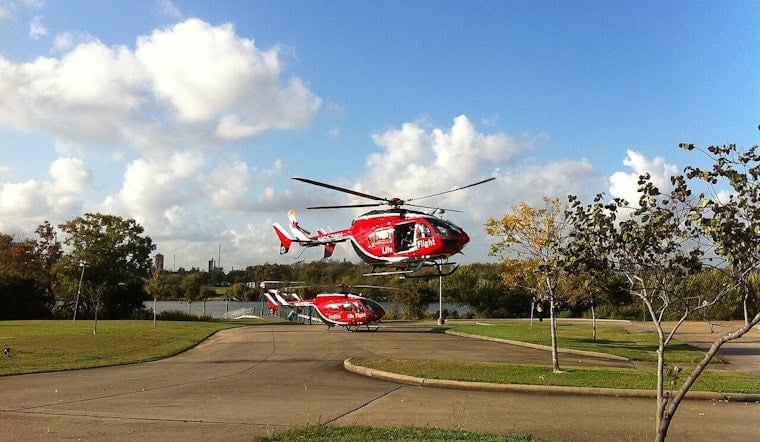
Memorial Hermann's Life Flight campaign has officially crossed the $60 million mark, locking in funding for five new state-of-the-art helicopters that will replace the program's aging fleet. The milestone was announced during the Memorial Hermann Foundation spring gala, where hospital leaders said the upgraded aircraft will boost range and enhance critical-care capabilities across the Houston region. The campaign's success effectively closes a major fundraising chapter for the long-running air-medical program.
Foundation Gala Delivers Big Night
As reported by PaperCity, the spring gala honored Gail and Greg Garland and Anna and Scott McLean, and netted more than $4.3 million for Memorial Hermann Foundation projects. Foundation executive vice president Anne Neeson used the evening to roll out a new "Tower of Strength" initiative, a proposed TIRR Memorial Hermann facility and campus renovation, alongside the Life Flight update. The outlet noted that chefs Aaron Bludorn and Cherif Mbodji oversaw the event's menu and logistics.
New Aircraft On Order
To modernize the Life Flight fleet, Memorial Hermann has ordered four Airbus H145 helicopters and one Airbus H160, giving flight crews larger cabins, updated avionics and longer-range capability. Aviation trade site HeliHub reported the purchase, while Metro Aviation has been developing the EMS interior work that will configure the H160 for high-acuity medical missions. Together, the new airframes are expected to deliver the capabilities of a mobile intensive care unit in flight.
Life Flight's Role In Houston
Life Flight, founded in 1976 by Dr. James "Red" Duke, conducts roughly 4,000 missions each year and provides hospital-based critical-care transport across southeast Texas. According to Memorial Hermann, each helicopter carries advanced equipment such as packed red blood cells, portable lab analyzers and specialized neonatal and pediatric kits. The program costs about $15 million annually to operate, funding that largely depends on donor support, which helps explain the foundation's aggressive campaign goal and why the gala's results carried weight beyond a single night of celebration.
Leaders And Survivors Stress Impact
Dr. David Callender, president and CEO of Memorial Hermann Health System, said the organization "excels at the 'trauma trifecta,' a continuum of care beginning with Life Flight and extending to the Level I trauma center and TIRR Memorial Hermann," per PaperCity. The gala also featured remarks from Zach Matula, who told attendees he "grew up with a dad because of Life Flight," underscoring how the program's impact shows up in family stories as much as in hospital statistics. Leaders framed the new aircraft purchases and the TIRR work as companion investments, from pre-hospital response through long-term rehabilitation.
Timeline And What Comes Next
With the campaign milestone reached, Memorial Hermann and its foundation will now finalize delivery schedules and donor-directed naming opportunities as pledges move into contracts and detailed project planning. TIRR Memorial Hermann, located at 1333 Moursund St. in the Texas Medical Center, will be central to the newly announced campus work, according to system materials. Hospital officials said they plan to publish additional information on timelines and community benefits as the projects advance from planning into construction and aircraft delivery.
Donors at the gala, from longtime Houston philanthropists to corporate sponsors, pushed the campaign to its new total and left Life Flight poised for what system leaders described as a generational upgrade. For a program that has saved thousands of lives since 1976, the $60 million benchmark translates into more advanced care arriving faster along some of the city's busiest trauma corridors.





