

























































A city housing lawsuit against the owners of an Inwood building comes with a surprising twist buried in the paperwork. Tucked into the court filings is a separate Queens stipulation where a rent-stabilized tenant agreed to move out for just $100. That tiny payout now appears in the Department of Housing Preservation and Development’s broader harassment case, even though the underlying record tells a more tangled story about unpaid rent, a handwritten deal and a later change of course. For New Yorkers following tenant protection fights, that $100 line has quickly become shorthand in a larger argument over coercion and enforcement.
HPD’s suit and the $100 detail
In a verified petition filed April 27, the Department of Housing Preservation and Development accused the owners of 207 Dyckman Street of failing to fix “dangerous conditions” and running what the agency calls “an intentional and aggressive campaign to harass and displace rent stabilized tenants.” As part of its case, the agency points to a stipulation from a separate Queens proceeding in which a pro se rent-stabilized tenant was allegedly offered $100 to vacate, according to HPD.
The Far Rockaway file
The $100 detail comes out of JB Hartman LLC’s nonpayment case against tenant Dorian Rease at 10-15 Hartman Lane in Far Rockaway, where filings show Rease was paying a preferential rent of $1,696 while the apartment’s legal rent was $2,004. As reported by The Real Deal, the owner says Rease repeatedly paid less than the preferential rent between August 2024 and October 2025, running up substantial arrears. In December, according to those records, Rease signed a handwritten agreement admitting to roughly $21,800 in arrears and promising to move out in exchange for $100.
Why $100 matters under the 2019 law
On its face, $100 is barely cab fare across town, yet its legal weight is amplified by the Housing Stability and Tenant Protection Act of 2019. That law largely wiped out the old 20 percent vacancy bonus that once made buyouts a lucrative tool for owners. With vacancy incentives sharply reduced, buyouts have become rarer, and even a small payment can be read as part of a larger pattern of pressure on rent-stabilized tenants. The post-2019 debate over exactly where buyouts end and harassment begins, and how enforcement should work, is explored in coverage from City Limits.
A muddled motive
The Far Rockaway case file, however, complicates any simple harassment storyline. The Real Deal reports that the stipulation emerged in the middle of a nonpayment proceeding in which the owner claimed tens of thousands of dollars in unpaid rent. In a filing, the landlord’s attorney wrote, “It was clear that [he] knew what he was signing.” According to that reporting, Rease ultimately did not leave as planned, and in February the owner agreed to keep him on as a rent-stabilized tenant.
What HPD’s move signals
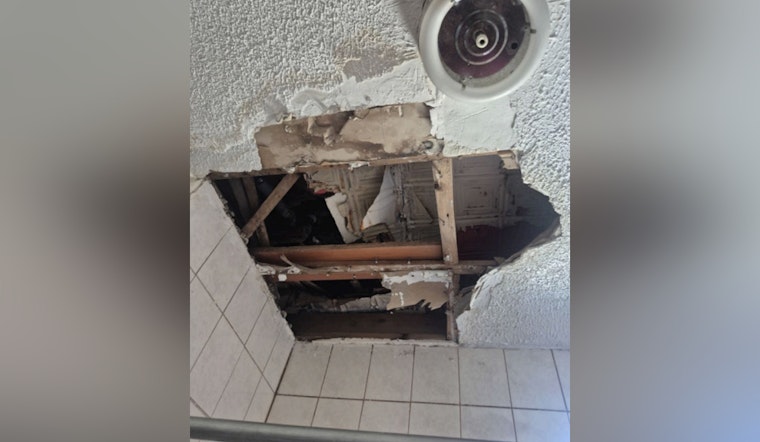
HPD has folded the Far Rockaway stipulation into a much broader petition that accuses the Inwood owners of systemic neglect. The filing lists hundreds of open housing code violations and describes collapsing ceilings, fire hazards and peeling lead paint. The agency’s move landed just days before a deadly fire at another JanJan-owned building next door in Inwood, a one-two punch that has sharply increased scrutiny of the owners’ portfolio, as covered by outlets such as NY1.
Legal angle
In court, HPD is seeking injunctive relief and civil penalties under city and state housing laws. The agency’s own rules treat coercive buyout offers alongside threats, utility shutoffs and deliberate neglect of repairs as potential evidence of harassment. Tenants who believe they are being pushed out can report coercive conduct under the tenant harassment procedures outlined by HPD.
The $100 payment may be small, but symbolically it looms large. HPD is using it to suggest a pattern, and tenants’ advocates and judges will now have to decide how far enforcement can stretch when a handful of dollars is cited alongside hundreds of housing code violations. This case, and the paperwork behind it, is likely to surface again in future fights over where a legal buyout ends and unlawful harassment begins.



