

























































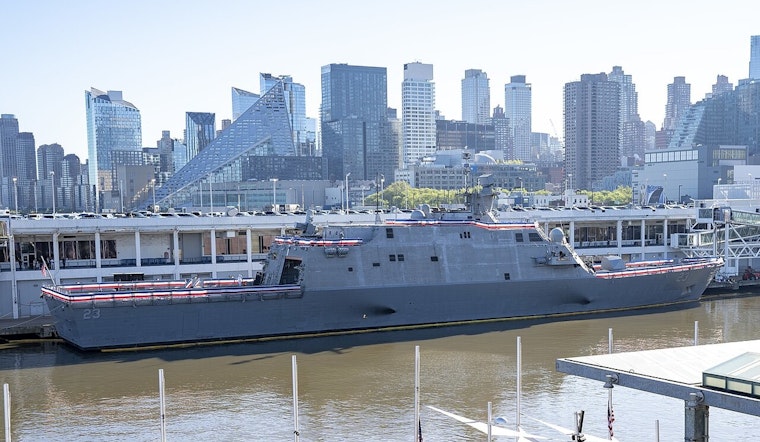
Under gray skies and a lot of mixed emotions on the pier, the USS Cooperstown pulled away from Naval Station Mayport on Monday morning, the latest Jacksonville-based warship to head out in a season of rising Middle East tensions. The Freedom-class littoral combat ship slid past waving families and friends who still do not know exactly where it is going or how long it will be gone.
According to News4JAX, the Cooperstown departed Mayport on Monday, with the Navy declining to publicly confirm the ship's destination or deployment length. It is one more movement in what has already been a busy stretch at Mayport, where ships have been cycling through exercises and overseas assignments at a brisk clip.
Earlier this year, the Navy sent a major group forward when the George H. W. Bush Carrier Strike Group left port at the end of March, with Arleigh Burke-class destroyers, including Mayport-based USS Mason and USS Donald Cook, listed among its escorts, the U.S. Navy said. Officials framed that deployment as part of a routine operating cycle that can be redirected quickly if a crisis flares.
One of those Mayport destroyers ended up in the headlines in early May, when U.S. defense officials said it and another ship transited the Strait of Hormuz while facing what was described as a "sustained barrage" of missiles, drones and small boats. None of the weapons hit either vessel, according to officials. CBS News reported on the incident and on U.S. Central Command's account of the encounter.
What Cooperstown Brings
The Cooperstown is a Freedom-class littoral combat ship, purpose built for speed and agility close to shore, and designed so crews can swap out mission packages relatively quickly. In recent multinational drills, it has also doubled as a kind of floating tech lab for unmanned systems. USNI News reported that Cooperstown served as a robotics and autonomous systems hub during the UNITAS exercise, operating several unmanned aircraft and surface craft from its decks.
That flexibility matters when a ship heads into a region where the threat list runs from drones and missiles to small fast boats. "They go to general quarters and they have to be prepared for every threat," retired Navy commander Richard Kolko told News4JAX, describing the mindset crews carry with them as they leave home port.
Local Reaction
At Mayport these days, departures are more hushed than celebratory, with families doing their best to squeeze normal goodbyes into a backdrop of global tension. Relatives often describe the same cocktail of pride and worry, especially when ships head out without a public itinerary.
Those nerves were on display when the Mason sailed in March. Local reporters spoke with families who said the lack of a publicly announced destination and the wider regional conflict left them uneasy. Action News Jax aired interviews from that send-off, capturing parents, spouses and kids trying to stay upbeat while acknowledging they had more questions than answers.
Why It Matters
The Cooperstown's departure is a reminder that for Jacksonville and Mayport, world events are never as distant as they look on a map. Ships that spend months training off the coast can be folded into global operations in short order when tensions spike, and that tempo ripples through households, school calendars and the local waterfront economy.
Analysts and officials have described the recent flurry of ship movements as part of a broader effort to shield commercial shipping and discourage further attacks in and around key waterways. At the same time, the Navy has been leaning harder into mixed manned and unmanned operations, a shift that ships like Cooperstown are helping to test in real-world conditions. USNI News has chronicled that evolution toward hybrid tasking in a series of reports on multinational exercises.





