

























































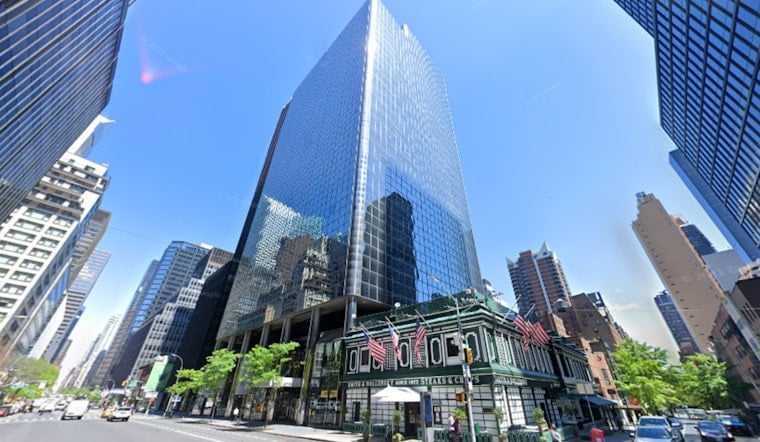
A South Korean investor is accusing Manhattan developer Gary Barnett of quietly pulling a nine-figure switcheroo on immigrant investors who thought they were funding a single luxury tower and a path to a green card, not a pair of struggling Midtown hotels.
In a new federal complaint, investor Jung Shin claims Barnett and Extell Development orchestrated a roughly $100 million “bait and switch,” rerouting EB‑5 money that was supposed to support one project into other deals that were in trouble. The lawsuit seeks class‑action status for around 199 investors and asks for about $560,000 in damages for each, the amount Shin says she put in. The filing also says Extell floated a $150,000 buyout offer last fall that came with a strict non‑disparagement clause, and that after paying off a key mortgage, millions allegedly earmarked for the EB‑5 group went to other creditors instead. The suit names Barnett, several Extell entities and Bether Capital, the migration adviser that helped coordinate many of the investors’ EB‑5 petitions.
What the suit alleges
According to The Real Deal, Shin invested $560,000 in Extell’s 555 Tenth Avenue project in 2016. She alleges that in 2022 Barnett moved to subordinate the EB‑5 investors’ loans so that later equity investors would be paid first, effectively turning the immigrant investors’ position into low‑interest debt with less upside and more risk.
Shin is asking the court to certify a class covering about 199 investors, many of them from South Korea and Vietnam, and is seeking roughly $560,000 per person. Extell did not immediately respond to requests for comment when the story first surfaced.
Court records show the case was filed on Jan. 30, 2026, in the U.S. District Court for the District of Delaware as case number 1:2026cv00111, according to the U.S. District Court docket. A First Amended Complaint landed in late February. The docket pegs the nature of the suit as "Other Fraud" and notes that summonses have been returned executed for Extell entities and related defendants, with a jury demand on the table. Attorneys for Shin have filed pro hac vice motions for lead counsel and served the amended complaint on Barnett in mid March.
Where Extell is accused of sending investor cash
Shin says Extell did not return EB‑5 capital once investors had secured conditional residency, as they say they expected. Instead, according to the complaint, Extell redeployed that money into two Midtown hotel ventures at 1710 Broadway and 201 West 54th Street as those deals ran into trouble.
Records show Extell later sold the 1710 Broadway site to Riu Hotels for about $173 million in 2023, and Riu is now building a large hotel there, per New York YIMBY. The complaint contends that Barnett paid off the 1710 Broadway mortgage, then distributed roughly $37 million to other investors, leaving the EB‑5 pool with nothing while around $13 million from the capital stack remains unaccounted for.
Why EB‑5 still matters to New York projects
The EB‑5 immigrant investor program has long been a go to source of relatively cheap capital for big New York developments, even as it has drawn years of scrutiny and calls for reform. Congress passed the EB‑5 Reform and Integrity Act in 2022, and USCIS has issued policy guidance to implement those changes. For the agency’s guidance, see USCIS.
This case highlights how long running EB‑5 structures can leave immigrant investors effectively locked in while developers recapitalize, shuffle assets or sell off properties. When the financial engineering gets complex, the people who put up the cash for a green card can find themselves exposed to the broader capital maneuvers of a project they barely recognize.
Legal implications
If the court allows class treatment, dozens or even hundreds of EB‑5 investors could try to recover through fraud and contract claims. The complaint invokes diversity jurisdiction and asks for a jury, according to the court docket. In practice, untangling remedies in EB‑5 disputes is rarely straightforward, since the money often sits inside layered capital stacks and cross border structures that can make getting paid difficult even when plaintiffs win on paper.
The docket shows that initial answers were due in mid March and that the case is still at an early procedural stage, so the next moves are likely to be motions to dismiss or fights over jurisdiction, per the U.S. District Court docket. For now, investors and lawyers are watching to see how Barnett responds and whether the judge lets the case proceed as a class action. Either way, Shin’s filing is putting fresh heat on how EB‑5 money has been handled in New York development and could spur closer scrutiny of other projects that tapped immigrant cash.


