

























































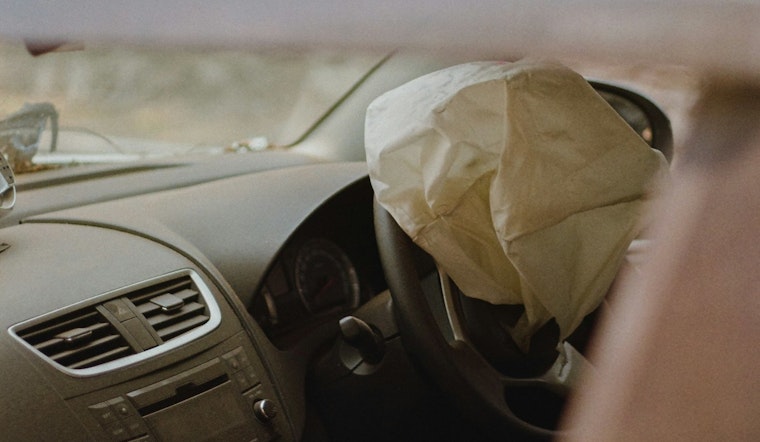
Los Angeles Honda and Acura owners just got another reason to double check their mail. American Honda Motor Co. has issued a safety recall for nearly 99,000 vehicles after federal filings flagged a front‑passenger seat weight sensor that can crack and short‑circuit, potentially causing airbags to deploy when they should be suppressed. The action covers sedans, SUVs, minivans and pickups across a wide range of model years, and dealers will replace affected seat sensors free of charge. Owners should watch for mailed notices and check their vehicle identification number (VIN) once federal lookup tools are updated.
As reported by Reuters, the U.S. National Highway Traffic Safety Administration lists the campaign as 26V332000 and says 98,892 U.S. vehicles are included. NHTSA’s summary says the front‑passenger seat weight sensor may crack and short, which can cause the frontal and knee airbags to deploy during a crash even when a child or particularly small adult is in the front passenger seat.
Models affected
The recall stretches across more than two dozen model‑year combinations. Among those listed are 2018–21 and 2023 Acura TLX; 2019–24 Acura RDX; 2017–20 and 2022–26 Acura MDX; 2017–21, 2023 and 2025 Honda Ridgeline; 2017–22 Honda Pilot; 2019–21 Honda Passport; 2018–26 Honda Odyssey; 2019–22 Honda Insight; 2019–21 Honda HR‑V; 2018–20 Honda Fit; 2020–22 Honda CR‑V Hybrid; and many Civic and Accord model years. Drivers can see the full model‑by‑model breakdown at Cars.com.
Owner notices and repairs
Honda will mail owner notification letters no later than July 6, 2026, and VIN‑based lookups on NHTSA’s site will become searchable beginning May 29, according to the recall paperwork. Dealers will replace the seat weight sensor with a verified part at no cost to owners; the recall notice lays out how and when to schedule the remedy, per coverage of the NHTSA filing. (See Autoblog for additional reporting on timelines and the dealer remedy.)
Why this is happening
Recall filings and reporting indicate the root cause is a change in the printed‑circuit base material used in the seat weight sensor, which can allow a capacitor to crack and create an internal short that tricks the occupant‑detection system. Automotive reporting that reviewed the NHTSA documents says the material change followed a natural‑disaster disruption at a tier‑2 supplier; the prescribed fix is to replace affected sensors with parts built to the original specifications. Autoevolution summarizes the supplier details from the filing.
How to check and schedule the free fix
Owners can confirm whether their VIN is included by using the NHTSA recall lookup once the campaign is live, or by asking an authorized Honda/Acura dealer to run a VIN status inquiry. Honda’s recall hotline is 1‑888‑234‑2138 and NHTSA’s vehicle‑safety hotline is 1‑888‑327‑4236; those contact details and scheduling guidance are included in the recall notices and dealer instructions (see Cars.com).
Context: a busy year for Honda recalls
This campaign is one of several airbag‑related actions for Honda in 2026. Hoodline covered a separate April recall involving roughly 440,830 Odyssey minivans tied to side‑airbag programming in an article headlined pothole jolt can blow Odyssey airbags, and the automaker’s February 2024 seat‑sensor campaign affected more than 750,000 vehicles, according to the AP. Taken together, the company has now moved to address seat‑sensor issues across a large swath of its U.S. fleet.
Legal and safety notes
Federal safety rules require manufacturers to provide a free remedy for recall defects on covered vehicles, and NHTSA urges owners to get recalled repairs completed promptly to reduce the risk of injury. For the official record, VIN lookups and hotline information, see NHTSA.





