

























































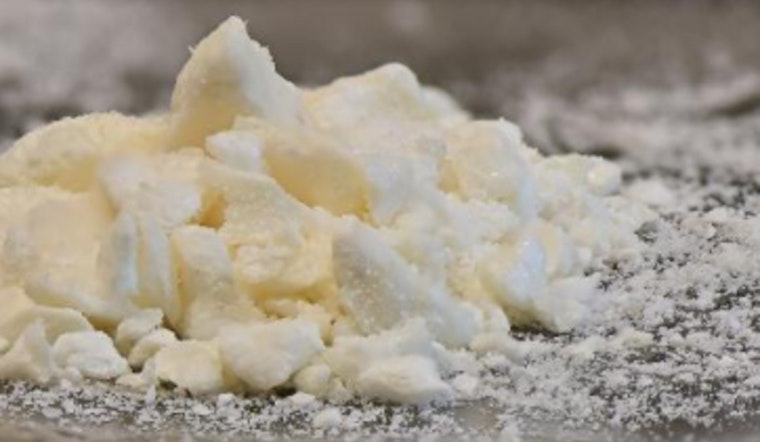
Federal agents say a crude oil tanker ordered to anchor in the Port of Los Angeles and Long Beach this week was carrying a surprise payload. Crew members discovered multiple packages hidden in the vessel’s garbage room, alerted the captain, and watched as he secured the suspected contraband. When authorities later boarded the ship, they removed about 227 kilograms of what they believed was cocaine, and a Filipino crewmember ended the voyage in handcuffs.
According to a press release by the U.S. Attorney’s Office for the Central District of California, the Greek-owned, Liberian-flagged tanker Aquatravesia was directed to anchor in the combined port of Los Angeles and Long Beach, where agents boarded on Thursday, May 21. Investigators recovered approximately 227 kilograms of cocaine, and court papers say the crewmember who possessed the drugs received them in Ecuador and intended to hand them off to another party as the ship passed Mexico. Homeland Security Investigations and the U.S. Coast Guard are leading the probe.
The Maritime Executive reports the Aquatravesia departed Ecuador earlier this month, and that crewmembers told investigators the plan called for small, armed boats to rendezvous with the tanker about 80 nautical miles offshore to pick up the packages. The outlet also reports that a Coast Guard narcotics-detection canine helped pinpoint the concealed cargo during the boarding operation. Officials have not publicly named a specific cartel tied to the shipment.
Planned Mid-Ocean Handoff And Takeover Risk
According to the U.S. Attorney’s Office for the Central District of California, the captain was told cartel operatives would be waiting roughly 80 nautical miles off the Mexican coast on the evening of May 14 and the early morning of May 15 to take possession of the packages. The captain told investigators he believed radio calls he received were attempts to hail the Aquatravesia, and that cartel crews might try to board or retake the contraband if the transfer did not go as planned.
Why Tankers Are Attractive Targets
The U.S. Coast Guard has stepped up counter-drug operations in the Eastern Pacific, where most interdictions of U.S.-bound drugs occur at sea, a recent Coast Guard summary notes. Seapower Magazine documents large offloads this year under efforts like Operation Pacific Viper, and reporting by The Maritime Executive places the Aquatravesia seizure at roughly $6.4 million in street value. Smugglers often conceal kilogram-scale shipments inside service spaces on commercial vessels, which makes routine inspections critical to stopping mid-ocean handoffs.
Charges And Next Court Steps
Federal prosecutors charged 43-year-old Ceasar Tubay Gelacio Jr. with importation of a controlled substance. He was arrested when the tanker anchored and was scheduled to make an initial appearance in federal court in downtown Los Angeles, according to the Los Angeles Daily News. A conviction on importation carries a statutory range of 10 years to life in prison under federal law, prosecutors say, and the case will be prosecuted by the U.S. Attorney’s Office in Los Angeles.
The investigation remains active, and officials say they are working to trace the shipment’s origin and any shore-side contacts connected to the operation. Authorities recovered the contraband without any public report of injuries or damage to the ship, and port operations were not significantly disrupted as the boarding was carried out at an assigned anchorage. Homeland Security Investigations and the Coast Guard continue to investigate and have asked anyone with information to contact federal investigators.





