

























































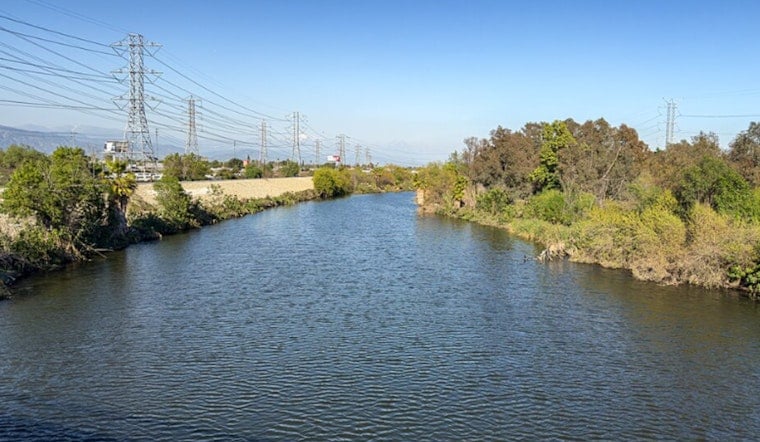
Los Angeles is gearing up to clean its rivers before the world shows up for the 2028 Olympics, rolling out plans to drop large, solar-powered "trash interceptors" into the Los Angeles and San Gabriel rivers. The goal is to keep hundreds of tons of plastic and other debris from flushing into the Pacific in the years leading up to the LA28 Games. The machines are modeled on Interceptor 007, the Ocean Cleanup system already at work on Ballona Creek, and are the centerpiece of a public-private push to protect beaches and marine life. Planners say they will also have to design around a small community of green sea turtles that lives near the mouth of the San Gabriel River.
Officials line up behind river interceptors
At a briefing at the Aquarium of the Pacific, county and city leaders announced a public-private partnership to build interceptors in both rivers, as reported by the Los Angeles Times. According to the Los Angeles Times, feasibility studies for the Los Angeles and San Gabriel projects are already complete, and the installations are scheduled to be in place before the LA28 Games. Seal Beach councilmember Joe Kalmick, who helped convene the San Gabriel River working group, said the plan "almost has a dream-like quality to it" during the announcement, the paper reported.
Scale, plastic load, and partners
The Ocean Cleanup said its "Smart Rivers Survey" estimates that rivers in Los Angeles may send roughly 410 to 628 tons of plastic into the Pacific each year. The planned interceptors on the Los Angeles and San Gabriel rivers will join Ballona Creek in the nonprofit's 30 Cities Program. In a press release, the group confirmed it has signed agreements with county and city leaders and listed corporate backers that include Kia and Primo Brands. The Ocean Cleanup said the expanded effort is timed specifically to cut down river-borne plastic before the LA28 Games.
Ballona 007 as the local test run
Ballona Creek's Interceptor 007, deployed in October 2022, has served as the region's test case. Los Angeles County updates say the device has already stopped more than 125 tons of trash from reaching Santa Monica Bay during its pilot phase. County explanations describe a system that uses floating booms to guide debris, a conveyor that lifts the material from the water, and onboard bins that are emptied after storms. After the pilot period, the Board of Supervisors approved continued operation, and county posts have tracked routine offloads and periodic repairs following heavy weather.
What it costs and who pays
Public-works officials told reporters that each river interceptor is expected to cost about $5 million to $8 million up front, with annual operating costs in the range of $3 million to $4 million. They said Los Angeles County will cover operations, according to the Los Angeles Times. That combination of hefty capital costs and recurring bills is why feasibility studies and private partners were treated as essential pieces of the rollout. Planners say river-specific engineering and permitting will determine the final designs and budgets.
Sea turtles complicate the map
The mouth of the San Gabriel River is home to a small group of green sea turtles, and the Aquarium of the Pacific has documented rescues and rehabilitation after some animals were found tangled in fishing line and other debris. Aquarium staff and local coverage have focused on several high-profile rescues, underscoring that cleanup systems will have to be vetted carefully so they do not create new hazards for wildlife. Conservationists and animal-care staff say operators will need to coordinate closely with marine biologists as they choose locations and move through permit reviews.
Permits, timeline, and what to watch
Officials say there are still hurdles ahead. Permits, river-by-river hydraulic studies, and coordination among multiple agencies will all take time, even though feasibility work is already underway. In a media release tied to the announcement, Kia noted that partners are targeting completion before the LA28 Olympic Games, which sets an aggressive schedule. That timeline will require agencies to move quickly on engineering, secure the necessary permits, and lock in a long-term operations plan.
For now, Interceptor 007 is the proof of concept and a reminder that technology by itself will not solve the upstream sources of river trash. What comes next will be part engineering project, part political fight, and part wildlife science experiment, as residents and beachgoers watch to see whether these rivers really stop sending plastic into the Pacific before the world arrives for LA28.





