

























































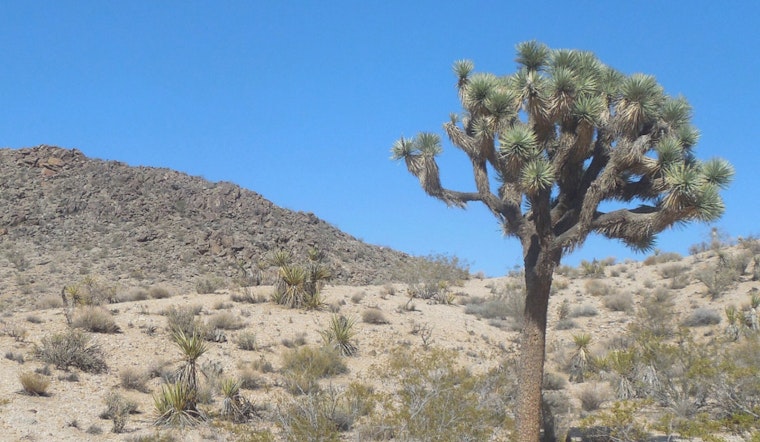
Out in the scorched flats of the Mojave, scientists are betting that the key to saving an iconic desert tree is hiding in plain sight, clinging to grains of dust. After years of record heat, smoke and human pressure, replanting Joshua trees has mostly flopped, and researchers think the answer may be buried in the microscopic partnerships underfoot.
Burn scars and failed plantings
Two recent megafires, the 2020 Dome Fire and the 2023 York Fire, along with development and drought, have stripped huge stretches of Joshua tree habitat. Environmental group WildEarth Guardians reports that those and other blazes together killed roughly 2.3 million Joshua trees in Mojave National Preserve. The National Park Service estimates the Dome Fire alone burned about 43,000 acres and killed around 1.3 million trees.
With that kind of loss, land managers have launched an aggressive replanting campaign, but it has mostly produced graveyards of seedlings instead of thriving forests. The trees that do survive are the rare success stories in a landscape that used to be dominated by them.
Scientists are digging in the dirt
To figure out what separates the survivors from the casualties, a team led by the Society for the Protection of Underground Networks and researchers from USC has been scooping up soil near both living and dead seedlings. They are sequencing the fungi in those samples and mapping which species show up where, according to the Los Angeles Times.
The Park Service told the paper it planted 3,622 seedlings between 2021 and 2024 to replace trees lost in the Dome Fire, and only about 23 percent seem to have taken hold. That is a rough batting average for a tree that is supposed to anchor the landscape.
"There's a whole world inside this little bag, but it's invisible," Anne Polyakov, a field scientist with the underground networks group, told the Los Angeles Times, as she collected soil that might contain those crucial fungal partners.
What the science says
Peer-reviewed research suggests that mycorrhizal fungi can make or break a Joshua tree seedling, depending on which fungal partners it hooks up with. A 2021 study in PLOS ONE found that fungal communities shift with elevation, and that inocula from different sites produced a full spectrum of outcomes for young Joshua trees, ranging from parasitic to mutualistic.
Studies of postfire soils also find that microbial communities can be surprisingly resilient, hinting that the right fungal partners might still be scattered across the landscape. The challenge is less about inventing something new and more about figuring out where those helpers still live and how to connect them with vulnerable seedlings.
Managers weigh inoculation trials
Because of those findings, the Park Service told the Los Angeles Times it is open to small trials that add native soil or fungal inocula to nursery mixes before seedlings are planted in the field. Researchers say the fix could be as simple as stirring a scoop of native dirt into the potting soil to bring in local microbes.
They also caution that any treatment has to be tested carefully and monitored, so managers do not pour money into a flashy but unproven solution. For now, the plan is to sequence the collected samples and compare the underground communities around living seedlings to those around dead ones, then see which fungal species line up with survival.
Policy and the big picture
Even if nursery techniques improve, climate forecasts suggest Joshua trees are still in serious trouble. Under a high-emissions scenario, models project that up to 80 percent of the species' current habitat could be climatically unsuitable by 2100, according to a USGS assessment.
In response, conservation groups have pushed for federal protections and have gone to court to force the U.S. Fish and Wildlife Service to fully account for climate-driven habitat loss, WildEarth Guardians argues. Those legal fights, paired with the latest science, are likely to influence where restoration money flows and whether managers focus on protecting climate refugia instead of trying large-scale assisted migration projects.
How to watch and help
Upcoming sequencing results and small, controlled inoculation trials will show whether fungi-based strategies can actually move the needle on survival at scale. In the meantime, the Park Service is still organizing volunteer plantings on Cima Dome as part of its restoration work.
For details on future volunteer events and how to sign up, check the Cima Dome restoration information on the National Park Service website.





