

























































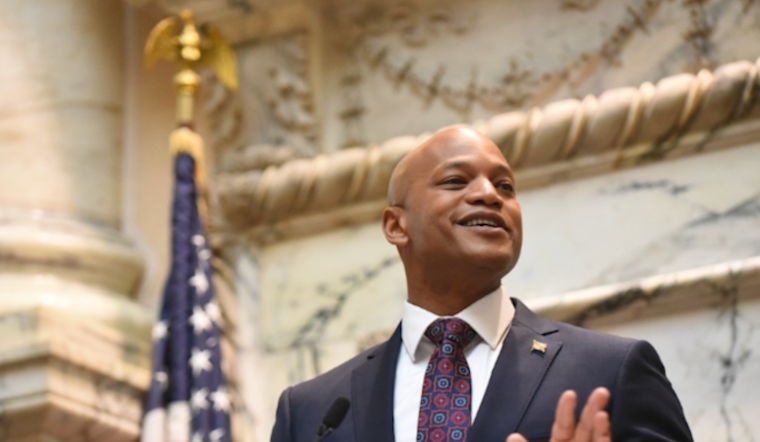
Gov. Wes Moore is putting state money where his ENOUGH anti‑poverty rhetoric is, rolling out a direct cash pilot for pregnant Marylanders in three neighborhoods that know economic stress all too well.
Today, Moore announced that Maryland is partnering with The Bridge Project to send cash assistance to expectant mothers in Cherry Hill, Park Heights, and Hagerstown. The pilot will open a limited application with roughly 150 spots and will pair the payments with referrals to food assistance, doula services, and postpartum care. Moore cast the move as an effort to stabilize households during pregnancy and a child’s early years.
What the pilot will cover
As reported by WMAR2-News, the state is teaming with The Bridge Project to provide direct cash support to expectant mothers in Cherry Hill, Park Heights, and Hagerstown. WMAR reports that roughly 150 mothers can apply to receive about $20,000 a year over three years to help cover rent, groceries, childcare, and baby supplies. “Make sure that child is coming up in a strong supportive home,” Gov. Wes Moore said at the announcement, according to the station.
The Bridge Project's application page confirms that Maryland families are now eligible and lists the qualifying ZIP codes and basic requirements, including Medicaid eligibility and a cutoff of 27 weeks pregnant or less: The Bridge Project.
How the payments compare
The Bridge Project's other pilots show the cash is structured as multi‑year stipends rather than one‑time six‑figure windfalls. Milwaukee's program, for example, distributes roughly $20,250 per mother across three years, according to a Zilber Family Foundation release.
Advocates and funders argue that predictable, unconditional cash helps families smooth out rent and food costs and makes it easier to engage with other services. Maryland's rollout will be closely watched as officials and researchers track how many families sign up and what short‑term outcomes look like.
Why the state is trying this
Moore described the pilot as part of the ENOUGH Initiative's place‑based push to reduce childhood poverty and invest in community‑led solutions, according to the governor's office.
The timing lands amid stubborn maternal‑health gaps. The CDC reports that the national maternal mortality rate fell to 18.6 deaths per 100,000 live births in 2023, yet Black mothers still face much higher rates than other groups. Supporters of the Maryland pilot say combining cash with programs like SNAP, WIC, and doula care can address some of the social and economic factors that drive poorer birth outcomes.
Who can apply and how to sign up
The Bridge Project's Maryland application spells out who qualifies. Applicants must live in ZIP codes 21225 or 21230 (Cherry Hill), 21215 (Park Heights), or 21740 (Hagerstown), be at least 18, be 27 weeks pregnant or less, and be eligible for Medicaid. The program notes that it does not require an SSN or ITIN.
The application is open now on The Bridge Project site. If demand exceeds the roughly 150 available spots, the program will use a selection process. State officials and community groups say the pilot is intentionally small so Maryland can study whether targeted cash, paired with services, improves stability for families in high‑poverty neighborhoods.





