

























































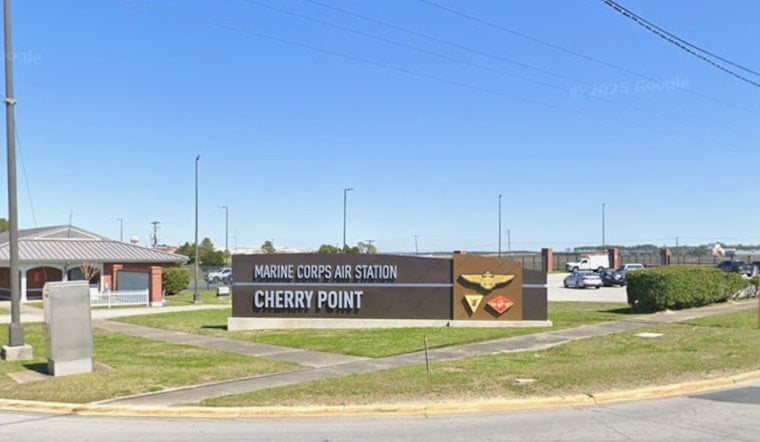
The Navy has dropped a major proposal on eastern North Carolina: a draft environmental assessment that would bring its new E-130J Phoenix II aircraft to Marine Corps Air Station Cherry Point, complete with fresh construction and about 1,000 incoming service members and family members over the next decade.
What the draft EA proposes
The Draft EA looks at a plan to station as many as 11 Phoenix II aircraft at Cherry Point, split between an operational squadron and a training squadron. The proposal includes new flightline campus buildings, unaccompanied housing, a weapons school and a Center for Naval Aviation Technical Training, along with the flight operations and aircrew training needed to keep the mission running. The Draft EA is available on the Navy.
How to read the document and weigh in
Residents can pull up a digital copy of the Draft EA through the Navy’s NEPA site and send comments either through the project website or by mail to Navy officials in Norfolk, Virginia. Printed copies are also on hand at public libraries in New Bern, Havelock, Newport and Morehead City. Comments must be submitted by May 31, 2026, according to WCTI.
Timeline and what it means for the base
The Navy says construction would not start before fiscal year 2028, with aircraft and personnel arriving in phases between FY 2029 and FY 2039 as new facilities come online. Under the proposal, roughly 1,000 personnel plus family members would be added to the area, which would push up demand for housing and base services. Those timelines and personnel estimates are laid out in the Draft EA on the Navy.
Airspace and training context
The basing push comes as the region’s airspace is already being reshaped. In April the FAA finalized new restricted areas near Cherry Point (R-5307A/B/C) to contain hazardous training activities and better manage military flight operations. The Federal Register notice spells out the restricted-area boundaries, altitude limits and controlling agencies and signals that training tempo in the area is expected to rise. Full details are in the FAA’s April rule on the Federal Register.
What comes next
Local officials, residents and planners will be watching how the Navy addresses noise, traffic and housing impacts as the review moves forward. Navy officials told WCTI that the plan would strengthen a key mission area and help meet national defense requirements. The public comment period closes on May 31, after which the Navy will review feedback and decide whether to finalize the EA or move into a more extensive round of environmental review.





