

























































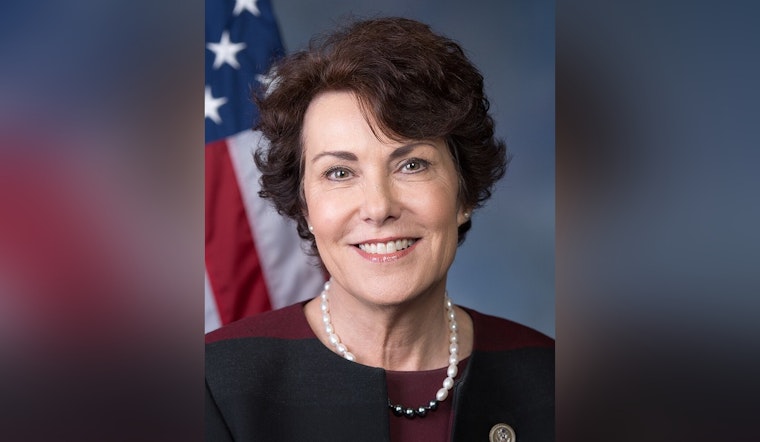
For years, veterans who worked in the desert hush of the Nevada Test and Training Range have said the government knew where they served, knew what they were exposed to, and still kept them locked out of care. Now, Sen. Jacky Rosen and Rep. Susie Lee are rolling out a new legislative push that could finally crack open that door to long-denied medical treatment and compensation.
Their proposal targets a problem that has lingered in the shadows: how the military and the Department of Veterans Affairs handle service at classified test sites. Survivors and advocates say secrecy around those locations has choked off claims for decades, leaving veterans with cancers, tumors and other serious illnesses fighting not just their diagnoses, but their own records.
As reported by the Las Vegas Review-Journal, Rosen and Lee introduced a pair of companion bills designed to officially recognize illnesses tied to work on the range and to make it much easier for affected service members and their families to get VA benefits and financial help. Local coverage by FOX5 noted that the Senate measure was updated and renamed the "Sergeant Dave Crete Forgotten Veterans Act" and would require the Defense Department to formally flag contaminated sections of the range and disclose where veterans actually served so the VA can evaluate their claims.
What the Bills Would Do
On the House side, the companion legislation, called the PROTECT Act, would create a presumption that military personnel who served in designated locations inside the Nevada Test and Training Range between 1972 and 2005 were exposed to radiation or other toxic substances. That legal presumption is intended to ease the burden of proof in VA claims and expand access to health care, according to Rep. Mark Amodei's office.
The Senate’s FORGOTTEN Veterans Act would put new obligations on the Pentagon. It would require the department to document contamination at specific locations, identify the servicemembers who worked there, and create a process that allows veterans to provide proof of their assignments when official records are incomplete, per the bill text on Congress.gov. Supporters say the twin measures go after the two biggest obstacles that have stalled claims: classified duty locations and personnel files that either omit or obscure where veterans were actually posted.
Pentagon Response
Defense Secretary Pete Hegseth told lawmakers he would review the proposals and report back to Rep. Susie Lee, while the chairman of the Joint Chiefs of Staff agreed to push the individual services to help track down potentially exposed personnel, according to lawmakers’ accounts of the exchange.
The back-and-forth featured a commitment from Gen. Dan Caine to "identify, assist and recognize" servicemembers who served at sites that other federal agencies consider contaminated, a pledge detailed in reporting by Navy Times. Lawmakers say that if the Defense Department follows through and formally records exposure information in personnel files, it would remove a major roadblock for veterans seeking eligibility for PACT Act and related VA benefits, according to Sen. Rosen's office.
Advocates Pressing the Case
Behind the legislation is a small but persistent network of grassroots groups and veterans’ advocates that has been pressing the issue for years. Sergeant David Crete, who founded the advocacy organization The Invisible Enemy, has testified that classified assignments, sparse documentation and nondisclosure rules have combined to keep veterans from receiving full VA benefits. His group says it has identified hundreds of veterans who may have been affected, according to its website and recent coverage by The Invisible Enemy.
Advocates and veterans gathered at a roundtable this month at the National Atomic Testing Museum, where former servicemembers described years spent fighting the government for basic recognition of their service-connected illnesses. That session and veterans’ accounts were documented by Stars and Stripes.
Local History and Next Steps
The Nevada Test and Training Range and the neighboring Nevada National Security Site sit roughly 65 miles northwest of Las Vegas and were the location of more than 900 nuclear tests during the Cold War, a history that underscores the stakes of the current fight, according to NNSS.
Sen. Rosen’s FORGOTTEN Veterans Act cleared the Senate Veterans’ Affairs Committee earlier this spring, and the House companion, backed by Reps. Amodei and Lee, is awaiting further action. Supporters now want the language folded into the next National Defense Authorization Act after an earlier version was blocked last year, according to Sen. Rosen's office.
Legal Implications
If Congress ultimately adopts the bills, they would amend Title 38 to establish statutory presumptions of exposure and require the Defense Department to share assignment and exposure documentation with VA adjudicators. That shift would move much of the burden of proof away from individual veterans and would likely speed up decisions on many claims, according to the text of the House bill on Congress.gov.
Carrying that out would require coordination among the Defense Department, the Department of Veterans Affairs and the Department of Energy. Lawmakers have left themselves options: the changes could be added into the broader National Defense Authorization Act or move forward as standalone amendments, per Congress.gov.
For the veterans at the center of the push, the legislation is less about legislative fine print and more about simple recognition and long-delayed help. Local reporting by the Las Vegas Review-Journal and other local TV outlets has detailed how the proposals would work and what veterans say they need as Congress decides whether to finally act on their claims.



.jpg)