

























































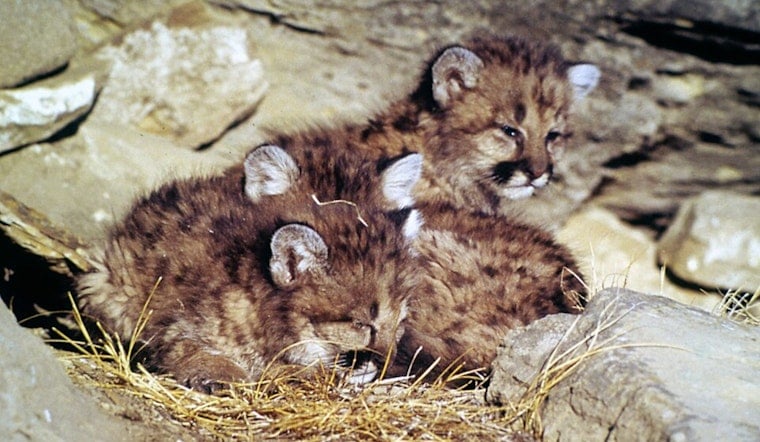
The north woods just got some new, very stealthy neighbors. Trail cameras run by the University of Minnesota’s Voyageurs Wolf Project captured rare, high-quality footage of a female cougar and three kittens feeding on a deer south of Voyageurs National Park. State wildlife officials say the images may be the first confirmed evidence of cougars reproducing in Minnesota in more than a century, a development that could mark the start of a slow return of the species to the northern woods.
State Biologists Make It Official
In a news release, the Minnesota Department of Natural Resources said researchers with the Voyageurs Wolf Project shared several hours of footage showing an adult female and three “large kittens” captured by two cameras placed over a GPS-collared deer, and called it the first evidence of cougar reproduction in the state in more than a century, according to the Minnesota DNR. The agency estimated the kittens to be about 7–9 months old, likely born last fall, and noted the only other confirmed kittens in Minnesota were captive escapees that appeared at a homeowner’s porch in 2001.
Researchers Roll the Footage
The trail cameras recorded the cats on March 25 and early March 26 south of the park, and lead researcher Tom Gable said his team captured around four hours of footage at the kill, including sounds of the kittens “growling and hissing,” as reported by the Star Tribune. Gable called the experience "surreal" and said the team will keep combing memory cards from the hundreds of trail cameras it has deployed across the greater Voyageurs ecosystem, according to the Voyageurs Wolf Project.
What It Might Mean for Minnesota
State biologists say the observation is an important early sign but far from proof that cougars are reestablishing here, warning the kittens face threats from wolves, male cougars and vehicle strikes, according to the Minnesota DNR. The agency also notes cougars can travel more than 40 miles in a day, which helps explain why most detections to date have been lone, transient animals rather than established family groups.
Cougar Comeback Around the Great Lakes
Similar confirmations in neighboring states point to a broader pattern: the Michigan Department of Natural Resources verified photos of a mother and two cubs in the Upper Peninsula in December 2025, marking the first verified reproduction there in more than a century, according to the Michigan DNR. Wildlife scientists say those cases, taken together, suggest cougars are slowly recolonizing parts of the Great Lakes region, though whether populations will establish long-term remains uncertain.
What Locals Need to Know
Cougars are protected in Minnesota with no open harvest season, and public-safety officers may use lethal force only if an animal poses an immediate threat, according to the Star Tribune. Officials stress that cougars typically avoid humans; the DNR posts guidance on how to respond if you encounter one and asks residents to report verified photos or trail-cam images to help track the animals.
What’s Next in the North Woods
The Voyageurs Wolf Project will continue scanning remote camera cards and sharing evidence with state biologists as it monitors carnivores across the greater Voyageurs ecosystem, per the Voyageurs Wolf Project. Funding for the research comes in part from the Minnesota Environment and Natural Resources Trust Fund, which supports multi-year monitoring in the region, according to the project’s funding page on Legacy Minnesota.





