

























































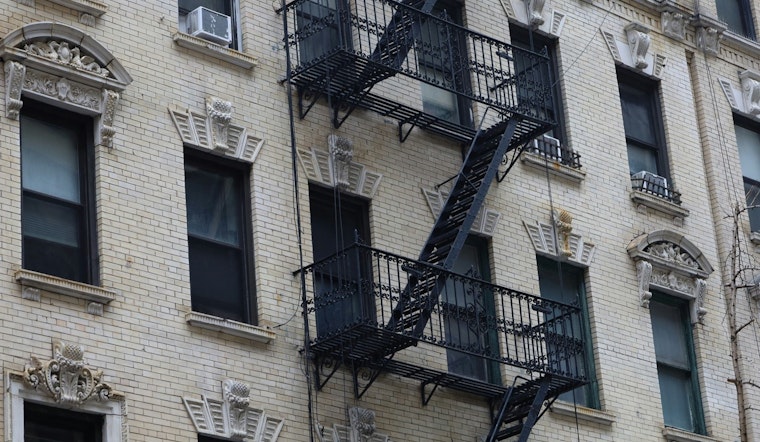
On those swampy New York afternoons when the lights flicker and the grid starts getting nervous, a new gadget is giving renters a way to keep their window ACs humming without piling on the stress.
New York City is piloting small plug-in batteries that let standard window air conditioners run on stored power during the hottest hours. The devices are pitched as a renter-friendly way to keep apartments cool, trim peak-time bills and ease pressure on the grid, lowering the risk of blackouts when everyone cranks the thermostat down at once.
How the power banks work
The units are about the size of a microwave and are designed to power a single 120-volt window AC for several hours when demand spikes, typically in an early- or late-afternoon window, according to AP. They charge up during off-peak hours, plug into the AC, then into the wall, and are controlled by an app that automates when they charge and discharge.
Unlike rooftop solar-plus-storage systems, these batteries do not send any electricity back to the grid. Instead, they simply lower a household’s draw at crunch time, which can help keep the whole system steadier when demand surges.
Who’s running the pilot and who it helps
The pilot is run by Every Electric, a startup co-founded by Andrew Wang and Richard May, in partnership with Con Edison, and was designed specifically for renters who cannot install solar panels on their roofs, according to Activate. Every Electric says the hardware is plug-and-play and that set-up is handled remotely, so tenants are not stuck wrangling permits or construction work just to keep cool.
Scale and payouts
The company says the pilot will expand to more than 1,000 homes this summer and that its flexible capacity is expected to grow from about 200 kilowatts last year to roughly 2 megawatts, according to AP. RMI manager Kevin Brehm told the same outlet, “There’s a question of emissions, and then there’s also a really important question around affordability,” underscoring why utilities and companies are testing these small, distributed batteries instead of relying only on big, centralized fixes.
Safety, payouts and the renter pitch
An earlier explainer found that Every Electric’s first pilot placed power banks in about 65 households and that participants can earn up to roughly $150 per connected device each year, according to Skylight. The same report notes that the company describes its batteries as UL-certified for indoor use.
According to Skylight, Every Electric says it passes revenue from Con Edison’s demand-response payments back to renters, and some participants described the experience as largely “set it and forget it” once the hardware was installed.
What to watch this summer
The real test is whether the idea can scale. A small cluster of batteries can shave peak demand in a few neighborhoods, but it will take much broader adoption before it meaningfully offsets the need for peaker plants.
Key signals to watch: how quickly the program rolls out, whether building managers embrace battery-equipped tenants, and how safety performance holds up. If those pieces fall into place, this kind of plug-in battery could become one of the cheaper ways to keep New Yorkers cool without building new power plants just to survive the summer heat.





