

























































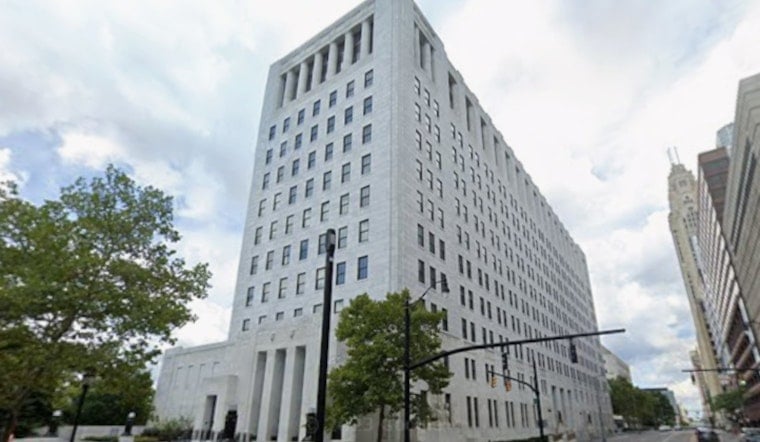
Ohio's highest court is about to decide whether Gov. Mike DeWine has to go back to Washington and ask for roughly $900 million in pandemic unemployment money that the state cut off early in 2021. The outcome could determine whether hundreds of thousands of Ohioans are owed retroactive checks for a 10‑week stretch that, according to the plaintiffs, the governor had no legal authority to end.
The case, State ex rel. Candy Bowling et al. v. Governor Mike DeWine, Case No. 2025‑1055, is set for oral argument Wednesday at 9 a.m., with a live stream planned. The session appears on the court's oral‑argument calendar, which notes that the justices will also hear several other cases that week, according to the Supreme Court of Ohio.
Background: How The Fight Began
On May 24, 2021, DeWine told the U.S. Department of Labor that Ohio would pull out of the Federal Pandemic Unemployment Compensation (FPUC) program, with the cutoff date set for June 26, 2021, even though the federal program itself ran until Sept. 6, 2021. Bowling and other jobless workers sued, and a Franklin County judge later ordered the state to take steps to restore Ohio's participation and to seek unpaid benefits. The Tenth District Court of Appeals summarized that ruling and noted that the trial court concluded it was still possible to undo the termination and pursue the money retroactively, according to the Tenth District Court of Appeals.
The Legal Questions The Justices Will Answer
Now the justices must tackle both procedural and substantive issues. One question is whether the Supreme Court's terse, one‑sentence dismissal of an earlier filing in 2022 made the whole dispute moot. Another is whether a 2023 change to Ohio's cooperation statute gave the governor clear authority to opt out of voluntary federal programs. The attorney general's office contends that the 2022 entry and the 2023 amendment together shut the case down, while the workers argue the new language cannot be applied retroactively to wipe out claims tied to 2021, as outlined by Court News Ohio.
How The Money Could Be Recovered
The record in the case includes a 2021 email from Jim Garner, then an administrator at the U.S. Department of Labor, stating that states could ask the department to rescind a prior termination. If such a request were accepted, the department would cover retroactive benefits along with administrative costs. That correspondence helped convince the trial court that seeking the funds was still realistic and that the potential pot of money might reach about $900 million, according to the Tenth District Court of Appeals.
Politics And Voices
Plaintiffs' lawyer Andrew Engel has argued that the case is about the limits of executive power. "The governor’s office is obviously a politically powerful role. However, that power is not limitless," he said, as quoted in The Columbus Dispatch. The state's counsel plans to argue that the 2023 statutory change and the Supreme Court's earlier entry foreclose any retroactive claims, an argument described in the court's preview from Court News Ohio.
Who Would Benefit If The Court Sides With Workers
Local coverage has estimated that roughly 300,000 Ohioans could be in line for back payments that together total about $900 million, which would average around $3,000 per person for the disputed 10 weeks. That prospect has pushed lawmakers and advocacy groups to call for quick action, including a February 2025 push by House Democrats urging that the funds be released, reported by News 5 Cleveland and in House Democrats Urge Release.
The justices will hear arguments Wednesday and could take weeks or even months to issue a decision. Their ruling will determine whether the state must ask the federal government to unlock the money and whether eligible Ohioans will ultimately receive retroactive pandemic benefits. For now, the long‑running fight moves to the high court, where legal, political and policy arguments will collide before anyone learns if those checks are coming.





