

























































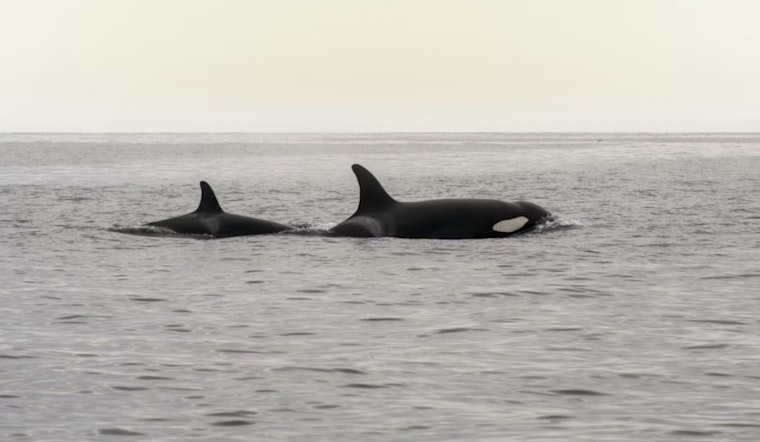
Commuters on the water got a rare bonus Monday morning when a group of orcas slipped past West Seattle, angling toward the Fauntleroy ferry lanes and stealing the spotlight from the usual boat traffic. Along the west-facing shoreline, onlookers and ferry passengers stopped what they were doing to watch dorsal fins and spouts surface in the channel as the whales continued steadily south.
Local naturalist Kersti Muul told West Seattle Blog that the whales were transient orcas headed south and approaching the Fauntleroy ferry lanes. The brief Monday morning update pulled together reports from people on shore and aboard ferries who spotted the pod moving through the lane. Those quick hits from West Seattle Blog have become a go-to alert system for boaters and beach-watchers trying to time their whale viewing.
These visitors are likely transient orcas, also known as Bigg's killer whales, which prey on marine mammals and often cover long distances, rather than the salmon-focused Southern Resident orcas. Earlier this year, researchers and NOAA crews followed a small group of these mammal-eating whales through Elliott Bay and attempted biopsies to determine where they came from, as reported by KUOW. By matching photos and distinctive scars, scientists have linked some of these passing transients to Alaskan populations.
State and federal agencies are clear about one thing: enjoy the show from a respectful distance. NOAA Fisheries notes that vessels in Washington inland waters may not legally approach killer whales within 200 yards, and experts warn that close boat traffic can interfere with feeding. Anyone who spots an injured or entangled whale is urged to call NOAA's enforcement hotline at 1-800-853-1964. Researchers say watching from land cuts down on disturbance and helps them keep better track of these transient visitors.
Best Shore Spots and How to Stay Safe
For a low-impact front-row seat, land-based spots are the way to go. Lincoln Park, Schmitz Overlook (Emma Schmitz), Constellation Park and nearby pier viewpoints all offer solid vantage points when whales move through. The Whale Trail lists Lincoln Park as an official viewing site and shares tips on how to watch from shore without bothering the animals or your fellow humans, especially during busy spring migration periods.
Basic etiquette still applies: keep dogs leashed, skip the shouting and airhorns, and do not try to motor over to the whales or cut across their path.
If you do spot orcas, researchers would love the details. Note the time, approximate location and number of animals, then report what you saw to the Orca Network. Photos and videos are especially useful for identification work. Local ferry crews and Washington State Ferries operations sometimes pass along sightings to marine researchers, so riders who see something unusual are encouraged to let crew members know. Anyone with photos or safety concerns can also consider contacting NOAA or local marine mammal organizations.




