

























































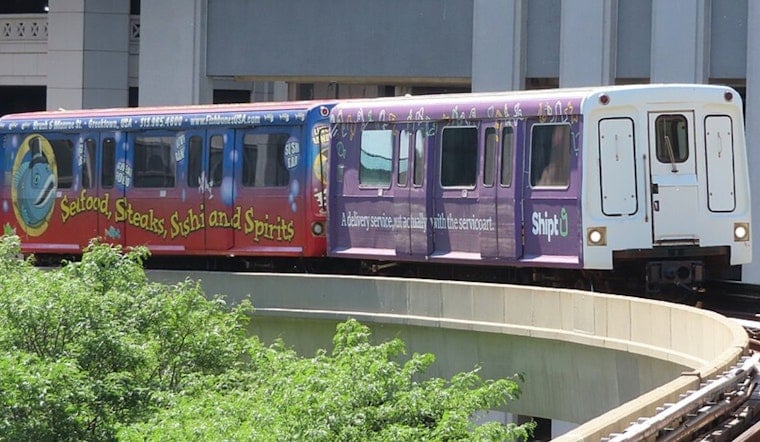
Detroit's People Mover is no longer just circling downtown. It is sliding into the driver's seat on plans for a new multimodal transit hub at Michigan Central in Corktown, turning months of behind-the-scenes planning into a full run at design and procurement. The shift hands the Detroit Transportation Corporation (DTC), which operates the People Mover, formal responsibility for picking consultants and steering early engineering work. Local officials say this is the next phase of a long-discussed push to reconnect the historic station with regional rail and bus service.
Project lead and next steps
Starting this summer, DTC will handle the public procurement process to select the design team and oversee engineering, environmental work and community engagement, according to Detroit People Mover. The agency states that DTC "will serve as MCMF Project Lead" and will coordinate procurement, public engagement, design, and construction oversight. In practice, that puts the People Mover in charge of turning the 2025 memorandum of understanding into technical plans, engineering documents, and contract solicitations.
Funding and background
The current push grows out of an October 15, 2025, memorandum of understanding in which MDOT, the City of Detroit, and Michigan Central committed about $40 million for initial research and engineering. That package includes a $10 million federal RAISE grant and roughly $30 million in state funding, as outlined in a press release from Michigan Central. The MOU lays out a vision for a facility that could add passenger-rail platforms and pull together intercity bus service inside the 30-acre innovation district. Officials have said that final designs, long-term funding deals, and any construction timeline will depend on what comes out of the upcoming engineering and environmental studies.
Where the numbers stand
The new leadership role arrives after earlier public records sketched out a broader and more expensive concept, with prior cost estimates in the ballpark of $150 million to $212 million. That range highlights the gap between early wish-list concepts and a fully built station, according to Axios Detroit. In an email to Axios, a DTC spokesperson said the agency is "uniquely positioned" to lead the work but emphasized that the project is still in its early planning phase, with no construction schedule set. For a little historical context, the last regular passenger train to leave the original Michigan Central Station rolled out in 1988, a milestone noted by the Detroit Historical Society.
What comes next
DTC's site says the agency plans to solicit proposals for design, environmental review, and site engineering starting this summer, with work scoped to cover architecture, circulation, and regulatory clearances, according to Detroit People Mover. The winning teams will generate the preliminary designs and studies that MDOT has said are needed before any construction commitments can be made. Earlier reporting tied to the MOU indicated those assessments could wrap up by late 2026 and that, if agreements are finalized, detailed design and construction could stretch into a 2028 window, per reporting highlighted by WXYZ.
Why Corktown matters
Supporters argue that dropping a multimodal gateway in Corktown would better connect southwest Detroit and downtown to jobs, the airport, and nearby suburbs, and could help support a proposed extension of the Chicago-Detroit Wolverine service toward Windsor and Toronto, according to Michigan Central. For people living nearby, the real test will be whether the hub delivers frequent commuter links and affordable access, rather than primarily catering to long-haul riders or conference crowds. Community groups and transit advocates say they plan to keep a close eye on DTC's procurement and outreach as the design work unfolds.
The announcement gives the People Mover an unusually large voice in what a long-promised Michigan Central transit fix actually looks like on the ground. From here, the pace depends on DTC's solicitations, the outcome of environmental reviews, and follow-on funding decisions. Those steps will decide whether the hub becomes a practical connector for everyday riders or stays parked as another big regional idea on paper.





