

























































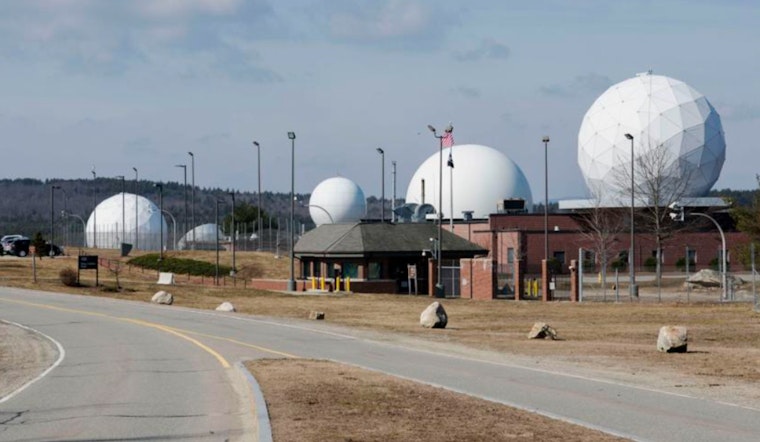
After decades of firefighting-foam use, state and federal officials are taking a hard look at per- and polyfluoroalkyl substances (PFAS) at the New Boston Space Force Station, and the findings could dictate how far the government has to go to clean up the site. The Air Force has launched a targeted environmental investigation at the mostly rural base, focusing on spots where aqueous film-forming foam was historically released. One on-base community well has already been fitted with a treatment system after PFAS exceeded safety thresholds, and lawmakers are pressing the military to spell out exactly when the broader project will move from study to action.
Phase I investigation targets training grounds and base wells
The Air Force's Phase I remedial investigation is set to sample soil, groundwater, surface water and sediment at four high-priority locations on the installation: the former fire-training area, the Hilltop fire station, the former wastewater treatment plant and areas near Building 141, according to a fact sheet from the Town of New Boston. The goal is to map where PFAS is present on base, assess potential risks to people and the environment and decide whether a formal cleanup under CERCLA is required. The town notes that the U.S. Army Corps of Engineers is providing technical support to the Air Force Civil Engineer Center as it carries out the fieldwork.
What tests have found so far
Earlier sampling turned up PFAS in several on-base supply wells, though not every result crossed New Hampshire's regulatory lines, the U.S. Army Corps of Engineers reports. According to that fact sheet, wells PW-1 and PW-2 showed PFAS detections below state drinking-water standards, while PW-3, which serves the station community center, exceeded an earlier EPA health advisory and state limits and received a treatment system in 2017. Testing of off-base private wells in 2017 and 2018 mostly came back below state standards, and the single exceedance in that round was located upgradient of the station and not tied to base operations.
Timelines and political pushback
The Department of Defense's public timeline for PFAS investigations has become a sore spot for local officials. New Hampshire's congressional delegation demanded answers from the Pentagon after a DoD report appeared to push completion of the New Boston investigation into the early 2030s, a change state regulators say they were never formally told about, according to New Hampshire Public Radio. The backlash lines up with broader criticism of how long the department expects PFAS cleanups to take at military facilities across the country.
How this fits into the bigger PFAS picture
The New Boston investigation is unfolding just as new federal drinking-water standards for several PFAS compounds are tightening the limits that trigger treatment and other responses. The EPA has linked certain PFAS to health effects, including a higher risk of some cancers, and its National Primary Drinking Water Regulation sets enforceable maximum contaminant levels for multiple PFAS compounds, changing the point at which water systems and other responsible parties are required to act, according to the EPA. That national rulebook narrows the gap between simply detecting these chemicals and having to clean them up at military installations and nearby water systems.
What residents can expect next
The Air Force says it will follow CERCLA procedures as the work continues, and AFCEC describes a three-step approach: "identify, respond, prevent" for dealing with PFAS at bases. Station outreach materials note that the early stages of the Phase I investigation were expected to produce initial results in 2025, and that any follow-on actions would be shared through the Community Involvement Plan and the public administrative record. If sampling shows PFAS moving toward off-base drinking water, the Air Force and New Hampshire regulators say they may expand testing or launch interim measures to protect residents, including providing alternate water supplies or filtration where needed.
Local leaders and members of the state's congressional delegation say they plan to keep pushing for transparency as new data comes in, and ongoing coverage by outlets such as the Union Leader has helped keep public eyes on the base's PFAS work. Residents can follow updates, documents and meeting notices through the Air Force administrative record and the installation's outreach pages as sampling results are released and future steps are laid out.





