

























































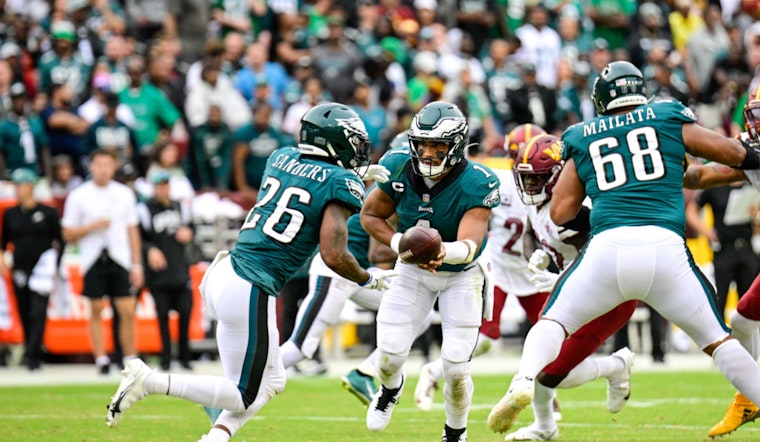
The Philadelphia Eagles just muscled their way to the top of the U.S. sports valuation heap, with a reported price tag of about $8.3 billion. That lofty number follows NFL approval of a deal in which owner Jeffrey Lurie sold a combined 8 percent stake to outside investors, the latest sign that private capital is quietly rewriting the rules of pro-team ownership and what it costs to get a seat at the NFL table.
How a Minority Sale Turned Into a Major Number
According to PHILADELPHIA Today, which cites reporting in The Wall Street Journal, the Eagles’ valuation climbed on the heels of Lurie’s decision to sell those minority shares. Sports Illustrated identifies the new investors as Susan Kim and members of the Peskowitz family, and notes that Lurie keeps firm control of the franchise.
At an $8.3 billion valuation, that 8 percent slice comes out to roughly $664 million. In other words, even a “small” piece of an NFL team now costs the kind of money that used to buy an entire franchise.
Private Equity Opens the Floodgates
The sale slots neatly into the NFL’s 2024 move to allow vetted private equity firms to buy limited stakes in clubs, a policy the league pitched as a way to give owners more liquidity without handing over the keys. The Washington Post reports that the new framework caps how much a fund can own, sets minimum holding periods, and limits voting power, and it links that shift to a run of record-breaking deals, including the $6.05 billion sale of the Washington Commanders and the roughly $4.65 billion purchase of the Denver Broncos.
Put together, those numbers show just how fast franchise values are climbing in the private-capital era, and the Eagles now sit near the top of that curve.
What It Means for Fans and the City
Lurie, who bought the Eagles for about $185 million in 1994, will remain the team’s controlling owner after the minority sale, according to Forbes. Industry watchers say these kinds of minority deals typically give owners cash to work with for stadium upgrades, debt management, or long-term investments, rather than triggering big shifts in day-to-day decision-making.
For Philadelphia, that could eventually translate into added financial flexibility for projects tied to Lincoln Financial Field, team facilities, or community programming, although any concrete plan would still rest with the Lurie family and would require league approvals.
The bottom line for the city and its fans: the Eagles’ recent run of on-field relevance now comes with a fresh financial milestone, placing the franchise squarely in the middle of a broader shake-up in how NFL teams are funded. For deeper details on the transaction, the new investors, and the approval process, see coverage from PHILADELPHIA Today and Sports Illustrated. Expect the spotlight on valuations and minority stakes to only intensify as the league continues to adjust to new streams of capital.





.jpg)