

























































Pierce County is heating up in all the wrong ways, and officials are not mincing words. After a fast warm-up stacked on top of a dry spring, wildfire danger has climbed across the county, and residents are being told to get serious about evacuation planning.
Dry grasses, low humidity and early snowmelt mean even a small spark can turn into a fast-moving fire, especially in forested or foothill neighborhoods. County officials are urging people to review evacuation plans, assemble grab-and-go kits and keep a close eye on official alerts before smoke is in the air.
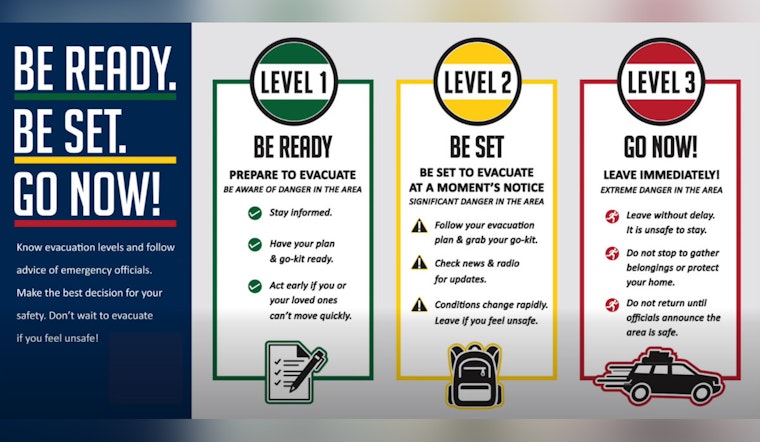
In a Facebook Reel, Pierce County walks residents through the county’s three-tier evacuation system and reminds everyone that Level 3 means it is time to leave, not linger. The clip hits the basics: Level 1 is "Be Ready," Level 2 is "Be Set" and Level 3 is "Go Now" and officials stress that anyone told to evacuate should not wait around to see what happens next.
Heat, drought and the regional outlook
The Washington Department of Ecology declared a statewide drought emergency on April 8, 2026, after an unusually warm winter left mountain snowpacks well below normal. That thin snowpack speeds the drying of grasses and brush and stretches the fire season longer than usual.
Seasonal outlooks from NIFC.gov and regional analysts now show above-normal wildland fire potential across large parts of the Pacific Northwest this summer. Local climate reporting and university research point to earlier snowmelt and a dry spring narrowing the short window when fuels stay moist, which in turn raises the odds that late-spring and early-summer ignitions will actually spread instead of fizzling.
What Pierce County is doing
To cut down on preventable fires, Pierce County has ordered a Stage 1 burn ban for unincorporated areas starting June 1. The goal is to reduce avoidable ignitions and preserve firefighting resources for when they are really needed.
In a county news release, Pierce County quoted Fire Marshal Ken Rice warning, "We are heading into a hotter, drier summer," and urging residents to use extra caution with grills, power tools and any equipment that might throw a spark. Under Stage 1 rules, land-clearing and yard-debris burning are off the table, while carefully managed recreational fires and barbecues are still allowed as long as safety guidelines are followed.
Evacuation levels and how to prepare
The three-level evacuation system is designed to make tough choices a little clearer:
- Level 1 - Be Ready: Pay attention to conditions, monitor official updates and think through what you would take if you had to leave.
- Level 2 - Be Set: Pack the car, be ready to go at a moment’s notice and consider leaving if you need extra time.
- Level 3 - Go Now: Leave immediately.
Local jurisdictions stick to the same language so residents are not guessing. For example, the Town of Steilacoom notes that people who need more time to move, such as seniors, people with medical needs and owners of large or multiple animals, should seriously consider leaving at Level 2 instead of waiting for the situation to escalate.
Authorities also caution that you might not always get a Level 2 alert before a Level 3 order is issued, especially if a fire moves quickly or weather changes fast. That is why having a concrete plan and a packed kit ahead of time is more than just a good idea.
Residents are urged to sign up for Pierce County ALERT to get neighborhood-specific warnings by text, phone or email, including official evacuation notices tied to the addresses they care about most. The Pierce County PCALERT page explains how to add multiple locations, adjust notification settings and stay plugged in when incidents are unfolding quickly. Keeping your enrollment active and your contact info up to date is one of the simplest ways to avoid being blindsided by a fast-approaching fire.
Quick "go" kit checklist
If you need to leave quickly, a pre-packed kit turns panic into a grab-and-go situation. At minimum, officials recommend:
- At least three days of water and nonperishable food
- Prescription medications
- Copies of important documents
- Chargers and backup power for phones and devices
- A battery-powered or hand-crank radio
- N95 masks for smoky air
- Pet food and supplies
- Extra eyeglasses or contacts
- Cash
- Comfortable, protective clothing and sturdy footwear
Ready.gov suggests storing your kit near an easy exit so you are not digging through closets when time is short, and keeping a smaller version in your vehicle if you might have to evacuate by car.
If you must leave
If officials issue an evacuation order for your area, the guidance is blunt: leave immediately. Follow the routes identified by authorities so roads stay open for fire engines and ambulances, and do not try to outsmart closures by taking back roads that might be unsafe.
If there is time before you go, close all windows and doors and move flammable items like patio furniture or wood piles away from the house. On the road, drive with headlights on, be prepared for heavy smoke and avoid areas where visibility is too poor to safely continue.
Anyone who needs help evacuating is urged to contact local dispatch so responders can coordinate assistance rather than scrambling at the last minute.
Officials say a few small steps now clearing yard debris, signing up for PCALERT and packing a go-kit can make a big difference if a wildfire starts nearby. They are asking residents to monitor official county and state channels for updates and to treat any Level 3 alert as a non-negotiable signal to leave without delay.





