

























































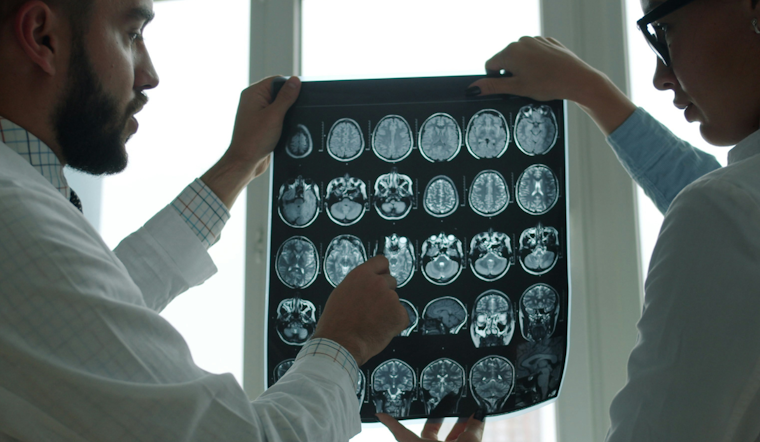
A Pittsburgh-led brain scan showdown suggests a newer tau PET tracer, MK‑6240, may be catching Alzheimer ’s-related tau earlier and in more people than the workhorse tracer most clinics still rely on, flortaucipir. Because each participant had both scans within weeks, the differences point to tracer chemistry rather than disease progression, raising fresh questions about who counts as tau-positive and how early diagnosis and trial enrollment should work.
Study at a glance
The multicentre “HEAD” study enrolled 775 people across eight sites in the United States and Canada, and 682 participants completed both tau scans, as reported in The Lancet and in a University of Pittsburgh news release. Each volunteer received paired flortaucipir and MK‑6240 PET scans, an amyloid PET scan, and cognitive testing within roughly a 45-day window so that comparisons reflected tracer differences rather than clinical change, according to the University of Pittsburgh coverage. The head-to-head design is the largest of its kind and was built to harmonize tau staging across tracers.
How the tracers compared
MK‑6240 flagged tau in far more people than flortaucipir. In amyloid-positive volunteers who were cognitively unimpaired, MK‑6240 was positive in about 15% versus roughly 6% with flortaucipir, roughly 23 extra cases per 100, according to coverage in ScienceBlog. Among people with memory problems, MK‑6240 found neocortical tau in 28% versus 16% with flortaucipir. The study also reported that MK‑6240 had a higher diagnostic area-under-the-curve (0.93) than flortaucipir (0.86) and reached a tau-positive threshold at a lower amyloid burden, about 53 centiloid versus about 81, suggesting MK‑6240 detects tangles earlier in the disease process than the older tracer.
Trials and treatment implications
Tau PET already helps decide who gets into anti-amyloid trials, so the tracer on the scanner can literally change who gets a shot at experimental drugs. In trials of agents such as donanemab, tau PET scans were used to stratify or select participants, as described in the TRAILBLAZER trial reports. In everyday practice, flortaucipir (Tauvid) is still the only FDA-approved tau PET agent for routine use under federal labeling, while MK‑6240 remains investigational. Lantheus has said the company’s NDA for MK‑6240 was accepted by the FDA,, and a PDUFA action date is scheduled for August 13, 2026.
What the researchers say
“Tau is the biology most closely tied to symptoms and future decline,” corresponding author Tharick Pascoal said in University of Pittsburgh coverage of the work, as per ScienceBlog. The team argues that earlier, more sensitive staging could sharpen trial selection and prognosis conversations, potentially allowing clinicians to see trouble coming while standard scans appear relatively quiet.
The authors and outside experts are not ready to declare MK‑6240 the new default just yet. The cohort was largely White, roughly 93%, and MK‑6240 lacks the long history of post-mortem validation that underpins flortaucipir. Independent reactions collected by groups such as the Science Media Centre call for broader validation before anyone rewrites clinical playbooks.
Limitations and next steps
Researchers note that greater sensitivity on a scan does not automatically translate into better outcomes. Spotting tau earlier is useful only if there are proven interventions or clear action plans for people who are still asymptomatic. If MK‑6240 gains regulatory approval and is validated in more diverse cohorts, it could reshape diagnostic maps and who qualifies for prevention or treatment trials.





