

























































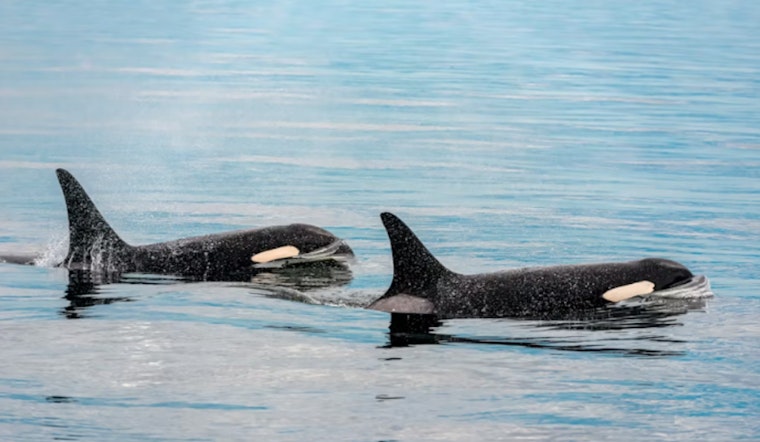
The Washington Department of Fish and Wildlife is telling boaters across Puget Sound to give endangered Southern Resident killer whales plenty of room, at least 1,000 yards, and to cut engine noise during the region’s critical summer feeding season. With Memorial Day weekend underway and FIFA World Cup matches bringing visitors to the water in June and July, officials say quieter, more distant boating can help orcas find enough Chinook salmon to feed calves and pregnant females. The reminder comes as agencies continue monitoring the population and logging recent sightings, including a newborn calf in the Strait of Juan de Fuca.
WDFW reminder and tools for boaters
“Boaters in Washington play a key role in saving our endangered orcas,” Julie Watson, WDFW’s killer whale policy lead, said in a statement, according to the Washington Department of Fish and Wildlife. The agency is urging both local skippers and visitors to use tools such as the Whale Alert app and the Whale Warning Flag to signal nearby whale activity and steer clear while the animals forage. For more details, the department’s news release from this week lays out the guidance and outreach plans. Washington Department of Fish and Wildlife.
What the law already requires
State law established the 1,000 yard setback for Southern Resident killer whales beginning Jan. 1, 2025, and it remains in effect for all vessel types. Among other rules, the statute requires operators to move out of a whale’s path, keep to 7 knots or less while exiting the area, and disengage a vessel’s transmission if a Southern Resident comes within 400 yards, measures intended to reduce underwater noise and disturbance. These prohibitions and exemptions are spelled out in RCW 77.15.740.
Canada is tightening rules too
The federal government of Canada announced an enhanced 1,000 metre approach distance for Southern Resident killer whales that will take effect June 1, 2026, aligning protections across the U.S.-Canada border for the summer and fall months. Fisheries and Oceans Canada has also published maps and seasonal speed and vessel restricted zones around key foraging areas such as Swiftsure Bank and parts of the Gulf Islands to reduce disturbance and collision risk. See the Transport Canada news release and the DFO map overview for the new measures. Transport Canada; Fisheries and Oceans Canada.
How to behave on the water
If you encounter Southern Residents, the advice is simple: slow down and move away. WDFW recommends leaving at speeds of 7 knots or less until you are at least 1,000 yards from the animals, and immediately moving out of a whale’s path if it approaches within 400 yards. Sailors are asked to luff sails and pause, paddlers should raft up and stop paddling, and fishing vessels are advised to pull gear and, when safe, switch off echo sounders and fish finders to reduce acoustic interference. These practical steps and more boating tips are summarized on WDFW’s boater guidance page. Washington Department of Fish and Wildlife.
Why quiet matters
Southern Resident orcas rely on echolocation to find and capture Chinook salmon, and vessel noise can mask the sounds they use to hunt. Federal and regional researchers have documented changes in whale behavior and reduced foraging success in the presence of boats, especially for females and nursing mothers, which makes even brief disturbances potentially costly for a small population. For background on acoustic impacts and foraging concerns, see reporting and guidance from NOAA Fisheries. NOAA Fisheries.
A fragile population and a new calf
Biologists continue to watch the Southern Residents closely. Researchers documented a new L pod calf on Feb. 16 in the Strait of Juan de Fuca, an encouraging birth that comes against a backdrop of low overall numbers. The population has hovered in the mid 70s in recent counts, which underscores why managers say disturbance reduction this season is important for recovery. KIRO; Puget Sound Vital Signs.
Enforcement and penalties
Violations of the 1,000 yard rule are classified as a natural resource infraction under state law and carry a standard fine of $500, although officers may choose education or outreach instead of a citation at their discretion. The statute also lists exemptions for official vessels, safety situations, and authorized research or response activities, and it requires agencies to post outreach materials at public launches. See RCW 77.15.740 for the legal text and exceptions.
Where to get tools and report sightings
Boat operators can download sighting and alert tools, learn to identify ecotypes, and find Whale Warning Flag information via Be Whale Wise. Mariners and commercial operators can also sign up for Whale Report/WRAS alerts that are used to notify large vessels. If you observe unsafe behavior around orcas, WDFW and regional partners maintain reporting resources and sighting networks to help managers and enforcement. Be Whale Wise; Whale Report app.




