

























































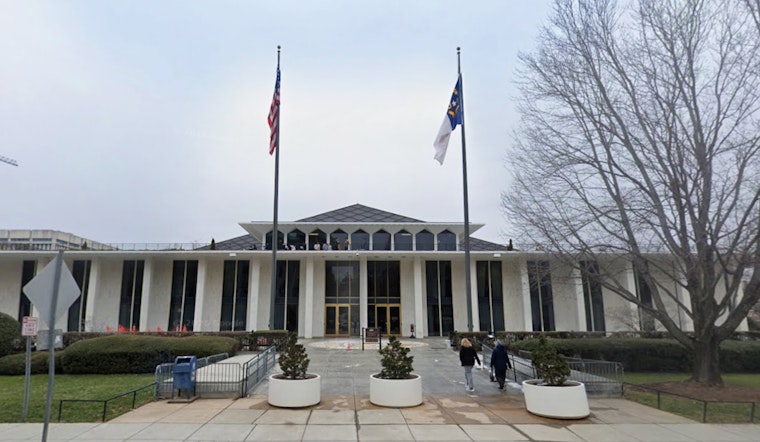
Raleigh lawmakers have dropped a sprawling 18-page regulatory package that would relax environmental rules, rewrite housing policy and reshape how state agencies get treated in court. The proposal folds together provisions on water transfers, accessory dwelling units and administrative review, putting local governments, utilities and regulators on notice. Backers frame it as a streamlining move to unlock housing and infrastructure, while critics argue it hands too much leverage to developers and chips away at long-standing protections.
What the bill would do
The draft, filed as Senate Bill 445, mixes together measures touching environmental oversight, housing, education and public safety. It steers courts away from deferring to agencies' technical interpretations and toward what the legislation calls "traditional de novo review." It would also extend a moratorium on certain large interbasin water transfers while directing the North Carolina Collaboratory to study recent drought, heat and flooding trends, according to WRAL.
Housing rules and ADUs
On the housing front, one major plank would require local governments to allow accessory dwelling units, or ADUs, in single-family neighborhoods and block many local limits. Those prohibited rules would include certain parking mandates and bans on long-term rentals, as outlined by House Bill 627, per the North Carolina General Assembly. Another provision would require residential development to be permitted in commercial zones and scale back minimum parking requirements, language that tracks House Bill 1056, according to the North Carolina General Assembly.
Water transfers and climate study
The package also zeroes in on interbasin water transfers, halting approvals for some large transfers while ordering a Collaboratory study to assess whether the state's approval process reflects modern climate variability. The summary of House Bill 850, which has been on the docket and references pending applications such as Fuquay-Varina's proposal to move roughly 6.12 million gallons per day, contains similar moratorium and study language, according to the North Carolina General Assembly.
Investigations, tanks and penalties
The proposal also wades into enforcement and public safety. It would expand subpoena powers for the State Bureau of Investigation so agents could obtain customer account records from telecom providers during criminal probes, increase penalties for illegal water hookups and tighten oversight of underground petroleum tank cleanups, according to WRAL. The bill also addresses education testing, how private-school scholarships can be used and a firearm training-certification requirement, making the package unusually broad in scope for a single piece of legislation.
Legal implications
The statutory push toward de novo review would be a big deal in its own right. The North Carolina Supreme Court and legal analysts have recently stressed de novo scrutiny for agency rule interpretation, a shift that puts even more pressure on precise statutory drafting, according to analysis on JDSupra. Municipal leaders warn that statewide preemption of zoning or permitting tools could blunt local responses to growth and environmental risks, a concern outlined in the North Carolina League of Municipalities' legislative bulletin (NCLM).
What's next in Raleigh
The filing has been sent to committee, with the official bill tracker showing Senate Bill 445 re-referred to the Regulatory Reform Committee on May 18, 2026, according to the North Carolina General Assembly. Lawmakers on those panels will decide whether to run it as one big omnibus package or carve it into narrower bills.
In the meantime, legislators and advocates on both sides will be lining up testimony, amendments and votes. The upcoming committee hearings will reveal whether this broad deregulatory push has the muscle to clear the General Assembly intact or gets trimmed down into smaller, more targeted changes.





