

























































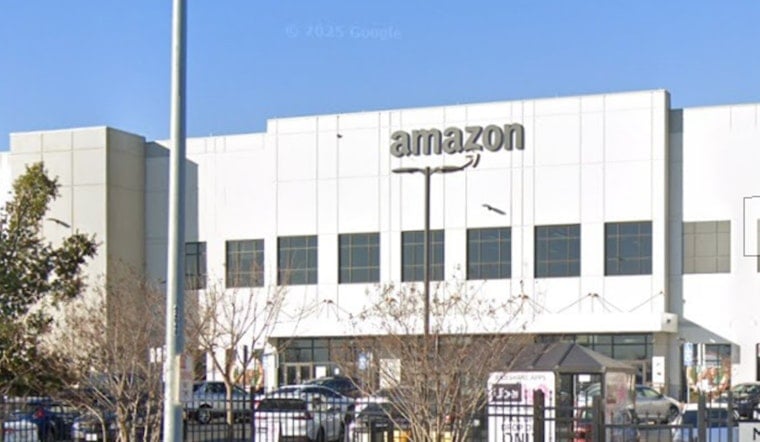
At Amazon’s Rancho Cordova inbound cross‑dock, everything is in motion. Trailers roll in, packages jump onto conveyors and, a few hours later, they are gone again. The roughly 630,000‑square‑foot building works as a staging hub that feeds Amazon’s broader network rather than a place to park goods long term. For nearby residents, the complex is a very visible sign that the local industrial scene is booming, along with the steady rumble of truck traffic.
As reported by the Sacramento Business Journal, the facility opened in September and is laced with about 11 miles of conveyor that can move packages at up to 25 miles per hour. The goal is quick turnarounds: Amazon aims to convert an inbound trailer into outbound shipments in roughly six hours. Photographer Mark Anderson documented the interior for the Business Journal, capturing high‑speed sort lines and staging bays packed with outbound freight.
According to Colliers' Sacramento industrial report, the roughly 629,000‑square‑foot project shows up among the large deliveries that have reshaped vacancy and absorption trends across the region. A single delivery of this scale can nudge leasing activity and rent dynamics across a metro area, and the report flags this building as one of those needle‑moving sites.
Amazon’s push into the Rio Del Oro area started with the purchase of about 84 acres and a design review that called out a large, 132‑dock building, according to local officials and public records cited by CBS Sacramento. Neighbors who spoke with the station voiced mixed feelings: the promise of jobs on one hand, and worries about heavier truck traffic in the Sunrise industrial corridor on the other.
What an inbound cross‑dock actually does
Inbound cross‑docks act as high‑speed relay points. Vendor freight is unloaded, sorted and consolidated for rapid shipment to multiple fulfillment centers, instead of sitting in storage. Reporting on Amazon’s other inbound cross‑docks has described employees routing products to dozens of downstream locations, a relay system designed to trim both time and storage costs from the supply chain, according to coverage by KESQ.
What this hub means for Rancho Cordova
For Rancho Cordova, the cross‑dock is both an economic signal and a logistical test. Colliers' research points out that a mega‑site of this size can noticeably adjust local industrial metrics, while residents and planners are keeping a close eye on how the added truck volume is handled. City permitting records and prior interviews indicate that officials and Amazon have coordinated on site plans and circulation, but questions about truck counts and long‑term traffic impacts remain. Local outlets have not yet published a detailed, site‑specific employment tally for the Rancho Cordova hub.
As the facility settles into a steady rhythm, planners, nearby residents and logistics watchers are likely to track truck patterns, hiring and any traffic mitigation work the city requires. The Sacramento Business Journal’s on‑the‑ground reporting offers a rare glimpse inside the conveyors and sort lines that keep this slice of the e‑commerce machine humming along.





