

























































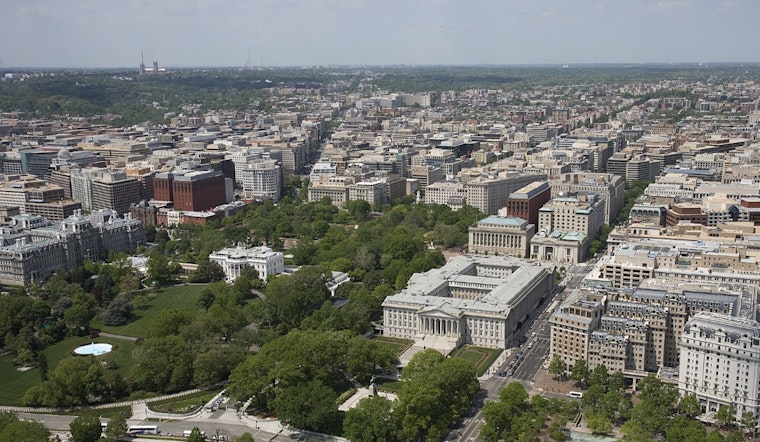
Downtown D.C. business leaders say the city’s central core is flashing warning signs of a possible recession, arguing that last year’s post-inauguration bump in visitors and office attendance has already run out of gas. Mark Simpson of the DowntownDC BID told a crowd that the district closed out 2025 on weaker footing and is still stuck below pre-pandemic employment levels. Mayor Muriel Bowser urged current and future leaders not to sideline downtown businesses, calling the core a fiscal engine that keeps the rest of the city running.
At the BID’s State of Downtown Forum, Simpson said foot traffic “started with a sprint, but ended up crossing the finish line with a hobble” and warned, “I shouldn’t say the R-word, recession, but the warning lights are flashing red,” according to WTOP. That reporting also pointed to some cultural bright spots, with museum visits and trips to Capital One Arena on the rise, even as theater attendance slipped and other measures of downtown commerce delivered a more mixed message.
Numbers Behind The Warning
The DowntownDC BID’s 2025 State of Downtown report, released at the forum, found that the core shed nearly 6,000 jobs last year and that downtown employment fell about 2.8%, according to DowntownDC BID. The same report logged a modest 2.5% gain in overall foot traffic for 2025, but noted that the momentum faded toward the end of the year as tourism patterns shifted and commuter routines changed again. Separate analysis shows that nonfarm employment across the region is still below 2019 levels and that the recovery has been uneven, particularly in the wake of federal workforce reductions, according to D.C. Policy Center.
Federal Cuts Loom Large
Researchers point to steep federal workforce reductions in 2025 as a key shock to the DMV labor market, a hit that fell especially hard on the Washington region, according to Brookings. The administration’s “workforce-optimization” push and related policy shifts cut federal payrolls and sent ripples into private-sector hiring and downtown demand, squeezing restaurants, hotels and retailers throughout the area, as reported by The Washington Post.
Business Leaders Pitch 'Magnet' Strategies
Forum speakers floated a mix of quick, low-cost fixes, nicknamed “golden BBs,” along with longer term investments meant to turn downtown into a magnet for workers, students and visitors. The BID report notes that multifamily housing growth in the core has slowed and continues to trail Northern Virginia, while more than 660,000 square feet of higher-education expansion in 2025 stands out as a rare growth story, according to DowntownDC BID. “We must become a magnet, finding other ways to draw people to our Downtown,” Ebony Walton told attendees, as reported by WTOP, a nod to the reality that the traditional nine-to-five office crowd is no longer a sure bet.
Mixed Monthly Signals
Short-term data are sending their own mixed signals. The District’s Department of Employment Services reported a preliminary unemployment rate of 6.5% for February 2026 and a modest month-over-month gain of about 2,100 jobs, according to D.C. Department of Employment Services. Those kinds of small upticks can disguise the bigger annual declines that businesses feel on the ground, making it tougher for downtown retailers and service providers to plan for staffing, inventory and investment when they are still waiting for a steady stream of customers to return.
What Comes Next
Speakers called for a blend of immediate support and deeper structural change, including targeted job incentives, conversions of empty office buildings into housing or campus space, and coordinated marketing efforts to rebuild visitor confidence, approaches that local policy researchers have also endorsed, according to D.C. Policy Center. Business and civic leaders said they will be watching the next rounds of employment and tourism data closely to see whether the current softening is just a wobble or the start of a more prolonged downturn, even as they argue that downtown cannot afford to wait for the numbers to tell them what they can already feel on the street.


