

























































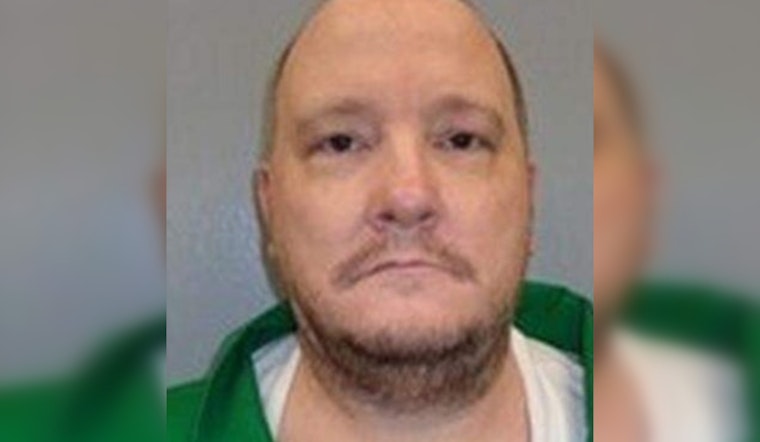
A Rock Hill man on South Carolina’s death row is now telling a federal judge that two prescription drugs he can no longer get in prison might be enough to change his mind about dropping his appeals and volunteering to die. In a recent filing tied to a sealed psychiatric review and a closed federal hearing, James D. Robertson said that if he could resume taking Neurontin and Seroquel IR, he might rethink his decision to fire his lawyers and move toward execution.
In a one-page letter sent from Broad River Correctional Institution to U.S. Magistrate Judge Mary Gordon Baker, Robertson wrote that "Neurontin" and "Seroquel IR" had been prescribed to him in the past but are no longer on the prison formulary. He asked that the medications be restored and said having them again could lead him to reconsider his push to end his own case, according to The Herald. The Herald reports that Judge Baker held a May 11 hearing that was closed to the public and that filings from that session remain under seal. Prosecutors have told the paper they previously argued Robertson is competent to make decisions about his appeals, but his new letter has reopened questions about his mental state.
What the medicines do
Neurontin is the brand name for gabapentin, an anticonvulsant widely used for nerve pain and sometimes prescribed off-label for mood or anxiety symptoms. Seroquel IR is the immediate-release form of quetiapine, an antipsychotic used to treat schizophrenia and bipolar disorder. Both medications work on brain chemistry and can affect sleep, mood and cognition, the very capacities courts look at when they decide whether someone is competent. Medical summaries of the drugs are available from Drugs.com and the Cleveland Clinic.
How courts weigh competency and medication
Judges handling situations like Robertson’s have to sort through a couple of distinct legal questions: whether a person can knowingly waive counsel or appeals, and whether a condemned inmate is legally competent to be executed at all. The Supreme Court addressed competency to waive counsel in the case of Godinez v. Moran, as summarized by Justia, and it barred execution of the insane in Ford v. Wainwright, another ruling detailed by Justia. The Court also limited when the government can medicate someone against their will to restore competency in Sell v. United States, in a decision outlined by the U.S. Department of Justice. Any attempt to direct or compel treatment for Robertson would run headlong into those precedents and their tight procedural safeguards.
How Robertson's case reached this point
Robertson, now 52, was convicted in York County in 1999 for the Thanksgiving 1997 killings of his parents. He remains listed on the state’s death row roster, according to the S.C. Department of Corrections. His long post-conviction history, which has included earlier letters in which he asked to drop appeals and represent himself, has already prompted layers of judicial oversight and psychiatric review, as previously reported by WCCB (AP) and confirmed by state prison records.
What happens next
According to The Herald, Magistrate Judge Baker had not publicly responded to Robertson’s letter at the time of its story, and the S.C. Attorney General’s Office told the paper it could not comment on the correspondence. From here, the court could order independent competency testing, appoint a different attorney to confer with Robertson in private, or leave treatment decisions to South Carolina Department of Corrections clinicians. Each route carries its own constitutional and procedural baggage, particularly when it comes to prisoner medical care and involuntary treatment.
If the medication request is treated as something that could realistically change Robertson’s choices, more legal maneuvering is likely. That could mean additional filings, closer judicial scrutiny of the Supreme Court standards described above, and the possibility of renewed appeals or fresh federal litigation over his access to those drugs.





