

























































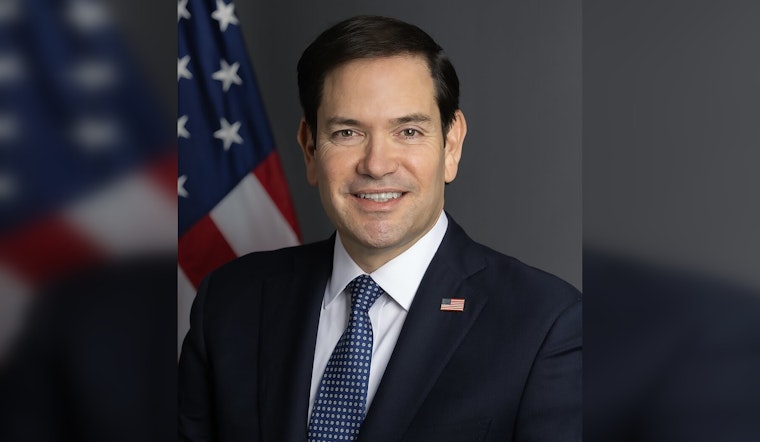
A single new national survey has suddenly scrambled the early 2028 Republican field, putting Secretary of State Marco Rubio ahead of Vice President J.D. Vance in a hypothetical primary. The finding stands out because most other trackers and polling averages have had Vance in front for months, and it has reignited debate over which contender is best positioned to inherit the post-Trump GOP. The gap between one firm’s headline result and the broader averages highlights how unsettled early presidential polling remains.
AtlasIntel poll shows Rubio surge
An AtlasIntel national survey conducted from May 4 to 7 found Rubio at 45.4 percent support and Vance at 29.6 percent among Republican primary voters, based on about 2,069 respondents and a reported margin of error of ±2 percentage points, according to The Independent. That headline number is a complete reversal from AtlasIntel’s December results, when Vance led Rubio by roughly 46.7 percent to 22.6 percent, a shift highlighted by Mediaite. Rubio’s jump has stirred fresh talk inside Republican circles about whether his high-profile foreign policy role and recent media visibility are reshaping the early contours of the race.
Aggregates still favor Vance
One flashy poll result, however, does not automatically redraw the entire map. Polling aggregators that blend results from multiple firms still show Vance with a consistent early edge in the Republican field. RealClearPolitics’ polling average for the 2028 GOP nomination has Vance in the mid-40s across early surveys, reflecting an advantage that has held for some time and that is not erased by a single AtlasIntel reading, according to RealClearPolitics. The split between a single survey and a multi-poll average is a textbook example of why campaign pros preach patience and focus on trends instead of one-off spikes.
Why pollsters disagree
Analysts attribute the disagreement largely to methodology. Differences in who gets surveyed, such as registered voters versus likely primary voters, along with question wording, weighting choices and turnout assumptions, can yield very different toplines in an off-year environment. Timing matters too. Rubio’s recent foreign policy spotlight and a few widely discussed public missteps by Vance are frequently cited as short-term factors that could nudge respondents, as reported by The Daily Beast. Statisticians warn that early primary polling is inherently noisy and that margins can swing sharply as firms refine their likely voter screens and as state-level dynamics start to come into focus.
What to watch next
The key question now is whether Rubio’s apparent gains show up in other polls, especially state-level surveys and models that hone in on likely primary voters, and whether donor money and endorsements follow. The New York Times maintains an interactive primary polling tracker that notes it excludes President Donald J. Trump from the polls it includes, offering a way to monitor how different firms are sampling the GOP electorate over time, according to The New York Times. Looking ahead, the 2026 midterm results and the evolving early-state landscape are expected to provide the clearest test of whether this AtlasIntel result is a real turning point or just a temporary blip.
For the moment, Rubio’s surge is eye-catching but not conclusive. The averages still put Vance on top, and the Republican race remains wide open. Expect the storyline to keep shifting as more state polls roll out and pollsters tighten their likely voter assumptions in the run-up to the next phase of the campaign.




(2).jpg)