

























































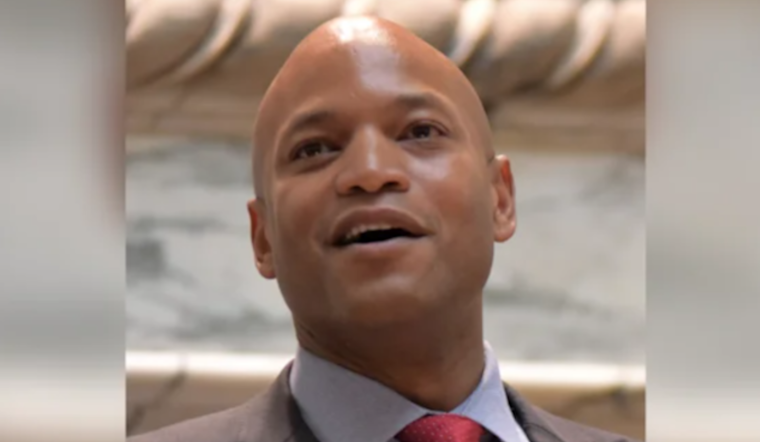
Nearly one million Marylanders sit on the sidelines every primary season, and Boyd Rutherford is done being polite about it. The former lieutenant governor, now representing five unaffiliated voters in court, is pressing Gov. Wes Moore to back real changes to the state’s tightly closed primary system after the governor’s recent public musings about reform.
Rutherford is advancing a lawsuit that seeks to crack open Maryland’s partisan primaries to unaffiliated voters, arguing the current setup raises state constitutional questions and locks out a huge slice of the electorate. The back-and-forth between the two Democrats underscores a growing fight over who actually gets to vote in the early, often decisive contests that shape Maryland politics.
Speaking on The C4 and Bryan Nehman Show, Rutherford said “we do believe strongly that there’s a constitutional issue” and urged Moore to help craft a fix that lets unaffiliated voters access primary ballots, as reported by WBAL NewsRadio. He stressed that the challenge is about access to taxpayer-funded elections, not about forcing political parties to rewrite their internal membership rules.
The pressure on Moore ramped up after his appearance last week on HBO’s “Real Time with Bill Maher,” where he remarked, “I think that the closed primary process has run its course,” a line that caught Rutherford’s attention and quickly raised expectations among reform advocates. Moore’s office later framed the governor’s words as a personal observation and part of a broader interest in boosting participation, and noted that he has not rolled out any concrete plan to overhaul primary rules, according to Maryland Matters.
What’s In The Lawsuit?
The suit, Bryson v. Moore, was filed in Anne Arundel County on behalf of five unaffiliated voters and asks for a declaratory judgment along with a permanent injunction that would block state officials from organizing or funding partisan primaries that exclude unaffiliated voters, according to the plaintiffs’ complaint. The filing names Gov. Westley W. Moore, the State of Maryland, and the Maryland State Board of Elections as defendants and contends that the closed-primary system violates the Maryland Constitution and the state Declaration of Rights (Open Primaries).
How Many Voters Are Affected?
State voter registration records show that 998,153 Marylanders were listed as unaffiliated in March 2026, nearly matching the number of registered Republicans and representing a sizable chunk of the electorate, per the Maryland Board of Elections. That scale is central to the plaintiffs’ argument that this is not just an inside-baseball party squabble but a basic question about who gets to take part in publicly funded elections.
Legal Timeline
An Anne Arundel County judge dismissed the case in November, but Rutherford’s clients appealed, keeping the challenge alive. Briefs to the Appellate Court were due in May, leaving the state’s second-highest court to sort through the constitutional and statutory issues as the case moves forward, Maryland Matters reported. How quickly the appellate judges choose to act will determine whether the dispute races toward a decision or lingers on the docket.
Legal Implications
The plaintiffs are not asking courts to make political parties open their membership or internal processes. Instead, they want the state to stop using taxpayer money to run primary elections that bar a large segment of voters. If they win, the ruling could force parties to pay for their own nomination contests or push lawmakers to redesign the system, the complaint argues. The filing leans on state registration figures and prior case law to outline the constitutional theory and sketch out possible remedies (Open Primaries).
Why It Matters
Supporters of more open primaries say loosening the rules tends to lift turnout and cool some of the partisan temperature. A Bipartisan Policy Center analysis found that states adopting more open nomination systems saw higher primary participation and shifts in representation, a finding frequently cited by reformers and by the attorneys behind Bryson v. Moore. In Maryland, where many local and legislative races are effectively decided in low-turnout primaries, changing who can vote at that stage could reshape campaign strategies and, ultimately, who ends up in office.
Rutherford said he hopes Moore will “work with us in terms of a solution to move forward to open up the primaries” and suggested the clash might be resolved through negotiation instead of a full-blown legal war, according to WBAL NewsRadio. For now, all eyes are on the appellate filings in Annapolis, which will decide whether this fight plays out mainly in a courtroom or spills over to the legislative arena.





.jpg)