

























































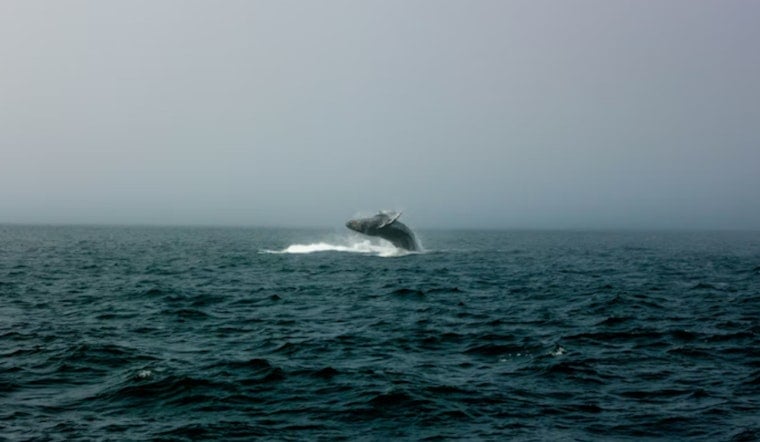
A rare fin whale turned up grounded and dead on the shallow tidal flats near Samish Island on Monday, triggering a fast response from marine mammal investigators. The carcass washed in close to shore, and responders shut down the immediate area while they worked. Residents and beachgoers were told to steer clear while experts examined the animal.
NOAA officials confirmed the discovery and said it is the first recorded fin whale death in Washington this year, according to FOX 13 Seattle. The whale was reported near the Gravely Beach area of Samish Island, and responders from the West Coast Marine Mammal Stranding Network were dispatched after a public call came in. Investigators plan to perform a necropsy to determine whether the animal was sick, entangled, or struck by a vessel.
Sighting logs and reports from professional whale-watch operators show fin whales have been popping up in the Salish Sea since last September, giving researchers some recent context for these unusual visitors, according to Western Washington University. Captains and naturalists photographed fin whales near Salmon Bank and McArthur Bank last fall, and a handful of sightings carried into 2026. Those community reports and photos help biologists check whether stranded animals match individuals that have been seen alive offshore.
Fin Whales Rarely Roam the Salish Sea
Fin whales are the second-largest whale species on the planet and are uncommon in Puget Sound, which makes any stranding in local waters stand out, according to the Encyclopedia of Puget Sound. They are sometimes nicknamed the “greyhound of the sea” for their speed, a detail noted by conservation groups such as Whale and Dolphin Conservation. In earlier Salish Sea fin whale strandings, researchers often found signs consistent with vessel strikes, so investigators will be looking closely for trauma as one possible cause.
Investigation and Necropsy Underway
NOAA and trained stranding partners coordinate large-whale responses and routinely carry out necropsies to look for trauma, disease, entanglement, or malnutrition, according to NOAA Fisheries. Responders on scene are collecting tissue samples and other evidence, and local stranding partners have asked the public to keep their distance while the work continues. Officials stress that anyone who encounters a stranded or injured marine mammal should report it immediately to the regional hotline at (866) ORCANET and should not approach, touch, or attempt to move the animal.
This is the first fin whale fatality recorded in Washington this year, and it comes amid an uptick in whale deaths along the state’s coast, as researchers with Cascadia Research and NOAA look at shifting prey patterns and coastal currents as possible contributors, according to FOX 13 Seattle. Officials say results from the necropsy and tissue tests may take time, but the findings will help determine whether the death was linked to human interaction, illness, or broader environmental stressors.





