

























































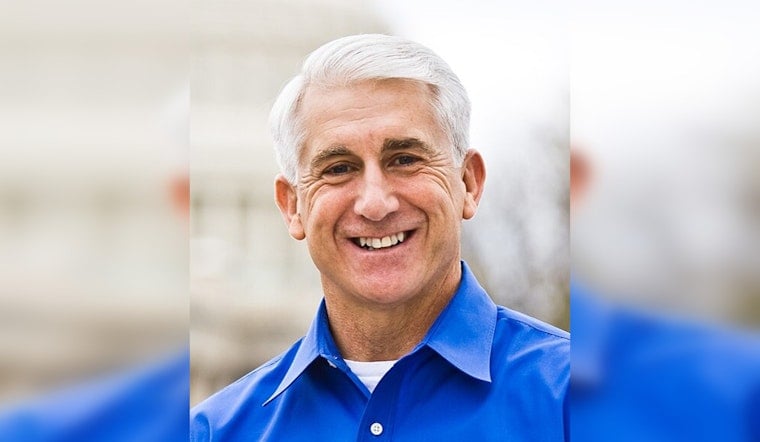
Retired Washington police officers and firefighters, led by former King County Sheriff Dave Reichert, have taken the state to federal court over a controversial plan to tap billions from their pension fund. The group filed suit on April 30, 2026, aiming to halt a new law that would let the state move roughly $3.3 billion out of the LEOFF Plan 1 trust and into a state holding account. They argue the move would shrink the fund’s financial cushion and increase the odds that taxpayers, not retirees, end up covering any future shortfalls if markets tank.
Lawsuit lands in federal court
The class-action complaint was filed April 30 in U.S. District Court for the Western District of Washington in Seattle. It names the State of Washington, the Department of Retirement Systems and its director, Kathryn Leathers, as defendants. Nine retired first responders, including Reichert, John Nordlund and Michael Duchemin, are listed as named plaintiffs and are asking the court to certify a class, declare the law unconstitutional and block any transfers out of the plan.
The complaint argues that the pension assets “must be used only for the benefit of members and beneficiaries,” grounding its case in statutory provisions and constitutional protections, according to the filing from Hagens Berman.
What the new law actually does
The law at the center of the fight is Engrossed Second Substitute House Bill 2034, signed by Gov. Bob Ferguson on April 1, 2026. It formally terminates LEOFF Plan 1 on June 30, 2029 and orders the state treasurer to create a “Restated LEOFF” funded at 110% of the plan’s actuarial liabilities. After that benchmark is met, any extra money is swept into a new Pension Surplus Holding Account, which lawmakers can tap for the general fund in the 2027–2029 budget cycle. Those mechanics are laid out in the enacted session law from the Washington State Legislature.
Actuaries warn the risk jumps
The Office of the State Actuary’s fiscal analysis suggests that, under its assumptions, the likely transfer into the surplus account could run about $3.9 billion. The office cautions that the bill significantly raises the chance the pension could someday fall short.
In a 2,000-scenario stress test, actuaries found that the share of cases where LEOFF Plan 1 ends up with an unfunded actuarial accrued liability by fiscal year 2045 climbs from about 5% under current law to roughly 40% if the sweep happens, an eightfold increase in risk according to the actuarial fiscal note from the Office of the State Actuary.
Plaintiffs say it is their money, not Olympia’s
Reichert and the other retirees, represented by Seattle-based Hagens Berman, argue the statute diverts assets that state law and earlier court rulings have effectively earmarked for retirees. In their view, letting the state strip out “surplus” cash violates both the Washington and U.S. constitutions.
“We believe this law is entirely against the state and federal constitutions,” managing partner Steve Berman said in a statement, calling any reversion of surplus pension assets to the state “a gross miscarriage of justice.” The list of named plaintiffs and the specific legal theories they are pursuing are detailed in a press release from Hagens Berman.
Deadlines and legal paths baked into the bill
The law itself sets the clock ticking on any challenge. Most sections take effect June 30, 2029, but the statute also imposes a hard deadline for lawsuits: claims contesting the restatement generally must be filed by December 31, 2027, and are routed for direct review by the Washington Supreme Court.
Legislative summaries instruct the Department of Retirement Systems to notify members about that statute-of-limitations timeline, which plaintiffs’ lawyers say is exactly why they moved quickly to sue, according to the Senate bill report from the Washington State Legislature.
How the state is responding
A spokesperson for the state attorney general’s office said the agency is still reviewing the complaint. The bill’s sponsor, Rep. Timm Ormsby, has publicly maintained that the statute is on solid legal ground.
Lawmakers have signaled they intend to use portions of the redirected pension surplus to help balance the upcoming biennial budget, and the state will need guidance from the IRS before it can fully implement the restatement, according to reporting from the Washington State Standard.
Why this fund in particular matters
LEOFF Plan 1 has long been a legacy system. It closed to new hires in 1977 and now consists almost entirely of retirees. Legislative reports put the count at roughly 5,945 annuitants, with only a handful of active members still paying in.
Contributions to the plan were suspended around 2000 after it reached full funding, and its track record of state support and cost-of-living adjustments is central to the retirees’ argument that every dollar in surplus should stay dedicated to protecting beneficiaries, according to the Department of Retirement Systems.
What happens next
The federal case has been docketed as case number 26-1469. The plaintiffs have asked the judge for an order preventing any transfers from LEOFF Plan 1 while their constitutional claims are litigated. A hearing date has not yet been set.
The state will get its chance to respond in court. Additional lawsuits or a separate state-court challenge could still surface under the timetable baked into the bill, and the outcome will determine whether Olympia’s planned surplus sweep goes forward or stops at the courthouse door.





.jpg)