

























































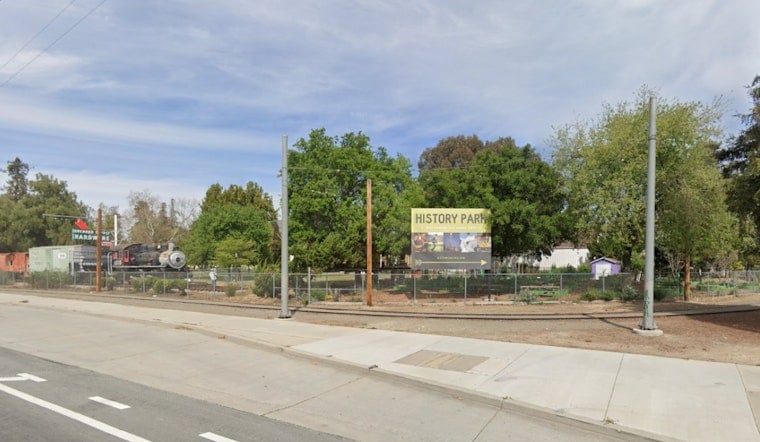
The 1930s-era Sakauye Farmhouse has officially landed at History Park in San Jose after preservationists and city officials wrapped up a high-stakes move on March 30. The wooden farmhouse - once staring down demolition to clear the way for a major Seely Avenue development - is now slated for restoration and interpretation as part of History Park's agricultural exhibits. The relocation caps a months-long push by local museums, preservation groups and donors to keep a rare piece of Japanese-American farming history in the Valley from disappearing.
The Preservation Action Council of San Jose reports the farmhouse "was safely relocated to History Park on March 30, 2026" and notes that Phase Two restoration work is already underway. According to the group, the next round of projects includes roof repairs, exterior fixes and interior build-out. History San José also marked the building's arrival and is continuing fundraising and planning for its reuse as an educational space.
Eiichi "Ed" Sakauye built the modest farmhouse after returning from incarceration at Heart Mountain during World War II, and the property went on to serve as a notable example of Japanese-American agriculture in the Santa Clara Valley. KQED and other outlets have chronicled both the Sakauye family's story and the community effort to save the house, which first secured a temporary reprieve in 2024. For more on that early chapter in the saga, see the original preservation fight.
How the move came together
The relocation grew out of a multi-party deal that combined private donations with developer and city support, according to official records. A City of San José memorandum states that the Hanover Company committed $100,000, the City allocated $25,000, and History San José had raised roughly $800,000 toward the move and renovation. The same document puts the estimated acquisition and relocation cost at about $822,600. It also notes that the farmhouse will sit next to the Sakauye migrant worker cabins and the Stevenson Fruit Barn at History Park, creating a connected exhibit on agricultural labor and Japanese-American history.
What's next
With the structure now planted on its new foundation, partners say attention is shifting to restoration work and future programming. The Preservation Action Council of San Jose and History San José are continuing to raise funds for roof reconstruction, exterior repairs, accessibility improvements and interior exhibition build-out. Organizers say their goal is to open the house for school visits and public interpretation that centers the Sakauye family's experience and the broader Japanese-American farming story in the Valley.
Local television cameras rolled during the move, and KRON4 aired footage of the house at History Park as contractors wrapped up final site work. Preservation leaders have hailed the relocation as a win for community memory while stressing that the fundraising and restoration phases are still very much in progress.




