

























































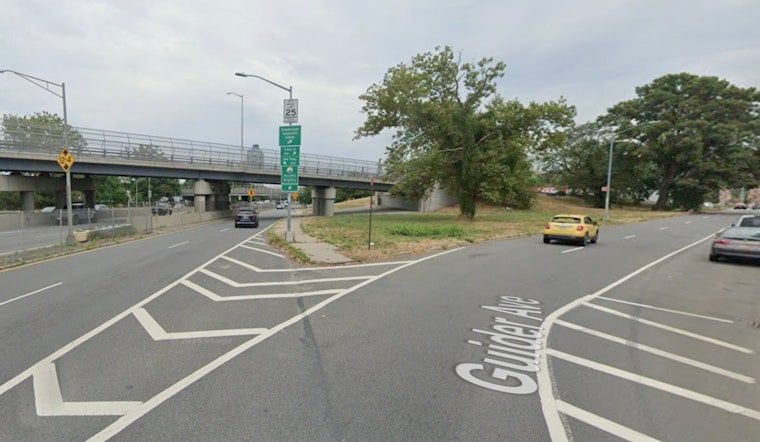
Under the Belt Parkway overpass at Exit 8 and Guider Avenue in Sheepshead Bay, a patch of ground that was once packed with tents and makeshift shelters now sits fenced off and empty. Councilmember Inna Vernikov walked the site this week and argued that the recent sweep of the long-running encampment is less a victory than a sign the city still has no real handle on street homelessness.
Vernikov, who represents the 48th Council District, toured the overpass area on Tuesday, April 28 and said the clearance highlights how slowly the system delivers mental-health care and housing to people living outdoors. Looking through the fencing, she said, “this is not a way for them to live.”
Encampment Cleared and Fenced
City crews dismantled a long-standing cluster of tents and structures beneath the overpass and installed barriers meant to keep people from returning, according to Brooklyn Paper. The move came after years of complaints from neighbors about trash, open drug use and safety hazards beneath the Coney Island Avenue span.
Multiple city agencies took part in the operation, and workers fenced off the space after the sweep to make it harder for new camps to spring up.
Vernikov led a short tour of the newly secured site and argued that existing outreach and shelter protocols are falling short. She called for faster mental-health interventions and clearer rules around when the city can move people into involuntary treatment. “If there isn’t a policy change, we’re gonna see a lot of these people suffering,” she told Brooklyn Paper.
She said her office contacted outreach teams about the people who had been living there. A crew from Breaking Ground reportedly showed up a few hours later but met an individual who turned down services.
Mayor's Policy Shift
Mayor Zohran Mamdani initially hit pause on encampment sweeps after taking office, then brought them back in February with a revamped playbook that puts the Department of Homeless Services in charge, according to reporting on WNYC’s Brian Lehrer show. The new rules call for daily outreach over the course of a week before any site can be cleared.
Supporters say the approach is supposed to build trust and steer people into shelters and supportive programs instead of just pushing them from block to block. Critics counter that a week of conversation does not go far without enough beds and permanent housing on the other end.
Outreach and Housing Options
Nonprofits that contract with the city to do street outreach say progress is often slow and built on repeated contact. Breaking Ground, which runs 24/7 outreach in Brooklyn and Queens and operates thousands of supportive housing units citywide, says its workers offer drop-in services, safe-haven placements and referrals into transitional housing.
Those programs are designed to connect chronically unhoused New Yorkers with case managers and medical care while trying to avoid institutional settings. Outreach providers note that placement rates vary widely and that plenty of people refuse help even when it is on the table.
Neighbors Push Back and Shelter Debates
Residents in Sheepshead Bay have long complained about conditions under the Coney Island Avenue overpass, citing trash, disorder and worries about safety. Local leaders say they spent months pressing the city for fencing and other remedies, according to Brooklyn Eagle.
The fight over the encampment is playing out alongside battles over traditional shelters nearby. In Bensonhurst, residents have repeatedly protested a planned 150‑bed men's shelter at 86th Street and 25th Avenue, Documented reported, highlighting ongoing tension between neighborhood concerns and the city's push to add more shelter capacity.
Legal Questions Around Involuntary Treatment
Vernikov is also calling for clearer authority to move people with severe mental illness into treatment, a position that tangles with state law on court‑ordered outpatient care. That system, commonly called Kendra’s Law, is laid out in the Mental Hygiene statute that governs assisted outpatient treatment.
New York's Office of Mental Health explains that assisted outpatient treatment under Kendra’s Law authorizes court‑ordered care for certain individuals who meet strict criteria and relies on a petition and hearing process under Mental Hygiene Law § 9.60. Adjusting how it is used would likely require changes at the state level. The New York State Office of Mental Health provides an overview of the program and the legal framework behind it.
Vernikov says she plans to keep pressing City Hall for quicker responses and more explicit rules. For now, the fenced-off stretch under the Belt Parkway stands as a stark reminder of both the human toll and the political tangle of homelessness in southern Brooklyn. City officials and outreach groups broadly agree that solving it will take more housing, persistent engagement and tighter coordination across agencies, and those arguments are almost certain to keep surfacing at community boards and in City Hall hearings.





