

























































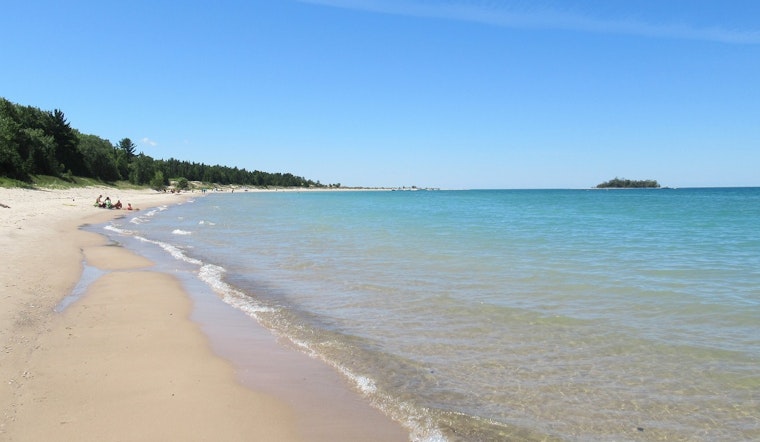
What started as a quiet stroll along Lake Michigan is now shaping up as a potential test case for who really controls Wisconsin’s Great Lakes shoreline.
Paul Florsheim, a Shorewood resident hit with a $313 forfeiture for walking a stretch of exposed sand, says his appeal is moving forward after a municipal court found him guilty. The dispute now sits in Milwaukee County Circuit Court, where a judge has sketched out the legal question at stake and set a status hearing for Aug. 13. Florsheim and environmental lawyers say the case could ultimately land before the Wisconsin Supreme Court and redefine how the public may walk along exposed Great Lakes beaches.
Judge Narrows the Fight to One Big Question
In a memorandum filed April 21, Judge J. D. Watts laid out the issues he wants the parties to brief in Village of Shorewood v. Paul W. Florsheim, Case No. 26CV1769, according to NPR. The filing notes that the circuit court will review the municipal record under Wis. Stat. 800.14(5) and asks the parties to address a tightly focused question: whether “the Village of Shorewood has the legal authority to regulate land between the ordinary high-water mark and the water’s edge.”
Judge Watts wrote that he will set a briefing schedule at a status hearing, turning what began with a ticket on the sand into a textbook fight over where municipal power stops and public shoreline rights begin.
How a Beach Walk Ended Up in Circuit Court
Florsheim was cited last summer after a lakeside homeowner reported him for walking on sand north of Atwater Beach. In January, Shorewood Municipal Judge Margo Kirchner found him guilty and imposed the $313 forfeiture, as reported by Wisconsin Watch.
In February, Madison-based nonprofit Midwest Environmental Advocates filed an appeal on his behalf, arguing that Wisconsin’s public-trust doctrine protects walking along the shoreline. The village, for its part, has leaned on a century-old Wisconsin Supreme Court decision, Doemel v. Jantz, to defend its authority to enforce trespass rules on the exposed shore.
A 1923 Ruling, and Neighbors Playing by Different Rules
The municipal ruling leans on Doemel v. Jantz (1923), a Wisconsin Supreme Court case that courts have traditionally read as limiting public rights to activities in the water rather than on exposed shore, legal commentators explain in Lexology.
Neighboring states have taken a different tack. The high courts in Indiana and Michigan have interpreted their public-trust laws to allow walking below the high-water mark. That split on Great Lakes shorelines is one reason lawyers say Wisconsin courts may be pushed to revisit the nearly 100-year-old Doemel precedent. Both sides expect the question to move up the appeals ladder if the circuit court does not resolve it decisively.
Why the Legal Procedure Could Decide the Outcome
Judge Watts’ April 21 memo stresses that, unless someone requests a trial de novo, the circuit court’s review will be confined to the municipal record, according to the filing. In practice, that posture limits the court to questions of law rather than fresh fact-finding.
That means the case will turn on a relatively stark issue: whether Shorewood has statutory or ordinance authority to regulate the space between the ordinary high-water mark and the water’s edge. A ruling either way would likely be appealed. If the Wisconsin Supreme Court ultimately takes the case, its decision could settle how the public-trust doctrine applies along Wisconsin’s Lake Michigan shoreline.
Both sides are preparing briefs ahead of the Aug. 13 status hearing, when Judge Watts is expected to set deadlines and, Florsheim says, possibly issue a decision, according to WUWM. “I really do feel it’s important for everyone to walk that shoreline,” Florsheim told the station, adding that he hopes the legal process will clarify public rights along the lake. Local officials, shoreline homeowners and legal observers say they will be watching closely, since the outcome could change how Wisconsinites move along the coast for years to come.





.jpg)