

























































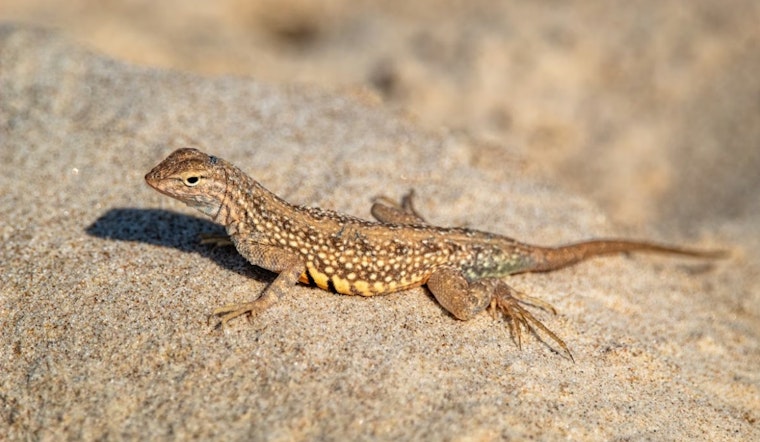
Tiny wall lizards smuggled from Italy in the 1950s have quietly colonized Greater Cincinnati, and researchers now say their numbers may reach into the millions. Ohio Wesleyan University associate professor Eric Gangloff and his students have spent years trapping, measuring, and sampling the animals in parks and older neighborhoods to figure out how these Mediterranean reptiles manage to survive Midwestern winters and city life. What started as a backyard release has turned into a living experiment with unexpected implications for ecology, health, and urban evolution.
How Ten Lizards Became A Citywide Population
According to National Geographic, the story goes back to the early 1950s, when a boy reportedly tucked about 10 common wall lizards into a sock after a family trip to northern Italy and set them loose in a backyard on Torrence Court. A genomic analysis published in Molecular Ecology confirms the Ohio animals trace back to Italian source populations and shows signs of rapid genetic recovery and local adaptation after that tiny founding group.
Fieldwork, Methods And The 'Millions' Estimate
In city parks such as Ault Park, Gangloff's student team uses extendable fishing poles fitted with soft loops and breathable bags to snag the lizards for study, a low‑tech technique that has even made local TV. As reported by WLWT, Gangloff says those captures, along with mark‑recapture work, lead him to suspect there may be millions of the so‑called "Lazarus lizards" across Greater Cincinnati, although he notes that solid evidence of ecological harm is limited so far.
Surprising Biology: Lead Tolerance And Lyme Links
Field and lab findings complicate any simple "invasive nuisance" label. A recent study in Environmental Research found Cincinnati wall lizards carry high blood lead concentrations yet show little reduction in measured performance. Some reptile species also have blood components that kill Lyme‑causing Borrelia in feeding ticks, a phenomenon documented in experimental studies and reviews. At the same time, European research finds lacertid lizards can sometimes carry other Borrelia species, so the net public‑health effect depends heavily on the species involved and the local ecology.
Why Scientists Say Watchfulness Matters
The Molecular Ecology team notes that genomic signs of adaptation, combined with Cincinnati's rocky walls, hilly terrain, and a climate similar to Milan, make further spread plausible. That is why researchers are continuing to map populations and track traits that influence survival and expansion. For now, city officials and parks staff do not treat the lizards as an immediate health hazard, but scientists say ongoing monitoring will be important if the animals keep moving beyond their established hotspots.
You are most likely to spot the lizards sunning on stacked‑stone retaining walls or darting across warm sidewalks in summer. They are small, fast, and harmless to people. Researchers say the city’s lizard saga is a reminder that a single backyard decision can reshape local nature for generations, and that the smartest response is careful monitoring, not panic.





