

























































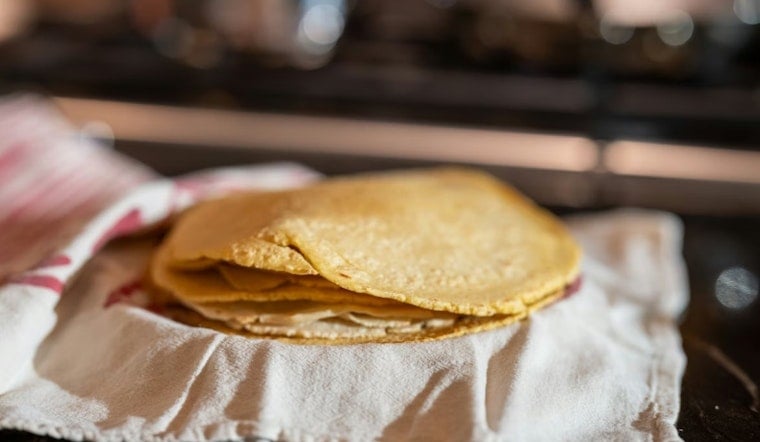
Mobile tortillerías, essentially full tortilla factories on wheels, are rolling through Sonoma County this spring, selling steaming corn tortillas by the pound and pulling steady lines in neighborhood parking lots. Shoppers say the fresh-made stacks are softer, more fragrant and closer to the tortillas they remember from home, and operators describe the roving kitchens as vehicles for memory and community as much as for food.
In Santa Rosa, Ramiro García parks his Tortillería La Lotería on Stony Point Road, while Cristian Álvarez runs Tortillería Apatzingán in Roseland, and similar setups have been spotted in Napa. The units sell tortillas by the pound and attract morning lines of customers looking for warm, paper-wrapped stacks, according to Sonoma Magazine.
These rigs are not taco trucks so much as trailer-mounted production lines. A recent profile described machines that can press about 100 tortillas a minute, adding up to thousands in an hour, which helps vendors keep up with demand, according to the San Francisco Chronicle.
Owners say the format turns high-volume production into something portable. Álvarez opened his mobile shop in early 2024, and García's La Lotería began serving customers last summer, giving nearby residents easier access to fresher tortillas. The concept has roots in the Central Valley, where the Fresno Bee has profiled Ramiro Ortuño's tortillerías and documented how machines imported from Mexico power the operation, while local reporting has tracked the format's spread in Sonoma County and beyond, as reported by Sonoma Magazine.
Why It's Catching On
Buyers say the difference hits immediately: the heat, the steam and the scent of fresh masa. The San Francisco Chronicle described tortillas from one trailer maker as "steamy and fluffy," and vendors say that aroma and texture, more than any novelty factor, is what keeps people coming back. For many customers, a hot, paper-wrapped stack is replacing the familiar supermarket bag.
Regulatory Patchwork
The regulatory landscape is more complicated than a simple health permit. A new California law now requires folic acid in corn masa products in an effort to reduce neural-tube defects, which has sparked discussion about how producers will adjust. Public-health reporting notes that the law is aimed at larger manufacturers while leaving some cottage-food exemptions in place, an ambiguity that could shape how easily mobile operations comply, according to KVPR.
Where To Find Them
The trailers have been spotted in market parking lots and outside busy grocers across Sonoma County. Trucks have set up on Stony Point Road and in Roseland, and one has parked near the Sonoma Valley Fruit Basket. Prices vary by vendor but have been reported at roughly 2 to 3 dollars per pound. The higher end of that range has been noted by KSRO, while longform Central Valley reporting has cited 2 dollar per pound sales at some stops, per the Fresno Bee.
As the weather warms, operators expect to settle into more regular schedules and add new parking spots. For now, the main draw is simple: a steamy, paper-wrapped stack that tastes like home.



