

























































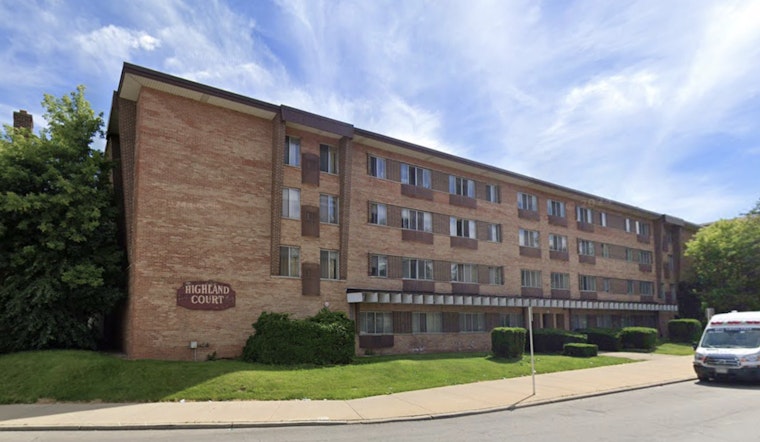
Nearly a year after the Mother’s Day blaze that gutted the Highland Court Apartments, Milwaukee is back in a bitter fight over whether older rental buildings should be forced to add sprinkler systems. The May 11, 2025 fire killed five people and left the four-story, 85-unit complex in the Concordia neighborhood uninhabitable. Firefighters and advocates say the building’s lack of a working sprinkler system turned what began as a single fire into a fatal, multi-floor emergency.
What happened at Highland Court
The fire was reported around 8 a.m. on May 11, 2025 and ultimately killed five residents, officials said. Ladder crews and interior teams pulled dozens of people to safety during the response, according to The Associated Press. The four-story building at 2725 W. Highland Blvd was left uninhabitable and many tenants were evacuated to shelters and temporary housing.
Sprinkler gap under state code
Milwaukee Fire Chief Aaron Lipski has repeatedly said the Highland Court complex lacked a functioning sprinkler system because it predates the state rule that mandates sprinklers in taller or certain multifamily buildings. He has urged lawmakers to close that “grandfather” gap, FOX6 Milwaukee reported. The Department of Safety and Professional Services code and related inserts note that statewide automatic-sprinkler requirements adopted in the 1970s create thresholds, including height and unit counts, that leave many pre-1974 buildings exempt from mandatory retrofit rules.
Local action: disclosure and incentives
City leaders have taken at least one concrete step. On Nov. 25, 2025 the Milwaukee Common Council unanimously adopted a fire-safety disclosure ordinance requiring landlords to tell prospective tenants whether a building is fully compliant, legally exempt or not compliant with required fire-safety systems, according to a City of Milwaukee press release. Other local moves, including waiving some permit, planning and inspection fees for sprinkler installations, and a separate, more recent apartment fire with no working sprinklers have kept pressure on officials, Spectrum News reported.
State lawmakers propose a package
A group of Milwaukee legislators has pushed a three-bill package to give cities the power to require sprinklers, fund retrofit grants and order a statewide audit of sprinkler coverage. The proposal, led by State Sen. LaTonya Johnson, would create roughly $10 million in grants to help landlords cover retrofit costs and instruct the Department of Safety and Professional Services to map gaps in protection, Urban Milwaukee and local trade reporting show.
What the research shows
National data underscore advocates’ case. The National Fire Protection Association finds that, in reported fires where sprinklers were present, civilian death rates per fire were roughly 89 to 90 percent lower and injury rates about 31 to 32 percent lower than in properties without sprinklers. That evidence is central to calls for retrofits and stronger local powers, National Fire Protection Association research shows.
Costs, resistance and politics
Opponents warn retrofit costs could be steep and passed on to tenants, and some state lawmakers have argued mandatory statewide retrofits risk worsening affordability. To blunt that objection, the legislative package includes grant funding and phased approaches, but critics say the political and fiscal hurdles remain large, according to The Daily Reporter.
What’s next
Fire officials are still finishing investigative reports into the Highland Court blaze while the city has already tightened disclosure rules and taken steps to encourage installations, and state measures remain under discussion, press coverage and officials say. Lawmakers and city leaders now face a familiar tradeoff: closing a life-safety gap in older housing stock versus shouldering retrofit costs, and that tension will likely shape committee hearings and local implementation in the months ahead, according to Wisconsin Public Radio.



