

























































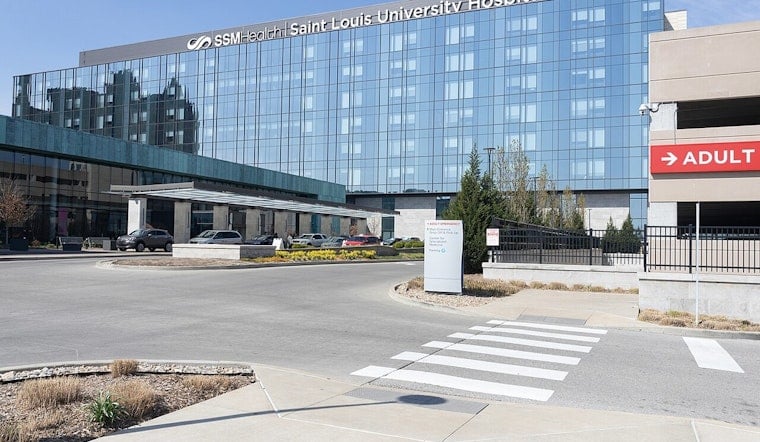
Surgeons at SSM Health Saint Louis University Hospital now have a new way to hunt for lung cancer in real time: a fluorescent imaging drug that literally makes tumors glow in the operating room.
The hospital has begun offering CYTALUX (pafolacianine) injections to help thoracic surgeons visualize lung tumors during surgery. Under near infrared light, the agent makes cancerous tissue fluoresce so small, hidden or hard-to-spot lesions can show up during a procedure. Hospital leaders say the SLU campus is the first medical center in Missouri to roll this out as part of its routine oncology surgery services.
The health system announced the new option Monday and noted that the agent has altered surgical plans in roughly one in five patients by revealing additional nodules or changing how much lung tissue surgeons remove, according to First Alert 4. Nirmal Veeramachaneni, MD, with SSM Health, told the outlet, “CYTALUX has been demonstrated to change the operative plan in one in five patients, mostly by finding additional lesions, or by changing the amount of lung that should be resected for optimal outcomes.” The hospital also pointed to clinical trial data that documented both previously undetected index lesions and additional lesions identified during surgery in a subset of patients.
How the Imaging Drug Earned Approval
CYTALUX (pafolacianine) is an FDA cleared optical imaging agent that binds to certain tumor cells and glows under near infrared light, giving surgeons another tool to locate malignant tissue in the operating room. The U.S. Food and Drug Administration granted an expanded indication for use in lung surgery after reviewing the randomized ELUCIDATE trial and related studies, noting that fluorescence imaging picked up lesions that standard visual or tactile inspection missed in a meaningful share of patients. The agency also highlighted the risk of infusion related reactions and the possibility of image interpretation errors, such as false positives and false negatives, and recommends pairing the drug with an FDA cleared near infrared imaging system. Regulators said the supplemental approval relied on safety and effectiveness findings from clinical studies and is intended to assist surgeons during resection procedures. FDA
Trial Findings and Surgeon Perspective
Investigators involved in ELUCIDATE and other trials report that the agent can shift the scope of an operation by exposing occult disease or sharpening margin detection, a point surgical teams at study centers have repeatedly stressed. Penn Medicine, one of the major trial sites, has noted that intraoperative molecular imaging with pafolacianine produced clinically significant findings that helped surgeons locate additional cancer in a notable share of cases and suggested that the technology could help some patients avoid a second surgery. That research role and commentary were detailed in the health system’s coverage of the FDA decision. Penn Medicine
How It Is Given and Safety Notes
According to the official prescribing information, CYTALUX is given as a single intravenous infusion at a recommended dose of 0.025 mg/kg over about 60 minutes in the hours before surgery. Surgeons must pair it with a near infrared imaging camera that has been cleared for use with pafolacianine. The label lists infusion related reactions - including nausea, vomiting, flushing and hypersensitivity - among the most common side effects, and warns that noncancerous tissue can also fluoresce. Full prescribing details and safety guidance are available in the drug’s label and public record. DailyMed
What It Means For St. Louis And Beyond
With CYTALUX now on the menu at SLU Hospital, St. Louis area patients can access fluorescence guided lung surgery without traveling to out of state specialty centers, a local upgrade that SSM leaders are positioning as a meaningful bump in surgical precision. Other health systems across the Midwest and around the country have started folding the tracer into thoracic programs as well, signaling a broader move toward intraoperative molecular imaging in academic centers. Northwestern Medicine, for example, recently reported its first use of CYTALUX during a lung resection procedure within its system. Northwestern Medicine
Lung cancer remains the leading cause of cancer related death in the United States, with the American Cancer Society estimating about 229,410 new cases and roughly 124,990 deaths in 2026, which makes any improvement in what surgeons can see in the operating room feel particularly timely. Patients scheduled for lung surgery at SLU Hospital are encouraged to talk with their thoracic care team about whether fluorescence guided imaging fits their case and to review the potential benefits and risks before moving forward. American Cancer Society




