

























































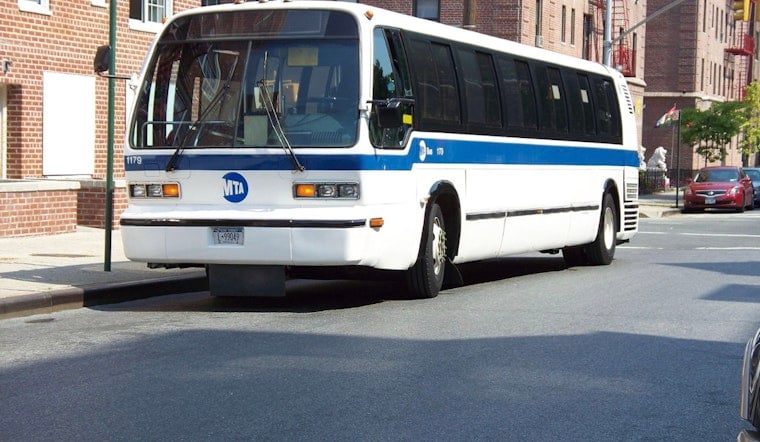
The MTA board on Wednesday approved an express order for 92 clean‑diesel commuter coaches that will operate out of a Staten Island depot, a short‑term fix for an over‑the‑road fleet that has hit the end of its 12‑year useful life. The move swaps out aging express motorcoaches for newer high‑floor commuter buses that are set to arrive over several years, highlighting the agency’s ongoing tug‑of‑war between keeping service reliable right now and chasing a long‑term electrification goal.
According to MTA sole‑source notices, New York City Transit posted solicitation B40721 for 92 over‑the‑road express diesel buses and five over‑the‑road battery‑electric coaches, specifying Motor Coach Industries’ D45CRT and D45CRTe models. The public procurement listing places the purchase under the agency’s sole‑source approvals and identifies NYCT procurement contacts for the package, framing the vehicles as express‑style coaches built for longer‑haul commuter service rather than local trips.
As reported by amNewYork, MTA documents show the authority awarded the roughly $120.8 million contract to Motor Coach Industries after NYCT said no other firms responded to the solicitation, which allowed staff to move forward without a competitive bid. Paperwork reviewed by the outlet pegs each coach at about $1.3 million and notes that the package includes manuals, diagnostic tools, spare parts, testing and training. According to those documents, MCI is slated to deliver the new coaches between late 2028 and late 2029.
MTA’s zero‑emissions goal and near‑term realities
The authority has pledged to convert its roughly 5,800‑bus fleet to zero‑emissions by 2040, according to an MTA press release, and has been buying electric buses while pouring money into depot charging infrastructure to get there. But depot upgrades, power‑supply work and the operational limits of current electric coaches mean that not every depot or route can flip to zero‑emissions right away. Agency officials present the Staten Island diesel order as a necessary swap for coaches that can no longer be depended on, with electric deployments advancing in places where the infrastructure is ready.
Trouble with early electric pilots
Electrification has also run into growing pains on some early rollouts. As amNewYork reported, a group of 60 electric buses that entered service last year saw persistent problems, including overheating and battery failures that sometimes stopped the buses from fully charging, which in turn slowed plans to ramp up electric coaches quickly. Those issues, together with the time and expense of rewiring depots for high‑power charging, have pushed the agency toward a mixed‑fleet approach in the near term.
What riders will notice
On board, the new express coaches are set up for commuter duty. Procurement materials reviewed by reporters describe driver enclosures, collision‑avoidance systems with intelligent pedestrian‑turn warnings, OMNY fare readers and automated camera‑enforcement equipment. Built as over‑the‑road, high‑floor coaches, they offer more luggage room and seating than standard city buses and are intended for faster, longer runs into Manhattan. For Staten Island commuters, the practical impact should be fewer breakdowns and newer vehicles, even as emissions from clean‑diesel engines remain a local concern until more electric buses and depot chargers arrive.
City and transit watchdogs are expected to keep a close eye on the sole‑source award and the lack of competing bids, while the MTA maintains that the procurement is consistent with its guidelines when no alternative suppliers step forward. With deliveries not expected until the latter half of the decade, the arguments over fleet strategy and depot upgrades are likely to continue as the agency’s broader electrification work moves ahead.





_bus_fleet.jpg)