

























































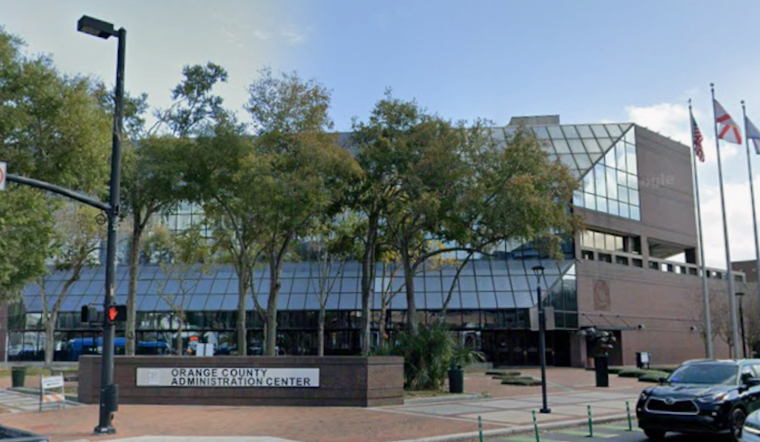
Orange County leaders are staring down a massive, soggy problem and a very specific price tag to fix it: more than $1 billion in drainage and water-quality work across some of the county’s older neighborhoods. To pay for it, commissioners are considering turning on a long-dormant countywide stormwater utility fee that has technically been on the books for decades but has never actually been charged.
At a May 5 meeting, county staff laid out a short list of high-priority projects and framed the discussion as a financial crossroads. Commissioners, however, held off on any decisions and instead told staff to fan out into the community, gather feedback, and come back with a clearer proposal.
The stakes came into sharp focus when longtime Bonnie Brook resident Jimmy Tadlock told the board his home sat under three feet of water during Hurricane Ian. He said he was ready to pay a dedicated fee if it would deliver real, long-term fixes. Not everyone shared that enthusiasm. Bonnie Brook HOA president Deborah Marley cautioned that many of her neighbors live on fixed incomes and might struggle with another line item on their bills. Orange County Mayor Jerry Demings stressed that no decisions were made and that county leaders are still in listening mode, according to WFTV.
Other local governments in Central Florida are already using stormwater charges to keep pipes, ponds, and canals in shape. The City of Orlando, for example, treats its stormwater utility fee as a non-ad valorem assessment that shows up on property tax bills, an approach county staff say is one of several models on the table as they assemble a long-term funding plan, according to the City of Orlando.
County Plan And Timeline
Staff reminded commissioners that Orange County already has a stormwater utility ordinance, adopted back in 1996, but the fee has been set at zero dollars ever since. A multi-phase feasibility study is now underway. Phase 2 is expected to lock in updated impervious surface data, sharpen the list of priority projects, and recommend how a rate structure could work.
Officials described the May 5 agenda item as informational, not a vote, and asked for direction on how aggressively to pursue public outreach over the next several weeks. The plan is to return to the Board of County Commissioners in June with more specific recommendations and a clearer picture of how a stormwater fee might be rolled out, according to a meeting preview from Orange County Government.
How The Fee Would Work
County staff sketched out a tiered system that would charge properties based on impervious surface, things like roofs, driveways, and parking lots. Under that framework, bigger or more developed parcels would pay more because they shed more runoff, a structure that has been detailed in local reporting on the county’s stormwater debate.
Earlier feasibility work and previous local coverage outlined several funding paths, including a ballpark figure of about a $100 annual charge for typical homeowners, as well as alternatives like an infrastructure surtax or adjustments to property taxes. Those same reports cited an estimated $1.38 billion in needed stormwater projects across the county, according to Spectrum News 13.
What’s Next For Residents
Commissioners have now tasked staff with taking the conversation out of the county chambers and into neighborhoods, holding community meetings and collecting public input before anything gets close to a final vote. The board is expected to revisit a more defined fee structure at a meeting tentatively set for June 30, 2026.
If the effort moves into Phase 3, county documents say formal public hearings and a Board vote would be required before any fee actually lands on a bill, according to materials on stormwater resiliency and related meeting previews from Orange County Government.
Supporters argue that a dedicated stormwater revenue stream is the only realistic way to finally tackle chronic flooding in long-neglected neighborhoods. Skeptics counter that residents already squeezed by inflation and living on fixed incomes cannot easily absorb another charge. County staff say the outreach now getting under way will help shape any credits, discounts or assistance so that vulnerable households, along with properties that take steps to reduce runoff, are not left carrying the heaviest load if and when a stormwater fee goes live.





