

























































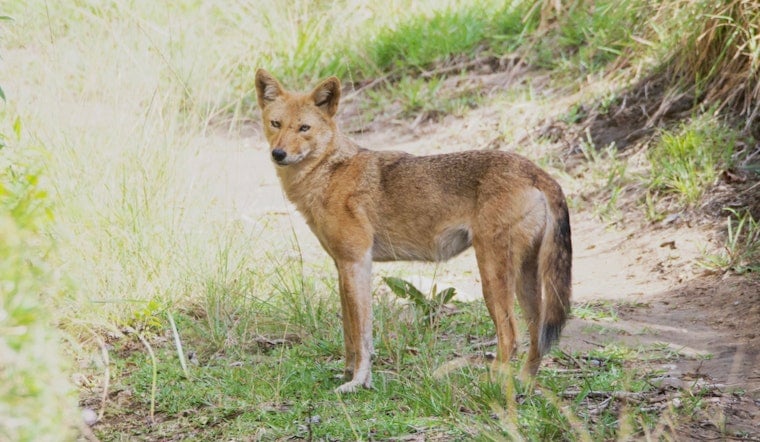
Late Thursday night into early Friday, a Dawson Hill dog walker got an unexpected escort: a very large adult coyote that quietly hustled up the slope near 41st Avenue SW, then trotted west toward California Avenue, barely acknowledging the human or their leashed dog.
The neighbor, who said he usually takes his dog out between 11:30 p.m. and midnight, told the sighting was a first for that particular stretch of the neighborhood in more than five years of late-night rounds.
Wendell told West Seattle Blog that he saw “a very large adult coyote heading up the Dawson hill” and described the animal as moving at a fast clip toward California Avenue. The blog notes it has been tracking coyote reports for more than 15 years and points readers to official guidance on how to share space with the animals safely.
What officials recommend
State wildlife officials say this kind of encounter is not unusual. Coyotes are now a routine part of urban and suburban life, and most sightings are simply that: an animal moving through the neighborhood, behaving normally.
According to the Washington Department of Fish & Wildlife, residents should keep pets leashed outside or indoors, remove food attractants such as unsecured garbage and bird seed, and use humane hazing if a coyote comes too close. That includes making loud noises or making yourself look larger to convince the animal to move along.
How sightings are tracked
Researchers and community groups rely on both technology and neighbors’ tips to understand where coyotes and other urban carnivores are moving through the city. Camera traps and public reports help build a map of activity over time.
The Woodland Park Zoo runs the Seattle Urban Carnivore Project’s Carnivore Spotter reporting tool and works with Seattle University to analyze sightings and promote coexistence strategies.
Recent neighborhood pattern
Local coverage has highlighted a run of West Seattle sightings and yard raids in recent weeks, with neighbors trading photos and video clips online. As reported in Coyotes Crash West Seattle Yards, multiple neighborhoods have logged incidents, and a University of Washington study published in PLOS Neglected Tropical Diseases found the parasitic tapeworm Echinococcus multilocularis in roughly one-third of coyotes sampled in the Puget Sound region.
What to do if you see a coyote
Wildlife officials say that if you run into a coyote, the key is to stand your ground without escalating the situation. Make yourself look big, make noise, and slowly back away while keeping pets close at your side.
Any aggressive behavior or attacks should be reported directly to the Washington Department of Fish & Wildlife. Non-threatening sightings can be logged with community science tools such as Carnivore Spotter, which helps researchers track where and how often these animals appear.
If you manage to get photos or video, officials and researchers recommend saving time-stamped files and sharing them with neighborhood groups and wildlife projects. That documentation helps paint a clearer picture of coyote movement. In the meantime, the basics still matter: secure trash, bring small pets indoors at night, and remove outdoor food so coyotes have fewer reasons to linger near homes.




