

























































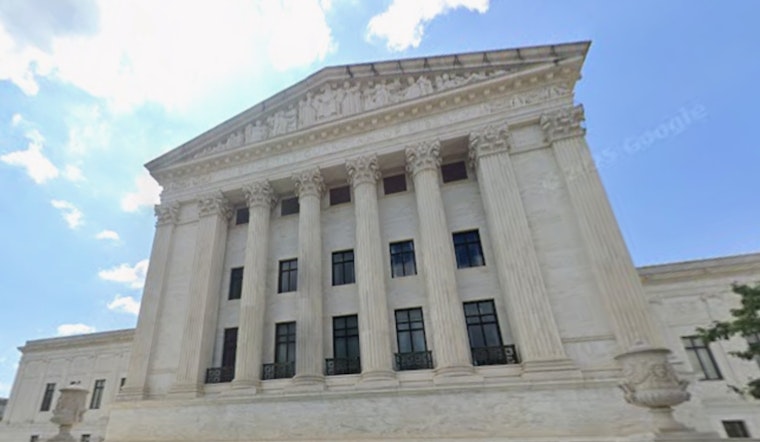
On Monday, the U.S. Supreme Court temporarily blocked a lower-court injunction that had required Alabama to use a court-drawn U.S. House map with two districts where Black voters had a realistic chance to elect their preferred candidates. The justices sent the dispute back to the trial court to be reconsidered in light of a recent ruling out of Louisiana, creating an opening for state lawmakers and election officials who want new lines in place before November. The emergency order is brief and leaves the core constitutional questions unresolved for now.
As reported by The Associated Press, the court vacated a lower-court requirement that had kept the court-drawn map in effect and told the district court to take another look at the Alabama case. The AP noted that the move "set the stage for Alabama to get rid of one of two largely Black congressional districts." The decision follows the Supreme Court’s April ruling in a Louisiana case that sharply narrowed how Section 2 of the Voting Rights Act is applied. The order drew dissents from the court’s three liberal justices.
Alabama lawmakers ready contingency plans
Republican legislators in Montgomery have not waited around. Lawmakers approved a measure that would let the state void May 19 primary results in certain U.S. House districts and call a new special primary if courts sign off on revised lines, with the governor required to pick a date by August, according to Axios. At the same time, Attorney General Steve Marshall filed emergency motions asking the Supreme Court to lift the injunctions that have kept the court-drawn map in place, according to the Alabama Attorney General’s Office. Those parallel legal and legislative moves leave election administrators and campaigns operating on a tight clock.
What the justices asked the lower court to consider
The Supreme Court instructed the U.S. District Court for the Northern District of Alabama to revisit its earlier rulings "in light of" the Louisiana decision, signaling that the trial judge must reexamine how to decide whether race predominated in the mapmaking. The April opinion in Louisiana v. Callais held that a state-created majority-Black district could itself be an unconstitutional racial gerrymander, narrowing one route plaintiffs had used under Section 2 of the Voting Rights Act. Alabama’s emergency application and related papers are available through the public docket, according to the U.S. Supreme Court. That filing asks the court to vacate the injunctions and send the case back for proceedings consistent with Callais.
Legal stakes: Section 2 and the Equal Protection question
Legal analysts say Callais reshaped the relationship between the Voting Rights Act and the Constitution by stressing that compliance with Section 2 cannot automatically justify using race as the predominant mapmaking criterion. Bloomberg Law and policy groups note that the decision forces lower courts to sort out when remedial, race-conscious maps cross constitutional lines and when other doctrines, including the Equal Protection Clause, might still expose intentional discrimination to liability. That unsettled mix of statutory and constitutional standards is exactly what the Supreme Court has now told the district court to revisit in Alabama.
Political stakes ahead of the midterms
The emergency order carries immediate electoral consequences. Several Southern states have already signaled plans to revisit their maps in the wake of Callais, and observers warn that the rulings could determine which lines control the 2026 primaries and general elections. Reporting aggregated by Reuters suggests that a different set of lines could make at least one Alabama seat more favorable to Republicans, feeding a broader scramble over mid-decade map changes nationwide. Campaigns, state election offices and voting-rights groups are racing to assess who stands to gain or lose if the district court signs off on new maps for this year.
The Supreme Court’s emergency action does not finally resolve whether Alabama intentionally discriminated. Instead, it tells the trial court to apply the new doctrinal framework that Callais laid down. State officials are pressing for fast relief while voting-rights advocates say they will keep litigating to protect minority voting strength, setting up another round of hearings and appeals that could stretch through the summer. Officials, campaigns and voters who had been gearing up for May contest dates are now watching the calendar just as closely as the courtroom docket.





