

























































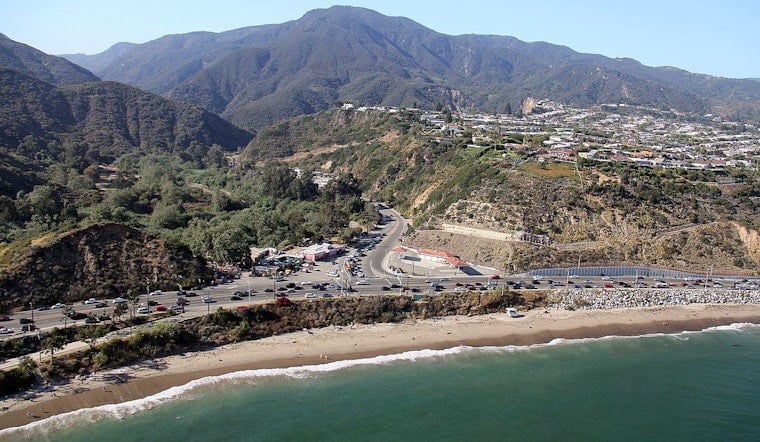
Topanga Lagoon is finally on track for its long-awaited overhaul, with the sprawling restoration effort shifting from years of studies to concrete design and engineering work that could reshape the mouth of Topanga Creek and the coastline at Topanga Beach. The preferred plan would widen the lagoon, pull visitor facilities farther inland and build in buffers to brace for sea-level rise and chronic erosion. The schedule sped up after the January 2025 Palisades Fire, which triggered emergency fish rescues and left the lower canyon charred and exposed.
Big numbers, big bridge
As reported by SFGATE, the preferred hybrid alternative would expand the shrunken wetland from less than one acre to roughly 7–10 acres and swap out the existing 79-foot Pacific Coast Highway bridge for a span of about 460 feet. The longer bridge is designed to restore tidal flow, improve fish passage and ease a notorious choke point that concentrates high flows and squeezes habitat for endangered species. Planners say the reconfigured lagoon would move the system closer to its historic footprint after decades of fill, road building and piecemeal fixes.
Mud, sand and the surf
According to the Topanga Lagoon Restoration Project, crews would excavate an estimated 166,000–256,000 cubic yards of native fill, much of which is proposed for nearshore placement at depths of roughly 15 to 25 feet to help nourish nearby beaches without harming the Topanga Point surf break. The plan also calls for moving lifeguard and restroom buildings inland and building a new “Gateway Corner” at Pacific Coast Highway and Topanga Canyon Boulevard to house visitor services. Project leads say in-water construction windows would be tightly limited so that remaining wet habitats are shielded as much as possible while the heavy equipment does its work.
Who’s funding the next stage
Public money for the design and permitting phase is starting to land. The Los Angeles County Measure A awards list includes a $500,000 grant to the Resource Conservation District of the Santa Monica Mountains to finish visitor services design and secure county beach permits. The State Coastal Conservancy has also recommended authorizing up to $5 million to build on earlier planning grants and push the project to 90-percent design and permitting. Officials say those dollars are earmarked for engineering, environmental review follow-up and early visitor-facility design that must be finished before bulldozers show up.
Rescued species make a comeback
Biologists argue the rush is justified. Heal the Bay reports that federally endangered tidewater gobies rescued from the lagoon were held at local aquariums, and a group was released back into Topanga Lagoon on June 17, 2025. State and nonprofit crews also pulled out hundreds of southern steelhead trout following the Palisades Fire and moved them to Arroyo Hondo Creek in Santa Barbara County, where the Los Angeles Times and partners reported successful spawning. Conservation advocates say those rescues spotlight both how vulnerable Topanga Lagoon is and how much ecological bounce-back is possible if the habitat is rebuilt.
Permits and environmental review
Regulatory hurdles are slowly getting cleared. The Final Environmental Impact Report was certified on September 4, 2024, opening the door to advanced design and permitting under required mitigation measures, according to the CEQA record on CEQAnet. That analysis locked in a preferred hybrid alternative meant to juggle habitat restoration, public access and protections for cultural resources. Even so, the team still has to secure a slate of state and federal permits before any official ground-breaking.
What visitors will see
The redo will be obvious to beachgoers if it all comes together. Designers are sketching out a new gateway hub with parking, an interpretive pavilion and lifeguard and restroom structures placed farther from the water’s edge. Caltrans is handling the bridge replacement, while engineering firm Moffatt & Nichol has prepared feasibility studies and early design work that feed into fish-passage and hydraulic modeling. Project partners say they are building public access and emergency-response needs into the plans so one of Malibu’s most popular surf and beach spots is not shut down for long stretches.
Timeline and next steps
Design work is slated to run through 2024–2026, with permitting to follow and heavy construction tentatively scheduled for 2027 or later, according to California State Parks. Public meetings, tribal consultation and broader outreach will continue as the team refines 90-percent plans and assembles a larger construction funding package. Officials caution that the exact start date will hinge on permit approvals and lining up enough money from multiple agencies to cover the build.
If the restoration moves ahead as planned, Topanga could recover a significant share of the wetland that once covered roughly 30 acres, creating expanded refuges for tidewater goby and steelhead while helping stabilize beaches used by locals and visitors alike. It will still take years of approvals, money and meticulous construction to turn that vision into a rebuilt lagoon and a more resilient slice of the Malibu coast.





