

























































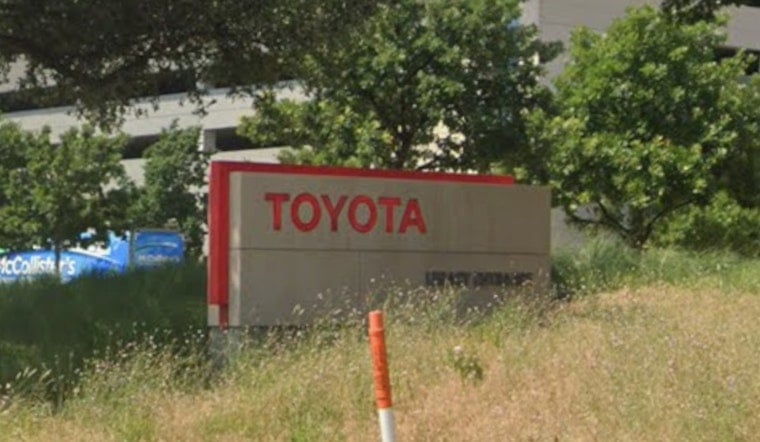
Toyota’s massive San Antonio expansion just got a crucial nod from Austin. The Texas comptroller’s office has recommended approval for the automaker’s proposed $2 billion buildout at its South Side manufacturing campus, a move that would add roughly 2,000 jobs and significantly reshape the area’s industrial landscape. The recommendation follows a filing earlier this month that spells out a multi‑year construction and hiring plan, even as company and local officials keep the specific vehicle model and exact parcel details under wraps while negotiations continue.
According to the San Antonio Business Journal, the comptroller’s office issued its recommendation on May 29, 2026, advancing Toyota’s application under the Jobs, Energy, Technology and Investment (JETI) program. The move does not automatically award incentives. Instead, it kicks the proposal to the governor and the affected school district for the final signoffs that would actually unlock the tax breaks.
What Toyota filed
Toyota Motor Engineering & Manufacturing North America filed in mid‑May for a project codenamed “Project Orca,” a plan that would add a new vehicle assembly line next to the company’s existing South Side campus, with roughly $2 billion in planned investment and about 2,000 new jobs, according to Bloomberg. The filing lays out an aggressive schedule: start construction in 2026, wrap up buildings by 2029 and begin production in 2030.
How the incentives work
The Jobs, Energy, Technology and Innovation (JETI) Act offers qualifying projects a 10‑year limit or reduction on the taxable value used for school‑district maintenance and operations taxes, along with other inducements. The comptroller’s office reviews applications and issues recommendations that guide the governor and local school districts, according to the Texas Comptroller. That review looks at whether the project meets local eligibility rules, whether Texas is competing with other sites and what kind of tax revenue the project is expected to generate before any final incentive agreement is signed.
Local prep and asks
Toyota’s application also shows the company is hunting for more state and local help, including about $37 million in grants or loans from state, county and city programs, according to KSAT. On top of that, Bexar County’s adopted budget lists a $250,000 “Project Orca Skills Development” allocation, a sign that local officials are already laying groundwork for workforce training and other support tied directly to the proposal (Bexar County).
Jobs, wages and schedule
The expansion would build onto an already hefty operation. Toyota’s San Antonio campus employs roughly 3,700 direct workers and turned out about 197,500 vehicles in 2025, according to the San Antonio Express-News. The new filing outlines phased hiring that brings in hundreds of construction workers each year and then ramps up manufacturing hires between 2028 and 2030. That drawn‑out schedule is designed to spread the economic punch across local suppliers, logistics operations and other support businesses that orbit the plant.
What happens next
Even with the comptroller’s recommendation, the deal is not done. Final approval still has to come from the governor and the relevant school district. State guidance gives the comptroller 60 days to issue a recommendation and then 30 days for the governor and district to act, per the comptroller’s own rules. For now, Toyota has told local outlets it has “nothing further to announce” and has not said which model, or which precise parcel, is on deck for the San Antonio campus, according to the San Antonio Report.
If the incentive package is finalized, Project Orca would deepen Toyota’s presence in San Antonio and likely attract more suppliers and logistics investment across Bexar County. Officials are quick to warn, though, that the final incentive agreement and its attached timeline could still take months to hammer out and will require several layers of local approval before any shovels hit the ground.




