

























































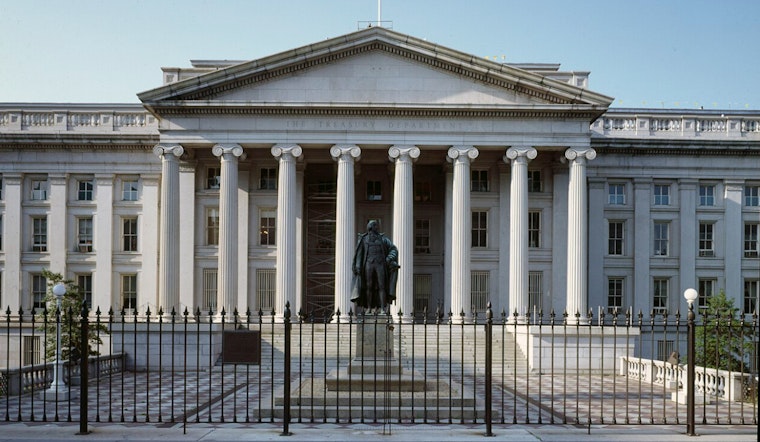
The Treasury Department has put U.S. banks and other financial firms on alert, telling them to flag customers suspected of laundering money for Iran as part of a wider effort to squeeze Tehran’s weapons financing and oil revenues. The move follows federal analysis that uncovered sprawling “shadow banking” networks moving large sums through shell companies, shipping outfits and crypto channels. Lenders are being told to zero in on newly formed companies pushing unusually high volumes, payment trails that hop through multiple intermediaries, links to crypto firms and trade tricks that hide where oil shipments really come from.
What FinCEN found
A Financial Crimes Enforcement Network (FinCEN) Financial Trend Analysis identified roughly $9 billion in potentially Iran-linked activity in 2024, with about $4 billion tied to oil companies and around $707 million flowing through shipping firms, according to FinCEN. The report traces most of that activity to companies based in the UAE, Hong Kong and Singapore and flags likely shell companies and correspondent-account relationships that pushed funds through U.S. channels. Investigators built the picture from Suspicious Activity Reports and large-value transactions that financial institutions reported during 2024.
Treasury is now asking banks to flag accounts that fit those patterns, such as new firms moving outsized sums, payments that snake through several intermediaries or customers with crypto connections, and to watch for trade tricks like oil billed as “Malaysian blend,” fake shipping documents or ship-to-ship transfers, as reported by The Associated Press. The notice effectively turns private banks into an early warning network and tells institutions to file Suspicious Activity Reports when they spot those red flags. Treasury officials say the goal is to disrupt Iran’s sanctions-evasion machinery without immediately rolling out new kinetic measures.
Washington steps up pressure
Earlier in April, Treasury warned foreign banks and jurisdictions that it was prepared to hit institutions that facilitate Iranian transactions with secondary sanctions, a threat first laid out in an April letter and reported by the Los Angeles Times. That warning has been paired with targeted designations of refineries, shippers and exchange houses that U.S. officials say help disguise Iranian oil sales. Officials argue that combining tougher enforcement with industry cooperation can cut into Tehran’s revenue while reducing pressure for a broader military response.
What banks will need to do
Banks are expected to tighten transaction-monitoring rules and widen their customer due diligence, especially for new legal entities and cross-border correspondent flows that match the FinCEN typologies. FinCEN advisories and SAR guidance outline concrete indicators and reporting steps that institutions can use to prioritize which cases to investigate, according to FinCEN. Smaller banks and nonbank financial firms caution that compliance costs are likely to climb as they are pushed to scrutinize niche trade-based schemes and crypto-linked activity more closely.
Legal implications
Legal and sanctions specialists say the threat of secondary sanctions, or the loss of U.S. correspondent accounts, gives Washington a powerful stick because it can cut foreign banks off from dollar clearing and wider global markets, as described in recent legal analyses. A review by Paul Weiss explains how the administration can use Executive Order 13902 and OFAC authorities to target those who enable sanctions evasion and spells out the practical fallout for banks that are designated or severed from key networks. That leverage gives regulators significant influence, but it also risks straining ties with trading partners asked to police complicated, often opaque payment chains.
For now, Treasury’s latest move shifts the focus from naming specific actors to expanding the private sector’s role in spotting suspect flows. How quickly banks adjust their screening systems, and whether that meaningfully constricts Tehran’s cash lifelines, will serve as an early test of how effective financial pressure can be in this conflict.




