

























































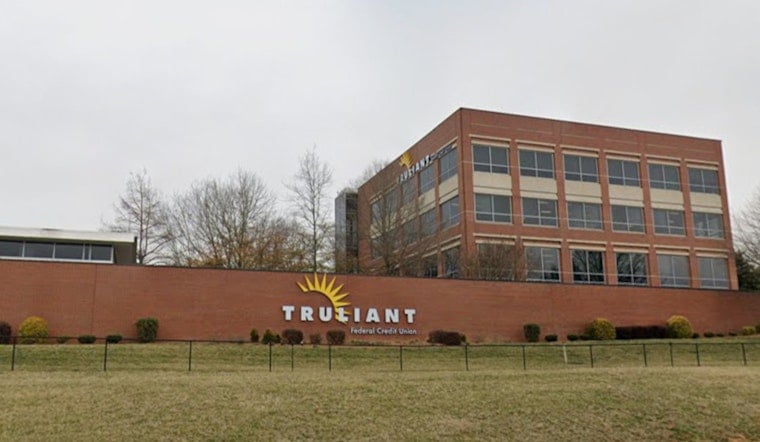
Todd Hall, Truliant Federal Credit Union’s president and CEO, spent time with local business leaders this week laying out his case for why the credit union’s headline-grabbing $90 million sale-leaseback of its Winston-Salem headquarters is not a sign it is sneaking out of town. Hall said the move was a deliberate way to unlock capital for growth while keeping jobs in the Triad, and he tied that strategy to Truliant’s past “merger scars” and its cautious stance on hot-button topics like stablecoins. Taken together, his remarks linked the credit union’s real-estate play to its digital spending plans and long-term community presence.
Why Truliant Sold Its HQ
Late last year, Truliant completed a multi-property sale-leaseback that covered its headquarters and several branch and operations sites, a deal that freed roughly $90 million while allowing the credit union to keep operating in the same buildings under leaseback terms, according to The Credit Union Connection. Regional market reporting shows that the headquarters parcel at 3200 Truliant Way was among the properties sold and lists CU Capital Management as a buyer, while a Cushman & Wakefield market report details the transaction and pricing for the quarter. Executives describe the structure as a way to pull equity out of bricks and mortar while keeping day-to-day operations intact.
Hall Frames the Move as Growth Fuel
Hall told NC Business Minds that the sale-leaseback was designed to shift capital into member-facing technology and a planned corporate campus, not to shrink Truliant’s physical footprint. As reported by Triad Business Journal, Hall has presided over rapid expansion, with roughly a 28% increase in membership and about 65% growth in assets since 2020. He also cited lingering “merger scars” from past consolidation as a reason Truliant approaches deals and partnerships slowly and carefully. In his telling, the real-estate deal is a financing tool that supports growth, not a retreat.
Stablecoins: Watchful, Not Reckless
When the conversation turned to digital currency, Hall cast stablecoins as promising infrastructure for payments rather than something Truliant is ready to roll out as a member product. He urged experimentation with care instead of a rush to jump in. That stance lines up with a broader industry argument over whether payment-focused stablecoins improve efficiency or introduce new deposit and regulatory risks, according to reporting by the ABA Banking Journal.
What It Means for Winston-Salem
Closer to home, Truliant says the sale will not trigger branch closures and that staff will stay put while leaders work on plans for a longer-term campus, according to reporting on the transaction. Truliant’s own materials show a membership in the hundreds of thousands and more than $5 billion in assets, and the credit union has already been plowing money into nearby facilities, including converting a former Macy’s into an operations center and installing rooftop solar, as it gears up for further expansion. Executives present the sale-leaseback as a way to fund those projects without tapping operating lines or disrupting service for members.
What to Watch Next
Hall is expected to revisit these themes at the Forsyth Growth Summit on June 4, where local leaders and investors will be listening for more detail on timing and how the freed-up capital will be allocated, per Triad Business Journal. Beyond the future campus location, the larger test will be whether Truliant channels the proceeds into lending and digital products that noticeably change how Triad residents bank with their hometown institution.





