

























































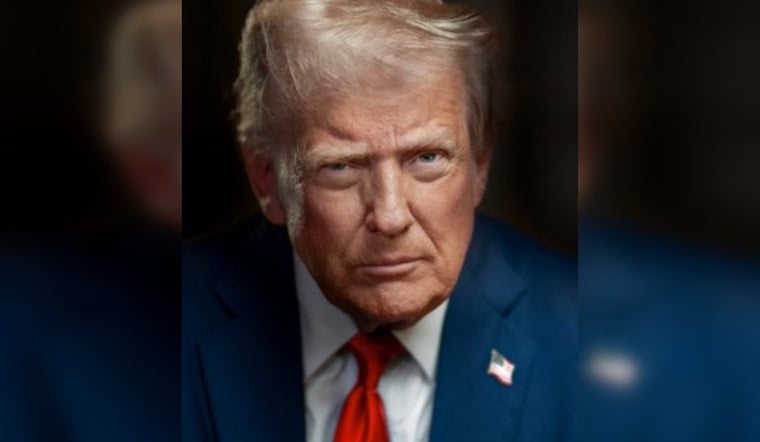
President Donald Trump on Friday, May 1, 2026, signed an executive order that sharply widens U.S. sanctions on Cuba, putting foreign banks and companies that do business with Havana squarely in the line of fire. The order gives U.S. officials new authority to freeze property in the United States and to restrict dollar access for entities tied to the Cuban state, a shift with immediate resonance in South Florida, where Miami's Cuban American community has tracked every swing in U.S. policy toward the island for decades.
What the order does
The executive order blocks “all property and interests in property” in the United States of foreign persons that U.S. officials decide are operating in key sectors of the Cuban economy. It lets the Treasury Department target foreign financial institutions that conduct or facilitate significant transactions for those designated parties.
It also authorizes travel bans and expands sanctions to cover certain former Cuban officials, along with adult family members of designated individuals. Treasury can move to prohibit correspondent and payable through accounts in the U.S. system and can block U.S. assets of foreign banks that cross the line.
According to the White House, the order is issued under the International Emergency Economic Powers Act and the National Emergencies Act, legal tools that let a president wield financial sanctions in response to declared national emergencies.
Why banks and companies are at risk
Because U.S. banks sit at the center of global dollar clearing, the order’s power to bar foreign banks from U.S. correspondent accounts could, in practice, push Havana to the margins of the dollar system and chill private investment on the island.
As reported by the Miami Herald, the measure explicitly gives Treasury authority to restrict or block U.S. bank accounts of foreign banks that conduct or facilitate transactions for the Cuban government. That kind of secondary pressure, previously used against Iran and other sanctioned states, can force international companies into a blunt choice between Cuban business and access to U.S. dollars. Observers told the South China Morning Post that energy, mining and financial services are among the sectors most exposed.
A broader policy push
The order is part of a string of actions this year meant to tighten the screws on the Cuban regime and its international partners, a broader administration strategy that uses economic pressure in an effort to drive political change on the island.
Bloomberg reported in February that the White House has been trying to steer Cuba toward greater dependence on the United States, a plan that has included narrower carve outs for private entrepreneurs while steadily increasing pressure on entities linked to the regime. The new executive order amplifies that approach by reaching past Cuba’s borders to third country actors and commercial partners that help keep the Cuban state plugged into global finance.
Reactions and what is next
Senior U.S. officials told Cuban counterparts in recent talks in Havana that the island has a “small window” to free political prisoners and undertake reforms, according to reporting from the Miami Herald. Cuban diplomats have publicly said they remain open to limited dialogue under certain conditions, the Associated Press reported in February.
For U.S. regulators and global banks, the immediate question now is how quickly Treasury will move to designate specific targets and whether foreign financial institutions will quietly pull back from Cuban exposure before Washington even asks.
Legal implications
Legally, the order leans on the International Emergency Economic Powers Act and the National Emergencies Act to give the Treasury and State departments broad room to designate entities and impose blocking sanctions. That structure mirrors past U.S. actions that used correspondent account restrictions to constrict financing for state linked industries.
As outlined by the White House fact sheet, existing licensed exceptions will remain in place, even as enforcement authority and potential penalties expand around them.





.jpg)