

























































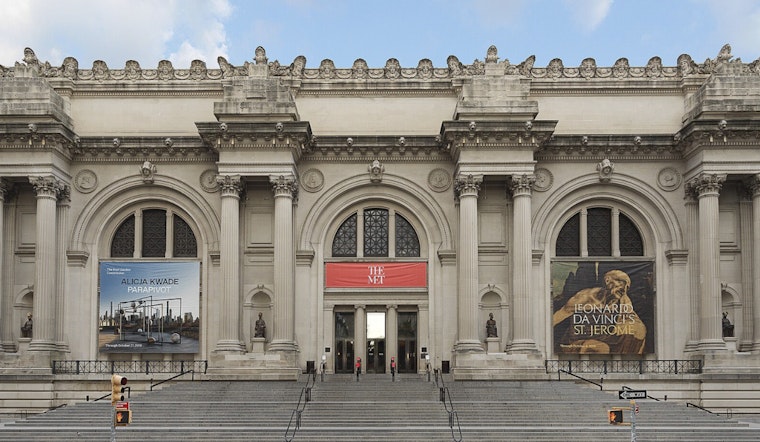
New York’s museum world just got a jolt on the Upper East Side. The Metropolitan Museum of Art and the Neue Galerie are tying the knot in a landmark merger that will tuck the jewel-box museum under the Met’s institutional umbrella while keeping its cozy galleries and Viennese café in place. The deal is slated to kick in by 2028, when the Fifth Avenue mansion will be rechristened The Met Ronald S. Lauder Neue Galerie. For regulars, that translates to the same “Woman in Gold” encounter and Café Sabarsky strudel, now reinforced by the Met’s conservation labs and research muscle.
What the agreement says
According to The Met, the plan is to complete the merger and transfer ownership of the Neue Galerie’s home, the William Starr Miller House, along with the museum’s broader assets, to the Met in 2028. At that point, the townhouse will officially take on the name The Met Ronald S. Lauder Neue Galerie and will be folded into the Met’s campus alongside The Met Fifth Avenue and The Met Cloisters.
Ronald S. Lauder, who co-founded the Neue, framed the move as a long game for the institution’s future, writing that “the merger with The Met in 2028 will preserve and strengthen the Neue Galerie’s legacy in perpetuity” in a personal reflection released with the news. The Lauder family is lining up a major gift of artworks and a substantial endowment to support the building’s care. That package includes 13 standout paintings such as Gustav Klimt’s Die Tänzerin (The Dancer), along with additional promised works that will bolster the collection and conservation funds as the two museums weave their operations together, according to details released by The Met.
What stays the same
For anyone who treats the place like their living room, the Neue will not suddenly morph into a mini Met. It will continue to function as its own museum space, with its current galleries, staff, design shop and much loved Café Sabarsky intact. The institutions say the setup will be comparable to how The Met Cloisters operates as a distinct site within the larger Met orbit.
Coverage of the merger notes that Gustav Klimt’s Portrait of Adele Bloch‑Bauer I, the so-called “Woman in Gold,” will stay put as a star attraction in the mansion’s displays. That kind of continuity is expected to keep the visitor experience feeling familiar, even as the money, governance and back-office operations shift under the Met’s control, according to Time Out.
What the Met gains
From the Met’s point of view, this is not just a real estate deal, it is a collection upgrade. Vogue reports that the Neue’s holdings include “more than 600 objects,” giving the Met a deep well of Austrian and German modernism that it has long been seen as lacking. The trove features major works by Gustav Klimt, Egon Schiele, Max Beckmann and Ernst Ludwig Kirchner, all of which will now fall under the Met’s broader stewardship and future exhibition and loan planning, according to Vogue.
Timeline and governance
The merger is not instant. The Neue Galerie is scheduled to close for planned renovations on May 27, 2026, then reopen in Autumn 2026 with a 25th anniversary exhibition, even as the institutional transition continues behind the scenes. The full handoff to the Met is targeted for completion in 2028.
As part of the deal, the two museums say they will create a Special Advisory Board to steer the integration, with Ronald S. Lauder set to serve as its first chair. Several Met trustees have already stepped up with lead gifts to seed a new endowment that will support the combined operation, according to reporting on the announcement. See coverage in ArtDaily and additional reporting in Time Out.
What to watch next
For New Yorkers who treat the Upper East Side museum circuit like a second home, this move mostly looks like preservation. The townhouse stays a townhouse, the Klimt stays on the wall, the coffee and cake keep coming, all now backed by the Met’s conservation facilities, global loan network and research infrastructure.
Behind that relatively calm surface, though, the deal plugs into familiar conversations about consolidation and donor power in the city’s cultural sector, as major collectors and institutions negotiate who controls what, how spaces are named and how boards share authority. Reporting in the art press frames the merger as a long-term stewardship arrangement, one that secures the Neue’s future while materially expanding the Met’s reach and programming options. Outlets such as Ocula and other arts publications are expected to keep a close eye on how the governance structure, collection sharing and visitor experience evolve as the merger moves toward its 2028 finish line.





_-_Central_Park,_NYC.jpg)