

























































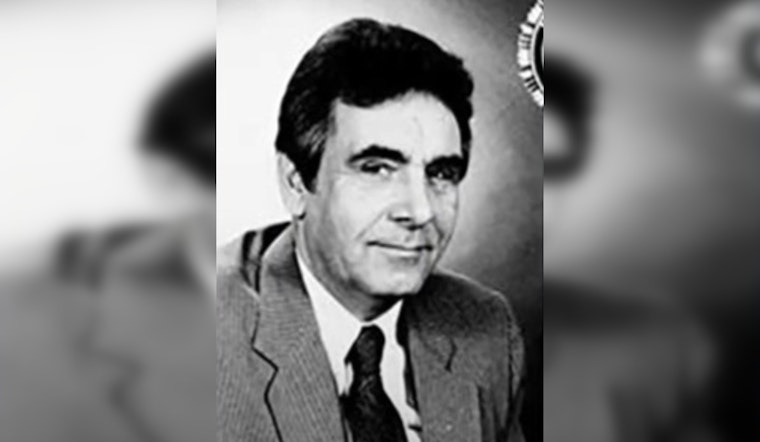
More than three decades after a violent bank robbery and chase that left Waukesha Police Captain James Lutz dead, convicted killer Theodore "Ted" Oswald is asking for a second look at his fate. Oswald, one of Wisconsin's most infamous inmates from the mid-1990s, has filed for early release after roughly 32 years behind bars, reviving a case that still hits a nerve with Waukesha law enforcement and Lutz's loved ones.
Oswald's petition, local coverage
Oswald's bid for freedom surfaced publicly this month, but his request has been in the pipeline for a while. As reported by FOX6 Milwaukee, he is seeking early release after serving more than three decades of his sentence. The station's May 20 video recap walks through the filing and revisits the deadly 1994 confrontation that put Oswald in prison for life.
DA: Petition filed early in year
Waukesha County District Attorney Lesli Boese told Wisconsin Right Now that Oswald's commutation paperwork is dated in early January and that her office has received several such notices from incarcerated people. Boese said, "I believe Ted filed his request before the governor announced the creation of the Commutation Advisory Board," and added that her office will carefully review and, when she believes it is warranted, formally oppose commutation bids.
How Evers' commutation rules matter
Gov. Tony Evers in April signed executive orders that rebooted Wisconsin's commutation process and created a Commutation Advisory Board. The new framework spells out eligibility rules that, in some situations, let people serving homicide life sentences apply after 20 years. According to the governor's release, applicants generally must have served at least half of a fixed sentence or 20 years on a life term, demonstrate rehabilitation and avoid recent violent misconduct. Victims and the sentencing district attorney have to be notified as part of the review. The governor's office also set the advisory board's first meeting for June 2026.
Eligibility questions and obstacles
Exactly how those rules apply to Oswald is not straightforward. In the mid-1990s he received multiple consecutive sentences, and prosecutors and court records note that stacking makes the commutation math a lot murkier when terms run back to back instead of at the same time. As Waukesha's DA told Wisconsin Right Now, "To commute any defendant’s sentence not only unduly depreciates the seriousness of the offense(s)," and she said she "will always object to applications for commutation" in cases she believes call for opposition.
The 1994 shootout, in brief
The crimes that put Oswald away began with a Bank One robbery in Wales in 1994 and spiraled into a high-speed chase that included gunfire, the taking of a homeowner hostage and a crash that finally stopped the pursuit. Waukesha Police Captain James Lutz was shot and killed during the incident. Local television crews captured parts of the chase and aftermath on video, footage that prosecutors later played for jurors. In 1995, a jury convicted both James Oswald and his son Theodore, and the two were sentenced to multiple life terms, as archived coverage by WISN shows.
What happens next
The Commutation Advisory Board is set to review applications, hold hearings and issue nonbinding recommendations to the governor. Its first gathering is scheduled for June 2026, and the governor keeps the final say on whether any sentence is cut, according to reporting by WPR. That long runway has created a sense of urgency on both sides: incarcerated people are lining up petitions while prosecutors in places like Waukesha are gearing up to respond.
For now, Oswald remains in state custody. His commutation bid is expected to trigger a formal review that can include written input from victims and responses from prosecutors. This story will be updated as new court filings or actions by the advisory board become public.





